Budget-friendly mis-matched chairs can make a real style statement
Mis-matching chairs around a dining or kitchen table used to be a characteristic of having your own place for the first time.
The look, born out of being too broke after taking on a mortgage to buy anything new, meant relying on the kindness of elder lemons to donate unwanted furnishings to get you started on your home-making adventure.
Of course this hasn’t really changed, except our attitude to it — all of those mismatched chairs are now a trend being touted by home interior stylists.
The result can look fabulous and appears to be easy to pull off, but there is potential for it to look like the makeshift tea room at a jumble sale if a few tried and tested rules are not followed.
When finished properly, it will reflect your personal taste and maybe even your home-making history, if you’ve held onto some of those early furniture donations and want to pull a dining or kitchen table look together in a way that won’t stress your finances.
Get a mismatched half dozen chairs you’ve shoved in the attic or garden shed and supplement them with a few from the second-hand furniture shop. Painting them the same colour will give cohesion around the table, using whatever colour takes your fancy.
Opting for all-white or fashionable pale grey results in a more sophisticated look, where design differences in the chairs fade into the neutral finish.
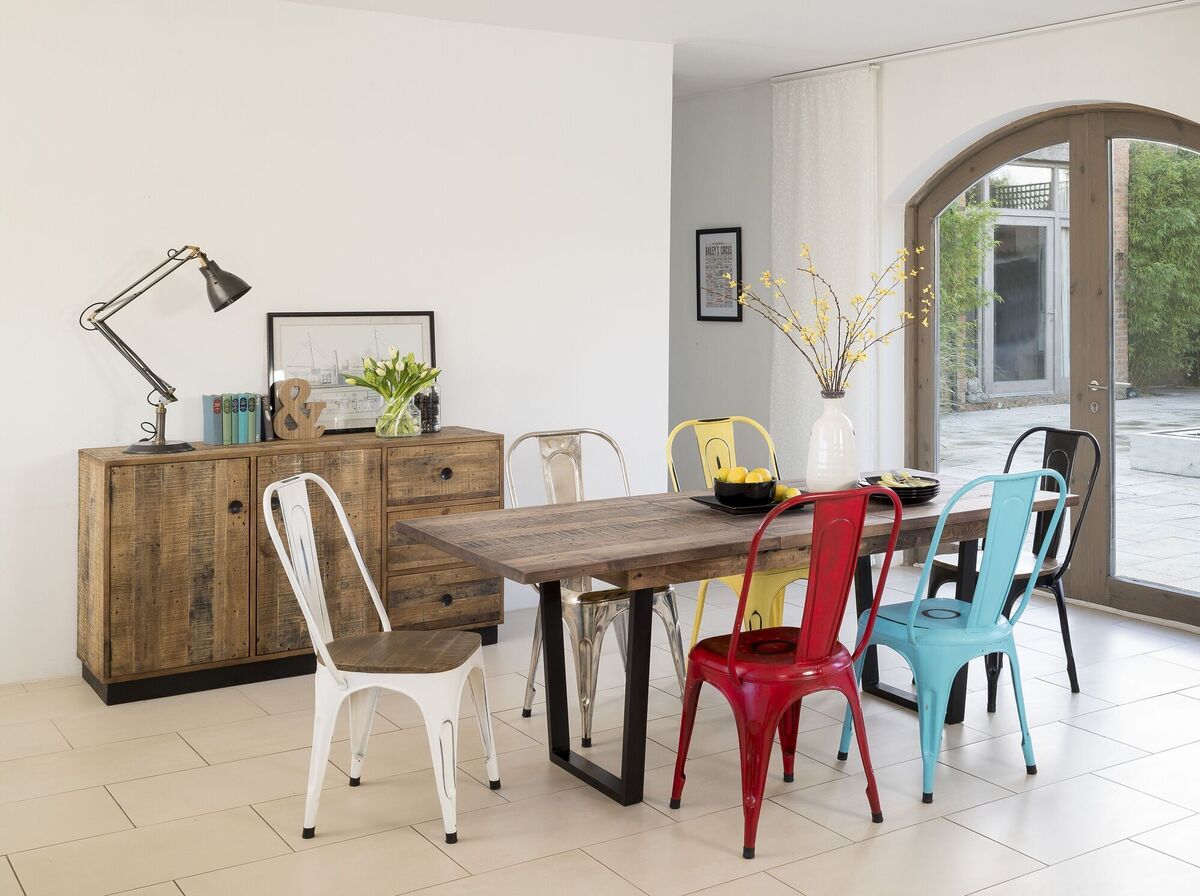
If your purse strings can be loosened up a bit, then the easiest and labour-free way to get the look is buying the same chair design in a variety of colours.
For purposes of cohesion, use a family of colour like all shades of green, all pale hues or dark shades. Even two colours alternating around the table gets the look without over-committing.
Where you already have a dining set that’s made from good quality materials and is in perfect working order, it might be an extravagance to ditch it, so consider adding to it.
An upholstered chair at either end of the table will give the set a lift. Just make sure the new chairs are the same height as the old to maintain cohesion.
Think, too, about this option if you are buying a complete new dining set as it may be an opportunity to pick up a bargain where an incomplete set is on sale, or where a set of four can be used with two contrasting models added in to make the typical half dozen.
Traditional style chairs from something like a 1980s faux Regency dining set can be found filling up second hand furniture and house clearance shops, begging for a reinvention.
Take the set of six and place three at either side of the table, adding in ultra modern models at either end.
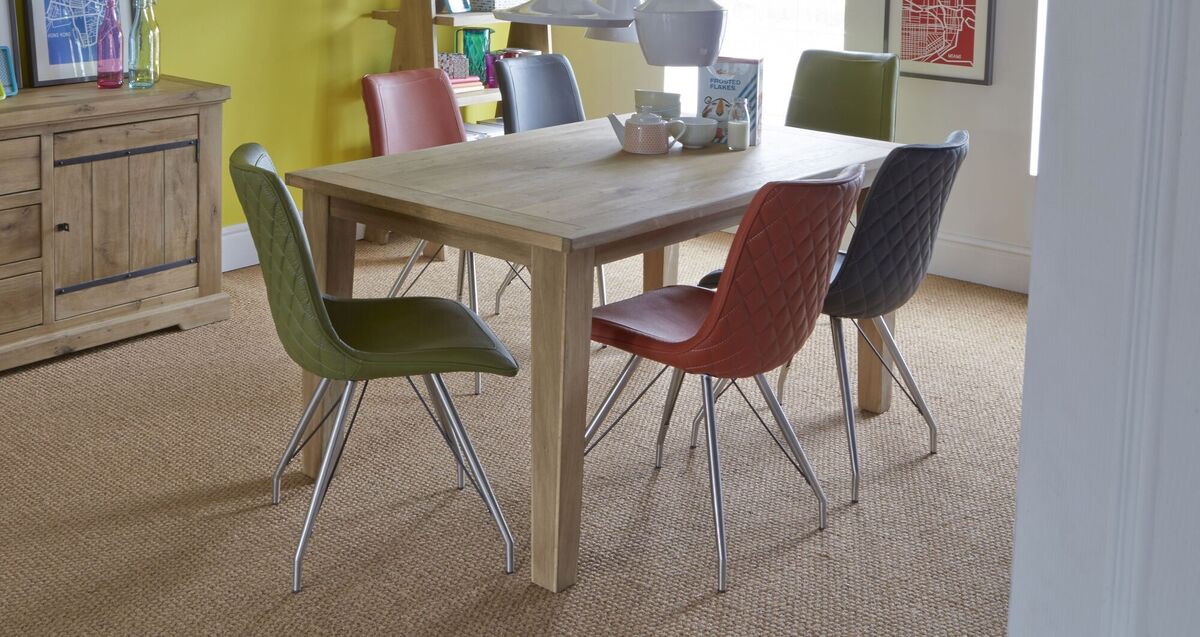
A quick change of upholstery on chair seats will achieve two optional looks. For cohesion, use the same pattern on mis-matched chairs, opting for a fresh modern fabric to contrast with a traditional chair design.
If your chair selection matches in shape and size, opt for a variety of seat patterns.
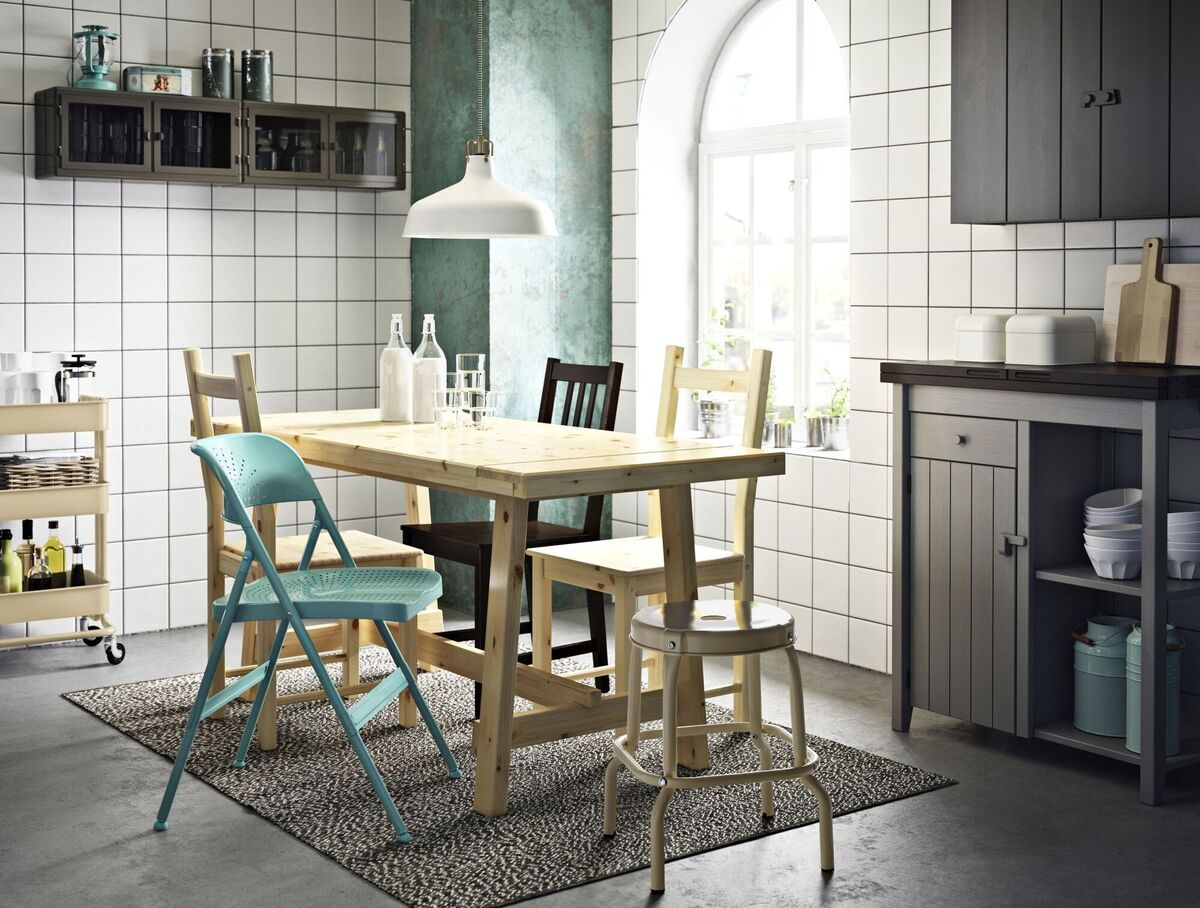
Kitchens enjoy the informality and flexibility a dining room doesn’t necessarily achieve; where a stool can be squeezed in for an extra diner and a crowd-friendly bench can be mixed with chairs.
To create the all-important cohesion, however, include two matching chairs, one on each side of the table, on a diagonal from one another, and try to keep the chair heights the same overall to avoid the jumble sale aesthetic.
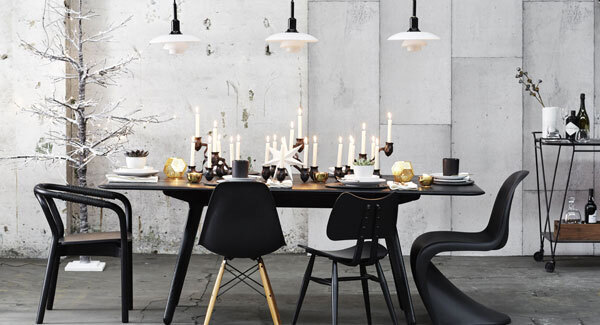
Aficionados of the mid-century modern look of the 1950s, 60s and 70s, who might have greater financial flexibility, could do a mix of chairs from a few of the big names of that era.
Opt for some uniformity by using the same colour to pull this eclectic bunch of designers together, making sure the two at the opposite ends of the table are the same model to mirror each other.
Using more or less the same height is a good idea too for another blast of cohesion, but, really, these designs are so stand-out and timeless, they’ll not only last a lifetime because of excellent manufacturing, but will create a conversation point at your next round-table gathering.

CONNECT WITH US TODAY



Be the first to know the latest news and updates