Anatomy of a bloom garden
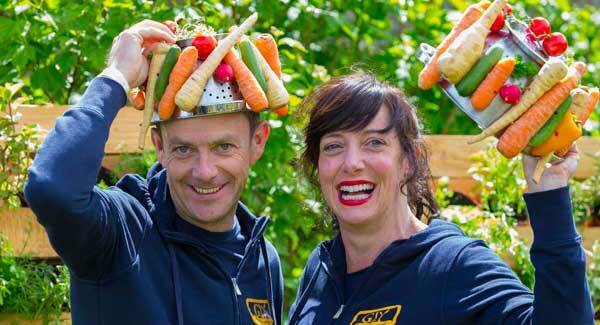
Bloom runs until Monday, it is not too late to make the trip and get some quality garden inspiration.
OK, some show gardens (here and shows abroad) can be all style over substance — nice plants, nice paving and a bit of rusted or polished steel depending on the latest trend, but some are all about the substance.
This year’s Bloom packs a punch with substantive gardens covering topics from plant evolution to social farming to breast cancer awareness.
And this year even the ones with the splash of cash are about reconnecting people with their gardens, rather than facilitating status anxiety.
There is a vibe this year and it’s all about how getting outside is good.
Considerable thought goes into these gardens.
A full year before they appear, they have been considered, researched, planned out and sketched up, costed, pitched to sponsors and entered for selection or rejection by the bloom selection board.
If accepted then begins the work of trying to find a nursery to grow on to perfection that rust-coloured sedum or silver foliaged Astelia (to match your snazzy welded wall of rusted or burnished industrial cogs and machinery parts — or whatever).
Picking up some hints of colour-matching between hard landscaping, soft furnishings and plants make the eye glide around the garden and the brain ping with delight. But we can light the brain up in other ways too.
I like to make gardens that can be read – scanned for meaning and enjoyed on a cognitive/intellectual level but also gardens that trigger brain chemistry to promote well-being — be that by borrowing from aromatherapy or creating rhythms in planting or patterns in paving and walls that elicit a sensation trigger.
These are the tricks of Bloom gardens that you can take home.
Why can’t your garden really relax you — not just by being a distraction from the pressures of work, family, friends (virtual and real) and the busy world?
Why can’t it be designed to lead your brain and body there?
So if that something you’d like, here is one way I set about for my 2016 Bloom garden called “The Tao of Now — a mindfulness garden”.
A foundation of symbolism is always brilliant — a circular lawn or a pyramid pergola to meditate under — it sets the tone but more importantly, it primes the brain. Go for it.
It’s your ‘self’ expression. For Tao I borrowed some yin-yang symbolism — the prime structure of the garden is the central hard landscaping — suggestive of a yang-like path and floor surface that merges with a yin-like pool.
Both of a concrete construction and finish that echoes the gardens potential in an urban location and defines the oneness and interconnectedness of the two halves. But easy to do as a weekend project.
We often hear the phrase ‘ yin and yang’ but there is no ‘and’, no separation — the true phrase yinyáng meaning “dark —bright” — it is one, inseparably, merged thing.
Just as there is no day without night, or shadow without light, owning your dark and your bright is accepting reality.
The struggle to leave one and find another does not bring oneness with oneself.
To be truly mindful is to see both without judgement or evaluation. Life continues in either.
Life is made of both. It’s OK to be a bit lazy/busy and take three weeks to finish that weekend project — no guilt — it’s your life, your time, your pace.
Follow your breath, not disproportion or perceived expectation. You cannot be mindful, spiritual, motivated, elated or perfect (whatever that is) in every second of your life. Life is all of life.
When you can (or need to) reach for the grounded or mindful state, there are ways to take the opportunity — mindfully dead-heading (beats mindfully washing the dishes) or consciously deadheading with the intent of eliminating negatives from your life in the process — or by smelling that rose, and entering the now but truly immersing in the moment and the experience of its natural wonderful fragrance.
In Tao (which means ‘the way’) I decided to sculpt a seating area inspired by the yogic and meditational hand gesture known as the Gyan Mudra — which represents unity between the self and divine consciousness and which is also the symbol of wisdom and groundedness.
A seat lets you enjoy the garden you work, lets you stop the work and appreciate.
So with this seat, beyond a visual cue and symbolism, in several therapies that positioning of the fingers connects meridian points that engage spiritual and physical healing channels, trigger reflex points to harmonise the endocrine system and act as acupressure points to calm the brain and quell fear and indecision.
Mimicking the hand gesture offers practical instruction to new comers to mindfulness/meditation to get that hit of non-medicated stress reduction.
Do it now — connect your fingers and reconnect to your self. Do it on your own bench later.
I normally work with natural materials or reclaimed materials but this year, I did use a poured eco-chem concrete pathway — it exhibits a different sustainability option to other hard paving but is hard wearing and low maintenance enough to fit in with workspace or urban public space installation and upkeep.
The garden at bloom is intended as a space created in a reclaimed urban setting, a waste ground for the community to reuse or a new use of a school or workplace courtyard. It makes it easy to replicate.
But more importantly it’s to show that true healing is integration not escapism, so the harshness of the pathway echoes the tough realities of life that we must transverse to mindfulness.
A hard life or tough circumstance is not an impediment to spiritual attainment — it is often the germination of it. You are a diamond — polished or rough — shine anyway.
The mute colour of the pathway enhances the perception of the greenery surrounding it and makes it a suitable surface to place yoga/prayer mats or partake in some barefoot earthing — the magnetic depolarisation of the earth continues to happen through concrete.
Again the valuable point — energy and healing can permeate even the tough and rough. Again, without getting to Pink Floydy — shine on.
Water in a garden is soothing — I love pools that catch the sky and give you gaze-out time — sometimes ‘not here’ is often as healing as fully here.
In Tao — the reflective body of water offers still repose at its widest parameters and a waterfall of sound at its narrowest.
It also enables a planting of water lilies to echo lotus flowers — nothing says life like plants.
The oasis in the desert. The Eden. Paradise. Plants are life forms.
Plants are teachers. Plants make a garden. The planting palette of this one is all about making it a healing space.
It is true that colours can generate electrical impulses and magnetic currents or energy fields that activate biochemical and also hormonal processes within the human body.
So why not use that in garden design? I chose predominantly green foliage plants for this one.
Green is known to lower blood pressure and soothe mind and body — it opens the heart chakra and is a healing modality in chromotherapy and Reiki.
It is the eco-psychology of our true selves as natural beings, requiring connection with nature to replenish and be at homeostasis (optimum health).
Green is also the bridge between our will/self (yellow) and divine interaction (blue) and so amplifies the message of inter-connectedness and harmony that’s beckoned by the Mudra seat.
Step out the back now and do some green bathing — refresh yourself.
Perhaps try a mindfulness exercise but however you do gratitude, remember now that that hedge, that lawn, that tree, that local park is a surge of green healing.
My planting list for the Bloom garden is simple, limited to create a tranquil effect; privacy hedging of bamboo (Phyllostachys spp), Sasa palmate, Fargesia robusta and the lush foliage of Fatsia japonica as well as Dicksonia and Cyathea treeferns all underplanted with Matteuccia struthiopteris and other ground ferns and Hostas.
The bamboo foliage filters pollutants and the sounds of breeze through stems and leaves disarm traffic and other urban noises.
It also sets an aesthetic in keeping with Mudra seat and while the pond contains Nymphaea spp it also has Equisetum hyemele (snake grass) to mirror bamboo and hint at Kundalini experience.
The garden is a collaboration with Eight Oaks holistic who will bring shamanic drumming and reiki to Bloom — reminding us that the outdoor room garden can actually be a therapeutic space setting.

CONNECT WITH US TODAY



Be the first to know the latest news and updates