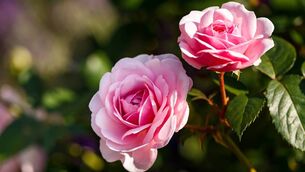
Three icons of Christmas - holly, mistletoe and red robin
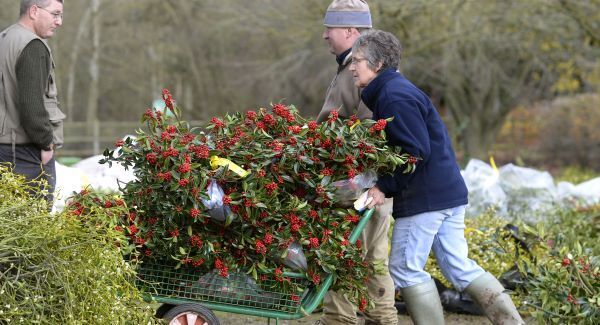
Before Santa completely usurped Jesus Christ as the king of Christmas, and brought in LED roof reindeers and plastic elf signs to displace candles and holly boughs, I used to like Christmas.
Don’t get me wrong I’m not against the national grid working overtime to keep your house humming with lights and signs that make Las Vegas look half-hearted.
Knock your socks off.
I’m also not one of those trying to reverse the consumer tsunami of Christmas in favour of a novena around a single white candle.
I am well aware that Santa is an anagram of Satan but hey, live and let live. What I dislike about the modern Christmas however, is what I miss about the old Christmas — the lost connection with the natural world.
When you think of the first Christmas presents — Jesus was given frankincense (a plant resin from Boswellia sacra) and myrrh (a plant resin from Commiphora myrrha) and there were camels, sheep and straw on the ground. The natural world was present.
Christmas appropriated the pagan tradition of bringing evergreens into the house and in the process did expand the natural connection.
While I don’t agree with killing a tree for a few days’ worth of decoration, I do however — out of childhood nostalgia and a genuine participation with eternal life ritual — cut some holly, gather some mistletoe if I can find it and stick some Fly agaric mushroom (Amanita muscaria) up on my fireplace.
Before my house is raided by operation THOR — they are wood carved — a present from Norway and you can lick ‘em all day without getting high.
That said if you or the drug squad want to find out how that magic mushroom influenced the iconography of Christmas see an old post called merry christmas on my blog theholisticgardener.com.
Meantime I have three icons of Christmas that I would like to save from extinction.
How to grow your own holly
There are so many varieties of decorative holly with berries in many shades of yellow, orange and red and with foliage types from smooth spoons to frizzy finery.
I have seen in recent years an increase in silver and gold variegated holly in Christmas door wreaths that are sold at florist shops and market stalls.
All of which look great but I would like Irish gardeners to consider growing our native variety — Ilex aquifolium.
The big bright red berries and glorious waxy green leaves are just elegant.
And as an indigenous plant it does so much for our native wildlife, especially our butterflies and birds.
Hollies in general prefer well-drained, sandy soil but our native variety will thrive in all soils that are not water-logged.
An understory plant in the wild, it makes a great open hedge that defeats burglars — better than a 12 foot fence.
You may not find it in your local garden centre currently wowing you with the latest self-fertile, thornless varieties, but Future Forests in Bantry not only stock native holly, they supply an excellent mail order service to every county, (info@futureforests.ie or ring 027 66176)
You can always take in a nice crisp country walk at this time of the year and not only harvest some material for the house decorations but some propagation material too.
Really, we are after semi-ripe cuttings — lengths selected from this season’s growth (the base of the cutting will be hard, and the tip soft).
Take a length, put in a plastic bag and at home trim your lengths to 10-15cm — aim to make the cutting at about a quarter inch below a leaf node.
Remove the lowest leaves and the soft tips.
Leave about four leaves on. For the best results dip base into a hormone rooting agent — shop bought or homemade via a crushed aspirin or willow sap.
Insert the cuttings into a pot firmed down with a mix of 50/50 free-draining potting compost and sharp sand.
Water well and let the excess drain before covering with a plastic bag.
Place the propagation in a warm, bright position, but out of direct sunlight.
After a few weeks, you can remove the bag.
It’s more about that extra warmth and avoiding water loss from the remaining leaves.
Plant out next summer.
You can try from seed too. But natural germination can take from 12 months to three years, as one to several winters are often required to break the protective coating on the seed.
Put the berries in a freezer for an hour and that might break the dormancy.
Let thaw, rub away the flesh, rinse then sow the seeds in a pot of similar mix as above.
Place in a cold frame and fingers crossed.
How to grow your own mistletoe
Mistletoe is becoming endangered as its traditional host sites — old style apple orchards — are almost extinct and some of its other habitats are likewise under threat.
There is a way to grow it at home, but patience is required.
You can try with any sprigs that you may have picked up at a local market or supermarkets, but these are picked for the time of year and the berries are often immature and not viable.
No harm in trying, as some people have had success with the sprig that was also a success at the office party.
For those of us who aren’t so lucky we can wait until March, when natural colonies of mistletoe are ripe for impregnating new hosts (preferably a tree or shrub over 10 years old). It doesn’t have to be an apple, anything in the rose family they seem to like. So a rowan, a pear, a cotoneaster, pyracantha or even a well-established old shrub roses.
Mistletoe is essentially a partial parasite — it has leaves to photosyhthesise but it likes to vampire it a bit, and root into the branch of an established tree and ‘borrow’ some of its nutrients over its lifetime of growth.
Year one, they stick to the branch, over the next year they root in slowly producing some leaves then each year after each individual shoot will produce two new stems, with a single pair of leaves at the tip of each.
Four to five years later, it will be big enough to berry and allow annual harvests. Slow going but worth it.
If you are up for the challenge, rather than just pasting a branch with the sticky berries, cut a flap/strip from the host branch (preferred girth 8-10cm), squidge in the seeds from their sticky pulp, as many seeds as you can (as little as 1-in-10 germinate), ease the bark back into place and bandage it with a light strip of hessian to stop the birds having them away the same day.
Wait, pray, eat, love, renew your household insurance.
If the seeds germinate and the plant takes, then well done — if not, don’t be deterred.
Try again come the next flush of mistletoe berries.
How to invite a robin into your garden
The link between Robin redbreast
Erithacus rubecula) and Christmas is a bit of old empire, I’m afraid.
The original English postmen wore red waist coats to honour their queen and the invention of the Christmas card and the posties nicknamed ‘the robins’ brought a new icon on to the scene.
There are a few cute myths about it getting its red breast trying to keep baby Jesus warm and other European folklore celebrates robins as portent of good luck, especially around Christmas and New Year.
So, having a robin come visit is great for the garden. They may be somewhat partial to earthworms but they will go to town on many garden insect pests, including overwintering grubs.
Bird watchers call robins a confiding bird, it will perch motionless close to garden activity, often on the freshly-placed spade handle — almost acknowledging your good work.
A pleasant garden companion that delights with flute-like songs, robins readily come to bird tables and water dishes.
Nest building begins as early as February but now is pretty much pairing up time. Robins rear 2-3 broods in a single season and generally build fresh nests for every clutch.
They will utilise open-fronted nest boxes but equally an ivy clad wall or a cavity in a wall will facilitate a home.
To keep visitors and nesters, plant winter berry trees and shrubs and deter cats which kill more robins per year for sport, than owls and sparrow hawks do for food.
If none of that works — send a postcard.
CONNECT WITH US TODAY



Be the first to know the latest news and updates