This 250 million year old bug might eat up the Japanese Knotweed problem in Ireland
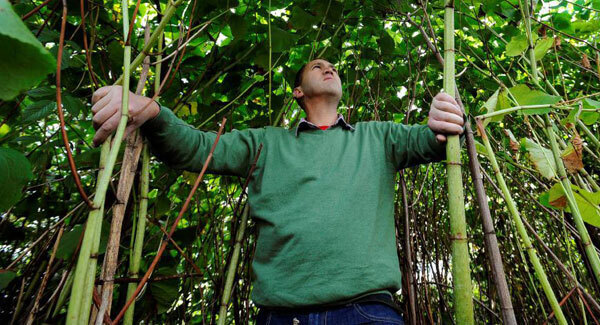
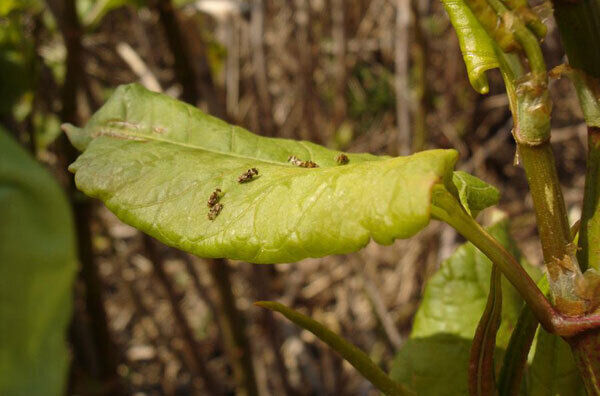
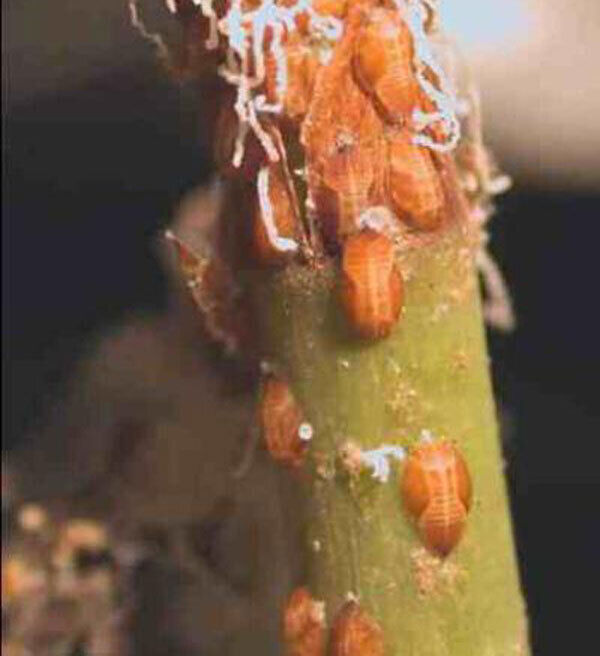
Aphalara itadori as a name might mean nothing to you, but this little psyllid could yet be the saviour of the Irish countryside.
A psyllid is a jumping plant louse and one of the most primitive of bugs.
It feeds on specific plants and in 2008, Aphalara itadori was selected from a list of 236 possibilities in a type of ‘X-Factor’ of pest control to be released into the British countryside.
Bugs of this type have been on earth for over 250m years and survived the Great Permian Extinction — a catastrophe which wiped out 86% of genera on earth and which happened over 252m years ago.
Reynoutria japonica was first recorded in Japan in 1777, and renamed during the 1800s as Fallopia japonica, and is now commonly known throughout Britain and Ireland as Japanese Knotweed.
Aphalaria meet Fallopia. Since 2009, these little bugs have been monitored in England in a secret location in Cornwall in the fight against this most invasive of weeds.
A lot of time and money was spent researching the possible effects of releasing a psyllid like this into the British countryside as the obvious risk would be that it could start to vary its diet and develop a taste for some native species, the very things that they are trying to protect.
The findings over the last five years have been positive if not earth shattering.
They have found that these bugs in shining armour do indeed inhibit the growth of Japanese Knotweed and thus far there are no reports of any negative effects on native flora.
So at long last, it seems help is at hand and thankfully, it’s not chemical. Up to now the best advice for controlling Japanese Knotweed has been to use Round-Up, a glyphosate based weedkiller.
Recommendations also vary as to the best time to apply the chemical, some saying early in the growing season and others saying later as the foliage is beginning to die back — and advise injecting the weedkiller into the stem.
The problem with this is the weed is so invasive and has colonised so much of our countryside and hedgerows, that with such widespread use of glyphosate must come questions.
Questions as to the environmental impact on flora and fauna and also, on humans.
In 2000, a review found that “under present and expected conditions of new use, there is no potential for Round-Up herbicide to pose a health risk to humans”.
However, earlier this year the International Agency for Research on Cancer classified glyphosate as “probably carcinogenic in humans”.
Equally there are reports that state it is damaging to beneficial insects, such as earthworms and bees, and further studies that say otherwise.
Glyphosate is big business — being one of, if not the most widely used weedkillers worldwide. There is a lot at stake here.
The Dutch government has banned Round-Up and all glyphosate based weedkillers from the end of this year and the French aren’t far behind.
It’s already illegal to sell over the counter in garden centres in France.
The Irish government unfortunately, probably won’t be as proactive, and there is strong lobbying by tillage farming groups to retain certain chemicals.
We will probably have to wait until a European edict before there is an outright ban on all dangerous chemicals.
There are other weedkillers available which are proving effective in the control of Japanese Knotweed, namely one Garlon Ultra which has triclopyr as the active ingredient.
Similar to glyphosate in that much of the literature claims that the environmental impact is low, I still don’t fancy the idea of it being applied all over the Irish countryside.
I had the pleasure of a trip to Heron’s Cove in Goleen recently and while down there I took the opportunity to explore some local countryside and saw no evidence of Japanese Knotweed around Goleen.
I did see far too much of it on the road back to Cork city however,and it was particularly bad on the outskirts of Skibbereen and several other stretches.
I have spoken on radio with a West Cork councillor about the problem this poses to the community, and it is not something which only concerns gardeners.
I said then and I repeat now that we badly needs a task force to combat this growing problem.
It can’t fall on voluntary effort, it is far too big for local community and Tidy Towns’ groups to eradicate.
Equally it can’t be solely the responsibility of local authorities, the situation in England has shown us that it is too big for any one agency to deal with.
There has to be a multi-agency and multi-faceted approach to this scourge and work should begin quickly to combat knotweed.
Perhaps the most primitive of bugs like Aphalara itadori will be the heroes of Cork county and beyond, after all?


CONNECT WITH US TODAY



Be the first to know the latest news and updates