Put yourself in right frame of mind for picture-hanging
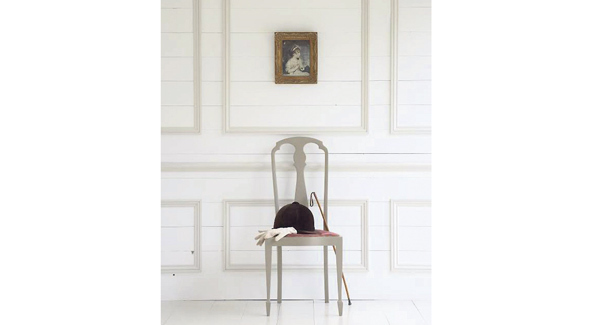
The way we hang or place pictures, photographs, indeed any imagery or artwork can celebrate or destroy its presence.
Rules are made to be broken. If something distinct about the piece or its subject matter and design tells you to put it up in a certain non-linear way, trust your eye.
Here are some general hints on hanging:
* Take stock of the hanging space. If it’s a column, then a stack of smaller pictures of one killer object with a vertical thrust is ideal within this distinct virtual frame.
* Doors, windows, even intruding radiators and light switches have volumes you must acknowledge and hang to suit. Give the work room to breathe. It should not be bumping off door surrounds.
* The biggest mistake people make is hanging pictures too high. When standing you should be looking at the picture’s centre and they can come even lower if you are going to observe it mostly from a seated position. A group of pictures will have a central point, so make sure it’s standing eye-height. Hang a simple horizontal line of different pictures centred on this horizontal height of adult eye-level.
* When dealing with pictures of equal size as a group, a simple vertical or horizontal arrangement works well. If you have an equal number and a large group, you can vouch for square or rectangular forms, but don’t lose the content of the individual pieces by too much community.
* Use a level and light pencil marks to create perfect placement allowing for the length between the hook and the top of the picture. Unsure? Place the picture face down, put your picture hook on the cord and put the end of a measuring tape into the hook end, pull up to see the length shown on the tape from taut cord to a hook or screw. Adjust the cord length if you have already drilled out the position.
* Assembling groups of disparate sized frames, put the larger landscape shapes to the top. Make a top horizontal line and then align anything parallel with that piece in the top row. Finding the inside vertical of the big picture, align the inside vertical of pieces below and work out from there. This works the pictures out from the centre rather than stuffing them into an imaginary perimeter line (which looks forced and awkward).
* Don’t ‘climb the stairs’ with bottom corners of pictures meeting top corners of the one below. Imagine a straight line drawn across the treads and hang the pictures on a centre line created from that. This way they will flow up the stairs stacking against each around a third to half-way up their height. You can stutter a few pictures in a group (rather than a dreary equally spaced parade), to add pause to a very long hall.
* Three dimensional, otherwise banal things gain new, curious life when celebrated up on the wall. Vintage kitchen beaters, enamel colanders, tin toys, all sorts of flea market finds and children’s creations. If you invest it with enough importance to hang it up, it will grab the eye.
Allow light to rake across the texture of a piece rather than flattening its form head on. Use thin battens of wood to field the piece directly on the wall in a ‘frame’.
* Let a large piece of art, sculpture or light-work (such as the letter in our DFS illustration below) dominate a wall.
Pull it a little lower than expected to make a relationship with the furniture below, rendering it dramatically present. Open up a small room with one large, show-stopper, rather than littering the walls with diminutive frames.
* If you have an especially heavy piece of artwork that’s in danger of defeating any screw, attach it to an interlocking batten system (50mmx20mm). One baton, a fraction shorter than the frame is fixed to the picture frame, the other screwed to the wall. The battens should have a 45 degree mitre cut along their edge and will slot into each other with one angle up and one angle down, to support the frame.
* Setting or leaning on a stout wall allows you to circulate a collection with ease so use a group of shelves for a floating gallery.Try layering smaller pieces against larger — lovely with framed black and white photographs.
If you’re lucky enough to have fabulous framed-in, or system shelving, leave larger openings to interrupt runs of books and ornaments with artwork. I am not a fan of formal picture lights, but some pieces will benefit from discreet, oblique lighting.
Timber frame or stud walls demand special attention when hanging anything of weight, but this doesn’t preclude even hefty artwork or shelving, if done correctly.
Simply find a vertical stud and screw into this. A masonry house may have a mixture of stud and block walls dry-lined with plasterboard and set on dabs.
* Check if you’re dealing with plasterboard with a knuckle-wrap.
A lighter, hollow sound means plasterboard on timber frame. This can tear and ding if rudely handled.
* Choose the right screws: 3.2mm (no.8) or 5.5mm (no.10) suit most moderately sized wall-shelving and artwork.
* Check for pipes and cables with a commercial checker.
* Any online span-chart will tell you the recommended distances for supports for shelving of various materials. Use a pencil and spirit level to mark screw positions.
* For timber-frame and lathe and plaster (in very old homes), find a vertical (upright stud) and, having made a pilot hole, screw your supports into this. If you can’t use a stud, use hollow-wall-fixings and limit the load.
* For plasterboard on block, use a bit long enough to drill through the board into the blocks beneath. After drilling out, use screws matched to masonry expansion plugs. Tapered, shanked wood screws offer maximum support, as they really dig into the plug.
* Put all the screws in on, say, a shelf support with a few turns left to do.
* Tighten up gently, in sequence, to avoid pulling on one over another and damaging the plasterboard with the support.


CONNECT WITH US TODAY



Be the first to know the latest news and updates