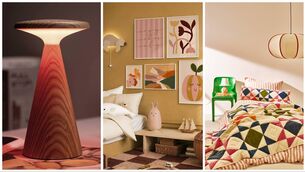
Buy items you love when creating a new look in your home
We try to be subtle but it’s obvious, especially when the friend has an interest in interiors or is — as described in days gone by — house proud. Maybe they have taste that matches our own so we’re likely to ask where they got some of their furniture and accessories — for when we’re pressed for ideas to sharpen up our own homes.
Of course when you write on the subject of home interiors this is even more pronounced as visitors’ expectations can be scarily high. I suppose the advantage of this is that I’m prompted to at least keep the place neat and clean.

Curiously, the eyes of my interior aficionado visitors tend to land on four particular objects. I say curiously as they all cost less than €50, and one just €10, but they never fail to attract attention.
One, located just inside my front door so I can cast it a glance as I dash to an appointment, is a Cuckoo clock by Jenny Walsh.
Indulging in my love of mid-Century modern design is the Krenit bowl, originally conceived in 1953 by Herbert Krenchel, but which has become a modern classic thanks to Danish design house Normann Copenhagen. It’s enamelled in the original black and white finish, although the range has now been extended to include colour.
The most curious object is the witty Dr Skud fly swatter by Philip Starck for Alessi. It’s pitted with tiny holes to give a very satisfying whip and thwack when applied to an unsuspecting insect. The latter activity is much loved by very young visitors who can be distracted for anything up to 20 minutes by some interior big game hunting.
My point here is that a single, beautifully crafted object can create a focal point in a room, drawing the eye to a mantelpiece and away from the dreaded outsize television, or it can elicit gasps of admiration when placed as decoration on a dining table, and without costing a fortune.
For weary wallets that cannot squeeze out the proceeds for a major purchase, think about making small buys regularly where you build up a collection from a particular maker, or dip into various designer-makers as they catch your eye.
Of course buying design means acquiring something that is not only beautiful but functional, which means there’s a greater chance of it being damaged over time, especially when you are dealing with glass and ceramics.
Most of us, however, will tend to take care of what we call our good stuff — objects kept for the more special occasions and that won’t be subject to the wear and tear suffered by objects in everyday use.
Don’t get hung up on function though. It’s worth remembering the old maxim used in the art world — buy what you love.
* Next week we meet home grown success story, upholsterer Aiveen Daly.