Vintage view: Victorian glass
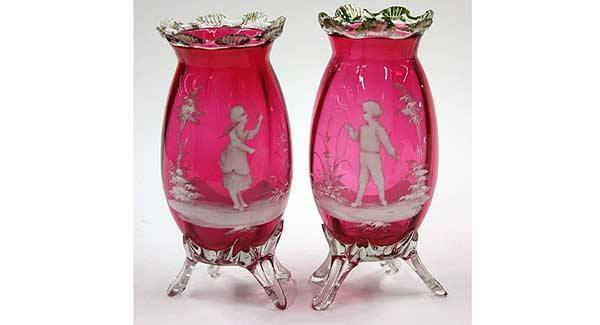
With its moist, fruity colour, it jumps out with a gem-hard confidence.
As late as the 1980s, antique dealers were sniffy about commonplace Victoriana, and that fanciful glint of late 19th century red glass would likely be found in the local jumble sale. Today, while still not the sexiest antique, cranberry glass holds a sentimental fascination for collectors.

The origins of deep-red glass are a mystery. The Romans, whose couch-reclining aristocracy loved deep, decadent colour, first stumbled over this expensive formula by using mineral salts (gold chloride).
It’s speculated that scrapped gold may have fallen into molten glass, causing the colouring. The fourth-century Lycurgus cup held by the British Museum bears this out, but no records for the ‘recipe’ for this early red glass been found.
The Venetians, famed for their beautiful glass-making, struggled gallantly to produce the signature ruby gold. Depending on who you believe, the 17th century, Florentine glass-maker and chemist, Antonio Neri, described the method for producing the material. A red precipitate of stannic acid with gold, it was later dubbed teasingly as the ‘purple of Cassius’ for another obsessive chemist attempting to crack the code.
Joseph Knuckel, of Bohemia, is credited with adding the deep-red colour we know today, in Potsdam in 1679. This second wave of ruby glass started in Bohemia and Czechoslovakia, and was later carried over to English glass-making. By 1820s, the Bohemian glass-makers found that copper could be substituted for gold, and while copper was still expensive, it was less so. The American market dubs red, vintage glass as ‘cranberry’, from the fruits that grow around the factories in New England. Truly-old ruby glass is a red, inky colour, more wine, less Ribena.
The zenith for the production of coloured glass, in all its colours, was the high Victorian era, when its semi-precious character and expense made it an ideal vanity addition in entertainment tableware. Glorious, blown and pressed-glass finger bowls, decanters, fruit bowls, frilly épergnes and wine glasses were a staple on a crowded Victorian dining table. Oil lamps from the latter half of the 19th century, in various, melting tones of garnet-rich glass with trailed decoration and engraving, are especially prized.
To reduce the cost of producing solid pieces of ruby glass and adding gorgeous possibilities in terms of decoration, red glass could be fused (cased) or dipped (flashed) onto a clear-glass object. Cutting through the top layers, into the clear glass, added mesmerising facets to the finished work. In other pieces, white glass set over red panels can be cut away in amazing engraving. By using layers of glass, the colouring can vary from a blush pink to a full-on garnet red.
In 1845, the century-long tax on glass was lifted, and the market went mad for the latest, newly dubbed ‘art glass’ with painted, gilded and blobbed decoration. In the cribs of Stourbridge, Sunderland and Warrington, glass-makers turned out fanciful ‘friggers’, decorative nonsense pieces, such as bells and full-size walking canes, pipes and bugles, all in coloured glass. Stems, flowers and shells in clear glass added eye-watering detail. Handles, even if twisted or ribbed, were made in a clear glass for economy.
For the collector, there are two eras to choose from — these earlier Victorian pieces (1870 forward), or the later, cranberry-coloured art glass, produced in Europe, and New England in North America, from the early 1900s to the 1930s. Mary Gregory glass, first made in the States, is lovely if you like small, feminine objects. It features a cranberry, glass body, with pictures painted on in enamel and then fired to look like highly detailed engravings, usually of young children. Look for pieces in green and red and check for authenticity, as the market is ankle-deep in Gregory reproductions from Germany and Eastern Europe and outright fakes.
At auction, online and in-store, prices for cranberry glass remain affordable, with even the top house of cranberry glass, the Grimes House Gallery, in Gloucestershire, England, offering antique pieces from around €25. www.cranberryglass.co.uk. Glass is notoriously hard to date. Get specialist advice from a reputable dealer before any significant buy.