Soil is the soul of the food garden
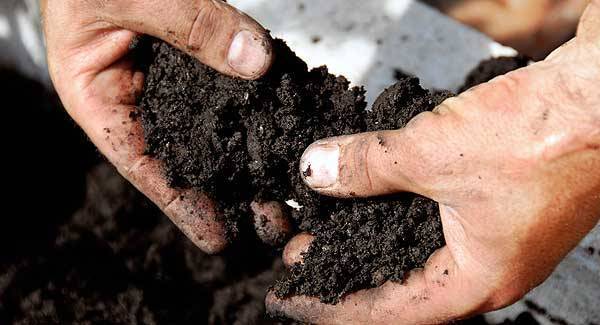
Clay will roll into a sausage that can be shaped, (it’s where potter’s clay comes from), while sandy soil will run through your fingers and won’t hold a shape. Loam, however, will roll into a sausage, but won’t be shaped.
Feed the soil not the plant is at the core of organic growing, encompassing a holistic approach to soil cultivation, underlined by the knowledge that a healthy soil produces healthy plants which in turn produces healthy people.
However some home growers may be a bit perplexed as to what kind of soil they have and what its exact health status might be.
Before working your soil, it pays to get to know it and one of the first things you should do is determine the soil type. There are many soil types but the main ones in Ireland are clay, loam, sand and peat, with loam being the most desirable of all.
This is a well-balanced soil, high in organic matter (decayed leaves, plants, animal bodies, twigs etc) and is rich brown in colour and crumbly in texture. It is high in nutrients, easy to dig and has good drainage but however it also holds on to moisture well so it doesn’t dry out in summer. A good loamy soil is what all gardeners are aiming for and is perfectly achievable over time if a persistent regime of adding soil amendments such as garden compost and well-rotted manure is followed.
This soil is very common in Ireland and is also known as ‘heavy’ soil. Being made up of small soil particles, it can be hard to work, hard to dig and is easily compacted. In winter it is prone to waterlogging, while in summer it will bake to a hard dense crust, often with surface cracks, excluding air from the soil and making it difficult for plant roots to access water. Clay soil is slow to warm up in spring but does have the advantage of being high in nutrients, so once it has been made more workable, clay soil has the potential to yield fantastic vegetables.
This is very light, feels loose and gritty when handled and is super easy to dig. As it is made up of large soil particles, it is free-draining meaning that water logging is not an issue but it will become seriously dry in summer. Sandy soils warm up quickly in spring but it’s loose texture means that nutrients will wash away easily with rain.
This is common to the bogs in Ireland, and is rich, black and fertile (although acid) and has a sponge-like texture that locks in nutrients.
You can learn a lot about your soil by talking to your gardening neighbours or asking in a local garden centre. However, it is not difficult to find out what your soil type is — take a small handful of wet soil from your plot and roll it between your palms. If it rolls into a snake that bends into a circle without breaking, it is clay soil. If it makes a snake, but crumbles when your bend it, you have loam. If it doesn’t roll into a snake, it’s sand. A further feel of your soil between your thumb and forefinger to check if it feels gritty or smooth is also beneficial. If it feels gritty, it contains a high proportion of sand, if it feels smooth, it contains a high proportion of silt and if it feels sticky and has a gloss, it is clay. Soil types are described according to their main constituents. Thus, soil that is predominantly sand is a sandy soil; soil with a lot of clay is a clay soil; and soil with a balance of all constituents is loam.
Another simple method of determining the texture of soil and the proportions of mineral element (sand, clay and silt) it consists of, is the straightforward jam-jar test. Simply half fill the jar with clean water and then top it up with soil until the water level reaches the brim. Seal the jar securely and shake vigorously for over a minute and then leave to stand on a level surface. As soil particles come in different sizes, the particles should settle in layers with the heaviest at the bottom and the lightest on top. As sand particles are heavier and coarser in texture than silt and clay, they will settle first, probably after a couple of minutes.
Silt is the next heaviest particle and will settle out after about an hour. After 24 hours, all particles should be settled.
There should be a slight difference in colours between the layers, clay being both the lightest in texture and colour and silt somewhat darker than sand.
By observing the proportion of each layer in the jar, you can determine whether your soil is predominantly sand, clay, silt or maybe you are one of the lucky ones and are working with lovely loam. Remember when discarding soil and water, a sink is not the best option.!
Once you determine your soil type, the good news is that no matter what it is, there is always ways to improve it, which I will discuss next week.


CONNECT WITH US TODAY



Be the first to know the latest news and updates