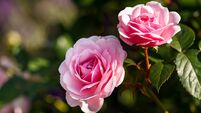
Darling buds of Dahlias
Whatever your feelings on that one, what is certain is that the year is certainly in its final third and the days are getting shorter.
We are now heading towards the autumn and as a gardener I can really understand why the Americans refer to this season as the Fall. The burgeoning new growth of the spring is by now a distant memory and the fresh leaves and flowers of the summer are beginning to fade. Many trees are already beginning to shed the first of their leaves, effects of the drought-like conditions we have experienced so far this summer. I love this time in the garden. We get to relax a small bit as the manic work load of the summer begins to lessen and you find the odd moment to in your oasis to enjoy the fruits of your labours earlier in the year.
In the Herbaceous beds many of the aristocrats are coming to an end. Delphiniums, Lupins, Verbascums and Hostas are no longer as stunning as they were earlier in the summer. These plants will all give a further flush of flowers if cut back quite hard now with spent flower stems and weak leaves removed; however, this second flush will never be as dramatic as the show that they put on earlier in the season.
The good news is that there is a whole group of plants that only come into their own during this period.
They’re what I refer to as plants for the changeover, as it’s nearly too late to be called summer and it is also too early to be called autumn. These include Penstemons, Phlox, Cosmos, Fuchsia, Gallardia and that old cottage garden favourite that I am delighted to see is enjoying a resurgence in popularity in the garden, Dahlias. There are so many reasons to love the blooms of Dahlias: firstly and quite simply it’s the way they lift your spirits when you see them first thing in the morning, also when the bees gorge on them later in the day, busy collecting the nectar from the flowers to turn it into honey. Meanwhile, they’re collecting pollen grains on feet and wings at the same time and transferring it to other flowers. But don’t forget that the blooms from Dahlia plants make fantastic cut flowers inside the home.
Many of the more modern varieties of Dahlias display their strongly coloured flowers atop chocolate brown foliage and I love the dramatic effect that this colour combination offers. Dahlias are not subtle, and thus not for the faint hearted in the garden. The long established and deserved favourite is ‘Bishop of Llandaff’ which produces blood red flowers on dark brown stems and foliage. But keep an eye out for some of the other Bishops — ‘Bishop of York’, orange/yellow flowers; ‘Bishop of Auckland’, bright red; ‘Bishop of Oxford’, Orange flowers and ‘Bishop of Canterbury’, pink flowers — all are dark-leaved varieties.
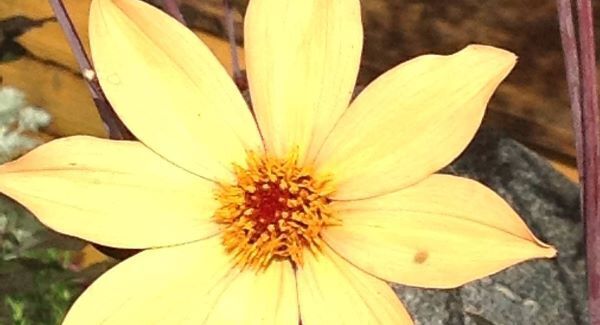
A more recent introduction to our gardens is the ‘Happy Single’ collection. ‘Happy Single Wink’ has beautiful pink flowers with a lovely red centre with ‘Happy Single Kiss’ produces an apricot/orange flower.
As the name suggests these are simple, single flowers, as simple as what a young child would give you when asked to draw a flower. However, there are over 10 different flower types in the genus with over 36 species and hundreds of varieties. Some of the more dramatic flower types include Cactus, Pom Pom, Anemone and Colourette.
With a genus this large and producing so many fantastic flowers it is next to impossible to pick favourites, but I would certainly look for ‘Arabian Night’ a beautiful blood red semi double with green foliage; ‘Bishop of Llanduff’; ‘Moonfire’, another dark leaved variety which has the most attractive yellow and orange flowers and ‘Crossfield Ebony’ which is probably my favourite of the pom pom types bringing me straight back to my childhood.
One of the pests most associated with Dahlias, and the one that does most damage, is the earwig. They will take refuge in the base of the plant and feed voraciously on developing flowers and emerging leaves. Please try to avoid unnecessary use of insecticides and try a completely harmless remedy. Stick a bamboo in the ground near your Dahlias and place an upturned pot stuffed with wet newspaper or straw on top of this bamboo. Earwigs like dark and damp places and they will flock to this upturned pot during the day making it easy for you to collect and dispose of them.
Whichever flower and foliage colour and flower type you decide upon then let me urge you to either rediscover Dahlias or to enjoy them for the first time and introduce them into your garden for this period of changeover.
CONNECT WITH US TODAY



Be the first to know the latest news and updates