Getting to the soul of a magical place
I had heard of the gardens at Ashton Grove and had met the owners from time to time and discussed what they were recreating on the outskirts of Glanmire, but I was not quite aware of the scale of what they had undertaken.

Getting to the soul of a magical place

For all that, what Gerald McGreal is doing in this garden wouldn’t work if it was simply a diligent recreation of what existed before, for a garden needs to possess some of the soul of the gardener for it to work.

A garden has to appeal to all five senses — and Ashton Grove does just that. But to make a garden truly special, it has to appeal to that sixth sense. There needs to be a ‘feel’ to the garden, which can only come from the soul of the gardener and those before him. Ashton Grove is all about ‘the feel’.


This garden works. It is a truly magical place where design features abound, but for me, it’s all about the plants. Good design is one thing, but a garden needs its special plants. Much has been lost throughout the years, victims of the ravages of time and neglect. Some stunning specimens survive and keep an eye out for one particularly majestic Tilia (lime) standing in the middle of the lawn to the front of the house.

Standing also in the lawn you will find a mature variegated sycamore, which in itself is a rarity. The sheer scale of the place stopped me from noticing this beauty until I neared the end of my second walk around. Then, when I did open my eyes, it left me nearly breathless, just a perfect tree.

It’s one of the many delights of Ashton Grove, and you cannot appreciate everything the garden has to offer on one quick walk around. From tiny little details, such as a glimpse of a marble seat in the distance through an accidental gap in a hedge, to a perfectly-positioned specimen tree, this garden needs senses on high alert.

If I am to be honest, I was expecting a garden recreated by the book and with a certain degree of interest from the owner. What I discovered was a garden being recreated by a man who is now thinking of the future generations and recreating this garden with a passionate attention to detail. Every plant that goes in is carefully considered; every stone and brick that went into creating an orangery from a derelict pig shed and a belfry from a cowshed were reused from the estate. Fallen slates, which weren’t good enough to use on buildings, create an edge around the rose beds.

What I love about the place is that the rule book is not evident, trial and error is the order of the day, which to me is real gardening. Except when it comes to the meticulous planning of the box hedges in the potager and the Horological Maze, which at this stage is on its third planting because the original Taxus (yew) failed due to a blight which struck again a few years later. The maze was replanted using Lonicera and is thriving, though it will be a few years before it is truly at its best.

Ashton Grove is open on June 9 with all funds raised going to the Mercy Hospital Foundation. I can’t think of a more enjoyable way to spend a Sunday than roaming through the ‘garden rooms’ here.

Starting with the Laurel Pantheon, discover what a small amount of imagination can do to some overgrown laurel. Moving onto what is probably my favourite ‘room’, the formal garden , not because of any wonderful planting of hedges and herbaceous borders, but because of the feeling of calm one gets here. Every garden should have a place which makes you forget about the trials and tribulations of the world. This is the tranquil part of Ashton Grove.

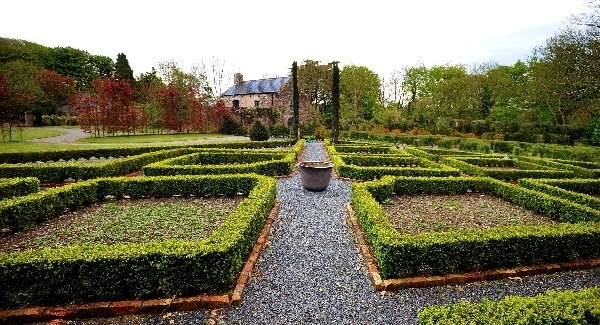
With the Victorian style potager, over 1,100 plants were used to create the box hedges and, standing as if on sentry duty, are pairs of Cupressus sempervirens (Italian Cypress). At the centre of this ‘room’ is a genuine Famine pot, a remnant of the soup kitchen in Ashton during that time.

Looking down on this garden, which is next to the maze, from an elevated platform you could imagine yourself in the south of France, except for the single-figure temperatures. Other features to admire include the fantastic Anglo-Chinese Regency-style bridge, constructed by the owner’s brother, and the pergola, which has been planted with several climbers including Jasminum, Laburnum, David Austin roses, Wisteria and Passiflora.

However, no account of a visit to this garden is complete without mentioning the Horological Maze.

What, I hear you ask is a Horological Maze? Well it’s a design centred on a French mantle clock, which is surrounded by interlocking cog-wheels, pinions and coil springs, all inspired by the workings of a typical mechanism. It also reflects the owner’s interest in horology and provides a balance in its garden sculpture to the turret clock presiding over the courtyard.

The owner took his inspiration for this creation from visits to Blenheim Palace and Weston Park in England, Shanagarry and Faithlegg in Ireland, and the Summer Palace in Vienna.

It is wonderful to see people with such passion and the wherewithal to recreate a special place, and you should not miss the opportunity next Sunday to get a glimpse into this garden and into the soul of the gardener at Ashton Grove.

* The open garden event takes place on Sunday, June 9 from 1pm to 5pm and is signposted from Grandon’s, Glanmire. Entrance is by donation.

* A new and dedicated email address: gardening@examiner.ie is now open for notices and related topics from clubs, groups, garden societies and also, for queries on general gardening matters from our readers.

More in this section

Revoiced

Newsletter

Sign up to the best reads of the week from irishexaminer.com selected just for you.

Cookie Policy Privacy Policy Brand Safety FAQ Help Contact Us Terms and Conditions

© Examiner Echo Group Limited