Vintage view: Hand loomed vintage rugs
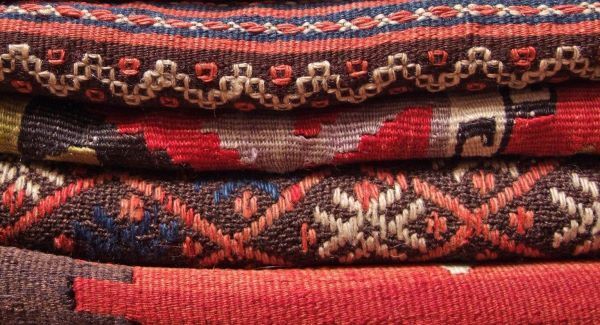
TICKLING the laptop in the wee hours of the morning, I can be a bit impulsive rooting around on Ebay.

Vintage view: Hand loomed vintage rugs

Thankfully, like most people, my withered funds and crumbs of accumulated sense undercut any dangerous financial behaviour.

With the increasing popularity of online auctions, more people are buying larger, big ticket antique and vintage items online. In the case of something like an Oriental rug, a two dimensional photograph of a flat object over a 14” screen can be gravely misleading.

Here are just a few things a virgin rug buyer needs to know when laying hands on the quarry or at least in asking for some reassurance from an online seller. Don’t expect to net a rug of any great intrinsic value hunting alone. Ideally, buy from a reputable specialist where you can get advice, provenance and the carpet can be examined closely.

* Many rugs advertised as Oriental, are actually made in the Middle East, including the Caucuses, Iran and Turkey, all famed for their tribal rug making. It’s worth getting used to their distinct characteristics.

*You should be able to see the design on the back of the rug when it’s flipped over and the fringe should be part of the weave not stitched on or tied onto the backing afterward. The knots (seen on the reverse) will not be too uniform if this piece was hand knotted or woven on a loom.

* Some rugs made for finer settings offer a tight weave or dense knotting while other tribal rugs will be traditionally loose and rough. Knotting can vary from 50-1,200 knots per square inch. More knots are not necessarily a mark of quality, it depends on the variety— 200 knots will hold up well to domestic use with 120 as a base line for tribal rugs.

* Rugs advertised as antique are often vintage pieces of 50 years or more, which is not a problem if they are well made and preferably dyed with vegetable dyes rather than chemicals.

* Natural dyes rendered from crushed cochineal beetles, indigo plants and hennahave a gentle, earthy hue as they fade and the organic dye softens and adds lustre to the wool. Chemical dyes are hotter to the eye and badly applied can run, smudging the design.

* Damaged faded carpets may be rudely patched and over painted to disguise loss of colour. Look closely at the images online and ask for detail shots of damaged areas.

* Sellers can chemically wash a carpet or rug (carpets are simply bigger) to give it a distressed aged look. This may be openly admitted if you read through the description of an online piece. If you just want something eclectic to cover the floor, a cheerful aged piece even with light damage may do.

* Rugs can be so old or compromised by damp and damage that the backing will creak and even break when rolled or folded. Don’t turn your nose up at a good new or semi-vintage carpet with a sharp design and supple body made using natural dyes and hand knotted.

* A reduced rug with the borders or ends hacked off to remove uneven wear or low pile influences value, and it can look rather odd as a truncated design. Take a good look at online purchases to ensure the whole rug is there and the symmetry is correct.

* No one colour should dominate a rug and examples without a busy central medallion are easier to live with in a modern setting. If you’re spending serious money, get serious with a specialist rug house such as Peter Linden. www.peterlinden.com.

More in this section

Revoiced

Newsletter

Had a busy week? Sign up for some of the best reads from the week gone by. Selected just for you.

Cookie Policy Privacy Policy Brand Safety FAQ Help Contact Us Terms and Conditions

© Examiner Echo Group Limited