Witness a miracle — with the right care
A winter garden has a stilled, silent beauty, unlike anything found in the height of summer. The effect is magnified by the arrival of the first hard frosts and a further lowering of the available light. Its arrival here in the far south may be a month and more off yet but it has already hit many parts of the country.
It sees off sappy, tender plants such as Nasturtiums (the very first to go) leaving little more than a ghostly patch of yellow spaghetti-like mush and scattered seed on the cooling ground. Dahlias come a close second, followed by hostas, and then semi-tender agapanthus.
These early casualties are my ‘barometer plants’ and once they have gone, I make it a priority to bring in under cover all the tender and delicate plants that have been sitting out for summer. The most fragile go in first: Echeverias, then Clivias, large flowered Fuchsias, and Aeoniums, all of which would be turned to a purée by sub-zero temperatures.
Yet nothing is more heartening in the cold (and wet) weeks in the runup to Christmas than to garden indoors; in porches, greenhouses, sunrooms, or conservatory. In all such structures, away from the weather, many indoor plants will contribute generously to the home ambience by dispelling melancholy and the worst effects of winter gloom.
And yet, in the stillness of an east-facing, cool windowsill a very special plant will continue to delight for months, uninterrupted by severe cold or wet, giving as much pleasure as it did since coming into bud almost two months ago.
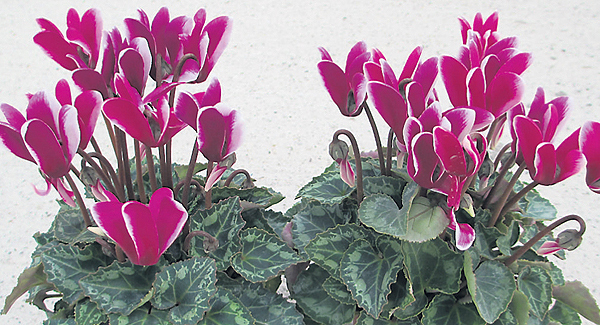
I refer to pot-grown cyclamen which need a degree of care unlike their cousins in the open garden. Despite being hardy to minus-2 degrees these ‘indoor’ cyclamen are now filling the benches in garden centres and thousands will be sold between now and the end-of-year festivities.
Sadly, the majority will be dead and gone by Christmas due to incorrect watering, excessive heat, and dramatic temperature variation. These special cyclamen (miracle strain) detest central heating and they dislike intensely any sudden dousing of water delivered from above.
They perform happiest in good light, in temperatures which almost no-one else indoors enjoy (about 45F) and abhor variations between the heat of evening and the cold after midnight in houses where the owners are increasingly forced to economise by the price of heating oil.
Miracle cyclamen demand a cool, steady temperature and a drink now and again from below and not around their fleshy corms. Stand them on a saucer into which you can pour enough water to keep the compost nicely damp and they’ll return your thoughtfulness by flowering for months.
If you strike the right balance you can keep these lovely plants in flower for weeks. I have had most success by moving them around and taking them out of heated reception rooms when humans are sitting around and demanding to be kept cosy.
Wonderfully, these plants give two seasons of interest, buds and flowers in autumn followed later by attractive marbled foliage. The longer you keep these the bigger the tuber becomes and the more the blooms and leaves multiply.
Tens of thousands will change hands in the next two months but few of them can hope for such a rate of survival. Because these are sold at under €2 many would consider them as disposable and more’s the pity. I can’t and won’t follow suit.
The garden is entering a time of austerity and there is no point in denying that winter is almost upon us. That cold, northerly wind returns yet again, and I would argue that it never really left us — even during our lamentable, sodden summer. It affects many of us strangely and none more-so than myself. There are nights now when I am woken by low rumbling as the wind rocks the substantial silver birch back and forth and the branches lash each other noisily in an orgy of self-flagellation. In the dark, the noise sounds tremendous. There may be leaves to sweep by morning and once again the gutters will need attention but now is not the time for worrying. Winter darkness swaddles the arrival of the morning light so I nestle back beneath the warm covers. There’ll be time for all these later.
If you haven’t lifted dahlias, cannas and other tender bulbs and tubers do so as soon as possible and store in a dry, cool place for winter. Even if winter is going to be mild, excess wet can be a killer and these summer wonders will succumb. They are also expensive to renew so it pays to save them. Allium and daffodil planting will have been completed by now and as we enter the month of November it’s the turn of tulips (also any Asiatic and Oriental lilies you can source). Place tulips deep in the ground or in pots (eight inches or more if possible) and they may not break up into four or more little pieces following flowering in April and May. Species tulips, tiny by comparison, can be planted more shallowly and these will return year after year unlike their larger cousins.
Tuck a few slug pellets (that’s all it takes) around your most precious border plants for slugs and snails will be active for most of winter. Place them under flat stones or pieces of broken tile held clear of the ground a little with the aid of a small stone or similar.
Following on from our dreadful summer, many will be familiar with the sunniest areas within their gardens. These ‘hot spots’ would be ideal for the establishment of the Nerines I wrote of recently along with other hot-climate bulbs such as crocus, anemones in red and blue, alliums, gladioli, lily-like crinums, and hardy Amaryllis Belladonna.
As the flower spikes of Red Hot Pokers fade, cut them off for they soon begin to look unsightly. Late varieties will naturally continue to bloom for a number of weeks yet, adding an important wash of colour to the late autumn garden. The general run of pokers may not be to your liking but if you want one with a distinctive, appealing colour, see can you source a variety called ‘Brimstone’ at your local garden centre. This stunning plant for September through to the end of November has keeled leaves with canary yellow and jade green blooms atop modest sized spikes (to 40’ or so) which need no support or staking.
now in a leaf rake! What I have in mind are those with a wide fan of black, plastic tines, and a lightweight handle with rubber grip. These are totally different from soil rakes or general garden rakes and believe you me, they’re worth their weight (which is very little!) in gold, for all the work they save the gardener during the months of September to December. Delightful to use and no bother to store, this leaf rake may only be used for a short period each year but I wouldn’t garden without one, ever.

CONNECT WITH US TODAY



Be the first to know the latest news and updates