New Homes: Government schemes hitting their stride
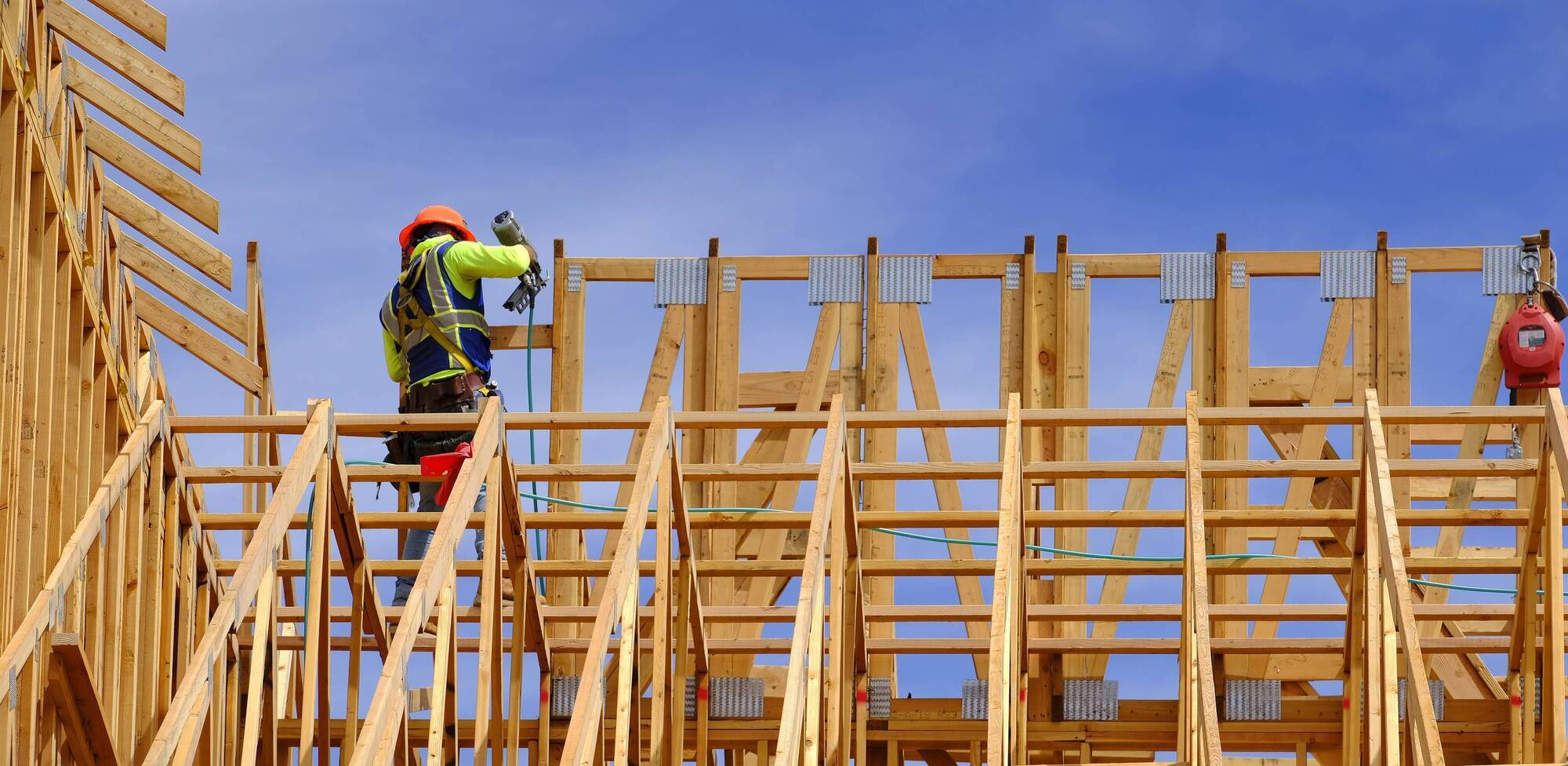
The First Home scheme is gaining momentum. The profile of buyer for many schemes is over 75% First Time Buyers, with over 25% of these using the First Homes Scheme.
There may be plenty of things wrong about the current housing situation in Ireland, but one area where the Government have not been found wanting is that of schemes to help and encourage the First Time Buyer (as well as others) to buy their own home.
While on the supply side of the equation, more time and effort will be required, the various schemes that the current administration has come up with are really making their presence felt.
With a combination of the First Homes Scheme and the Help-to-Buy Scheme, for example, someone looking to get their foot in the door of the property market is effectively starting off with a mortgage of perhaps 70% or less of the purchase price, instead of 85% or 90%.
“The Help-to-Buy Scheme remains the most utilised scheme,” says Elizabeth Hegarty, Associate Director of the Cork Residential section of Savills. “The majority of First Time Buyers are using this wherever it’s eligible. But we’ve also seen an increase in people taking up the First Home Scheme over the last few months.”
The Help-to-Buy Scheme has been in place for a number of years now. The First Home Scheme celebrated its first birthday, as it turned out, last July. As people become more and more familiar with this shared equity scheme, the take-up rate has been improving. It isn’t a new idea but a much needed one and for many First Time Buyers of the current generation, it’s something that they wouldn’t have seen before.
“The First Home scheme is gaining momentum,” says Paul Hannon, Director at Sherry Fitzgerald New Homes in Cork. “Buyer profile generally across our schemes are over 75% First Time Buyers, with approximately 25% of these using the First Homes Scheme.”
While there’s no doubting the impact that Government schemes have been having on the market and on purchasers’ ability to buy homes, Pat Davitt, CEO of the Institute of Professional Auctioneers and Valuers (IPAV) says that the biggest move that Government can now do is to remove VAT.
“We’ve been asking them to do this for years,” says Pat, “but they don’t want to do this – they can take off the VAT because, as we’ve been saying for so long, what is the point in charging young people VAT on houses when all they’re doing is borrowing money to pay back the tax? It doesn’t make any sense.”
There is, Pat says, the possibility that if the Government did reduce VAT, the temptation for builders to simply increase their prices and effectively reap the gains for themselves, might be too much, but a mechanism to avoid that scenario should be possible and therefore deliver cheaper homes for First Time Buyers.
Without the current grants and schemes for the First Time Buyer in Ireland, Pat says, new homes would simply be beyond the reach of a far greater number of people.
“We find that the grants are really needed – whether it’s in the buying of the house itself or in ensuring that the home is comfortably furnished.”
In the meantime, the supply side of the equation is showing tantalising signs of change for the better. While we’re still not at the levels of home production that we need, there was a significant increase in 2023 in the number of houses built.
The official target for 2023 was 29,000 and the 2024 target is to build 33,000 new homes – figures that are widely recognised as moderate at best and as falling some well short of what is actually needed.
“The latest figures I saw were over 32,000 houses built last year,” says Pat Davitt, CEO of the Instituted of Professional Auctioneers and Valuers (IPAV). “It’s getting well up to where the targets are, but the targets are moving. Obviously, nothing stands still because there are more and more people who want to buy houses, but at the same time, there are more and more people coming into the country and the nation is growing.
“So, the targets are going to have to be extended if there’s going to be a situation where there’s going to be enough housing, there’s nowhere near the amount of properties being built that people want to buy at the moment. There’s nothing being built at the lower end of the price scale for people who can afford to buy them. Depending on where you go in the country, a 3-bedroom semi is between €330,000 and €400,000.”
“The ongoing review of the the National Planning Framework (NPF) and Housing Needs Demand Assessment (HNDA) is critically important,” says Paul Hannon, Sherry FitzGerald. “We have to plan for the decades ahead.” Supply targets, he says, should be closer to 50,000 homes per year.
“It has been a very positive start to the year, though, with First Time Buyers the most active sector in the market. Sherry Fitzgerald New Homes have had over 100 sales in the year to date across a range of schemes … with Lakeview in Midleton to launch this week, with approximately 30 homes.”
Clear and sufficient targets, he says, are the most important element. After that, the job of building up the right skills and construction capacity in the construction sector can follow from that.
“The supply has increased with new developments coming on stream across Cork city and county,” says Elizabeth Hegarty, Associate Director at Savills. “There have also been an increased number of affordable homes schemes come to market through builders and in conjunction with Cork City Council and Cork County Council.
“At the same time, both output and delivery remain challenges in the new homes market. There’s a shortage of skills within the construction industry and this limits the number of units that can be delivered and sold each year.”
The juxtaposition of the skills needed to build homes, the availability of materials and the need for housing are all part of a moving machine that has been semi-dormant for a number of years. Just who is at fault for allowing that to happen is largely irrelevant at this stage. The important point is that this great national home-building machine is slowly but surely starting to function.
Going from 32,000 houses per year to 40,000 or 50,000 units seems like a very tall order – particularly when the increase from 2022 was only around 4,000 extra homes. However, it’s clearly too early to predict how well 2024 will go. There is certainly a will to build homes in Government and the market itself is in a positive place, considering the big increases in the number of mortgage approvals in 2023 over previous years.
“There’s a better choice for buyers now,” says Paul Hannon, “with several schemes coming online in 2024, but competition to secure a new home remains strong.”
The issue of lack of supply of apartments remains a live one, with little progress having been made in the last year with regard to the improving the supply of smaller homes in apartment blocks to a public keen to get a roof over their head.
The Government ‘Tosaigh’ initiative was designed to help solve that particular problem. The peculiar situation with the building of apartments is that for a variety of reasons (most of them relating to the added costs associated with improvements and safeguards around apartment block construction), the cost of building apartments to sell had become prohibitive. First announced in late 2022, ‘Project Tosaigh’ was to deliver 5,000 new homes by unlocking land in private ownership, where full planning permission was granted but where delivery had stalled due to mainly financial constraints. In practice, this covered a lot of apartment block projects.
“The good thing about apartments at one stage was that even if they were small boxes of units that were being supplied, at least people had somewhere to live,” says Pat Davitt, CEO of IPAV. “They were cheaper than anything else to build. Now, over the past number of years, they’re not the cheap solution any more. They’re the most expensive housing unit to build. It’s probably more expensive to buy a new 2-bedroom apartment than it is to buy a three-bedroom semi-detached home… Now, they’re only feasible in densely-populated areas in a city.”
The issue of increasing the loan-to-salary ratio for the First Time Buyer is another area of contention. At present, that ratio is four-to-one, meaning that a First Time Buyer can borrow a sum of money up to four times the amount of their annual gross salary.
This has increased in recent years from the previous figure of 3.5 times the annual gross salary, but many in the industry believe that the figure should be higher; that while a certain degree of caution is understandable in the home loan marketplace, there isn’t any excuse for the limiting what one can pay back in mortgage repayments in an era when the average monthly rental in Ireland has surpassed €1,300/month.
“We eventually got the Central Bank to change from 3.5 times a person’s gross salary to 4 times their salary,” says Pat Davitt, CEO of the IPAV. “But they should have changed it to 4.5 times. At that time when we were looking for them to change, interest rates were very low and many people could have got mortgages to buy properties if the Central Bank had changed their rules sooner.
“It possibly would have made properties more expensive but people would have got into their properties at low rates and many would possibly have fixed their rates for 20 years. All the other Government schemes and county councils work on a 4.5x times rule, so the Central Bank needs to allow people to borrow that extra money. People can well afford to pay it back because they’re already showing that in the rents they’re paying. So I don’t know what the problem is but obviously, the Central Bank see a problem.”
The good news, however, is that for the First Time Buyer, there have never been as many supports and help mechanisms in the history of the State. Prices remain high and supply remains low but the supply is increasing and the Government is showing concrete signs (what other signs could they possible show?) of keeping the foot on the pedal in that regard. It’s a safe bet to assume that even more houses will be built in 2024 compared to 2023. The only unknown is just how many.

CONNECT WITH US TODAY



Be the first to know the latest news and updates