Irish Examiner view: No, minister — Cork's traffic gridlock is even worse than New York's
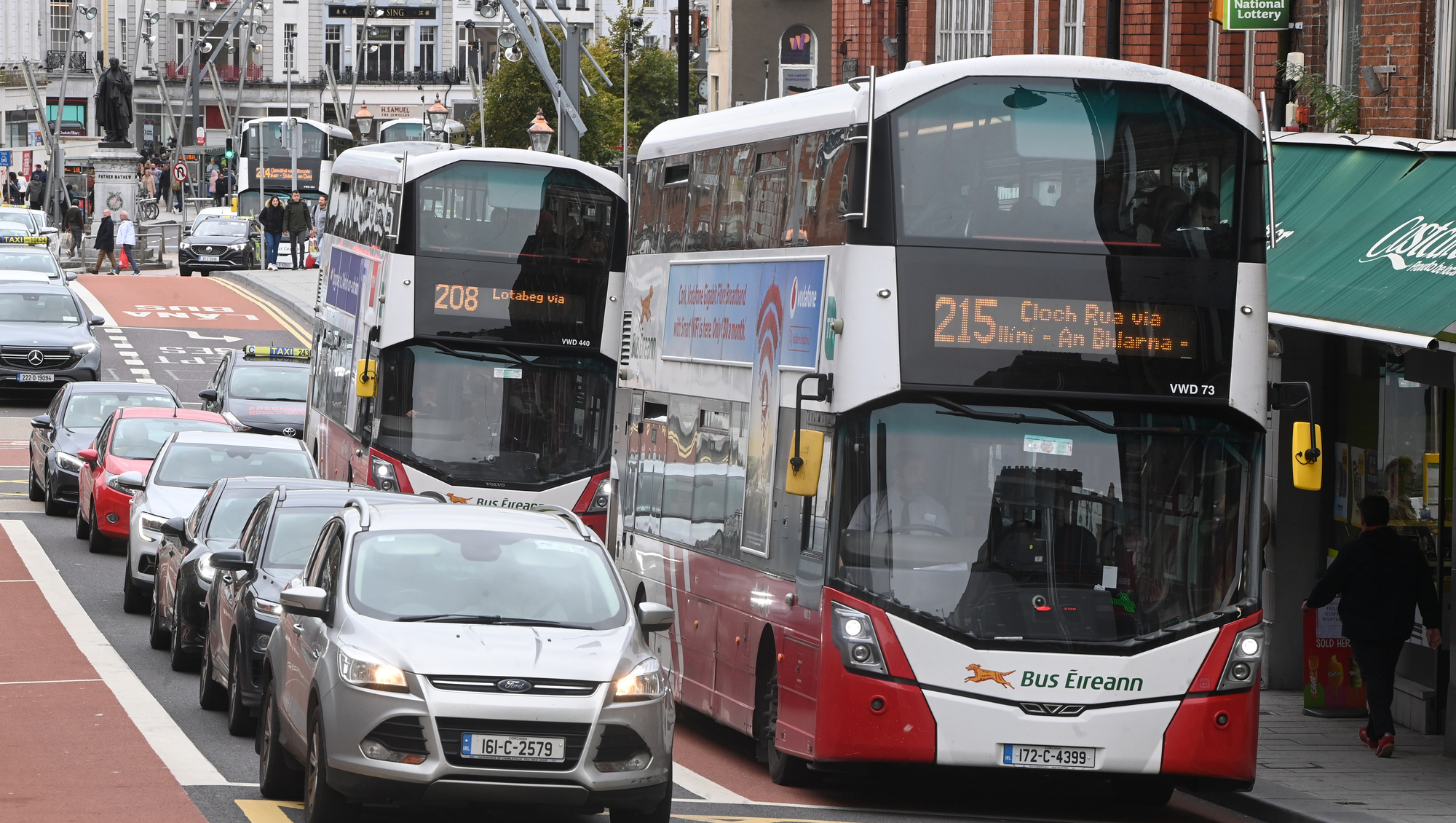
'What is worse again is the Government’s complete lack of urgency in tackling Cork’s traffic problems. Plans are ignored and promises vanish.' File picture: Larry Cummins
I have driven in downtown New York, and can confirm that Cork is worse.
What is worse again is the Government’s complete lack of urgency in tackling Cork’s traffic problems. Plans are ignored and promises vanish.
Since the last election, the long-awaited BusConnects plan has been effectively shelved, with the Government’s new sustainable mobility policy action plan committing only to starting construction on one of the 11 promised corridors by 2030.
That is after the next election, which means that this Government has not committed to delivering a single metre of improved bus or cycle infrastructure in Cork over its entire term.
Not only that, funding for progressing active travel and greenways has dried to a trickle, meaning new projects are being delivered by the city council at a snail’s pace, while the Taoiseach equivocates on their benefits.
As such, those of us who would much rather walk or cycle are forced to drive, worsening congestion for everyone else.
If the Government can’t or won’t deliver the improvements we need to move beyond Cork’s endless, miserable congestion, it is simply not fit to govern. Mr Buttimer and his colleagues need to deliver for Cork, fast, or should be replaced by others who will.
The GAA congress is over but the issue of Allianz sponsorship will not go away despite the GAA leadership attempts to traduce the GAA members who protested outside and inside the Croke Park Congress.
Though a petition signed by 800 current and former players had been submitted, and 10 counties had submitted motions asking for an end to the sponsorship, the GAA leadership, while prating about democracy, refused to enable discussion among the many members who oppose Allianz sponsorship.
While over 20,000 children have been slaughtered in Gaza, enabled by Israeli war bonds, Cumann Na mBunscol games must take place under the Allianz logo. Though UN special rapporteur Francesca Albanese had clearly identified the Allianz links to the financing of this slaughter, the GAA rushed to accept the recommendation of a so-called ethics committee.
The fact that none of the delegates from the 10 counties submitting motions offered to speak on their county motion is more a reflection on these delegates and how they are appointed than any support for the leadership position.
Doubts were cast on the GAA credentials of protestors, and Jarlath Burns urged 'people who might have been connected with the GAA' to condemn the protesters.
They had, according to Jarlath, entered “our property”.
“Our property”?
As a GAA member all my life, who protested and who played in Croke Park before Jarlath Burns or Tom Ryan were born, with no All-Ireland medal — though I played in the 1971 football final — I will not condemn the protest and I am proud to have carried a banner stating ‘Allianz Blood Money out of Our GAA’.
None of the riveting speeches by Colm McAlarney, David Hickey, or Colm O’Rourke were reported in Monday’s media. The protest demonstrates again the truth in the poem by the late, great, Galway poet Kevin Higgins who wondered why “a history of those who made their point politely/ and then went home/ has never been written?”
International law has evolved a lot since the 17th century, when sovereign nation states became the agreed structure of Europe.
The UN charter agreed after the Second World War aimed to “save succeeding generations from the scourge of war”.
While some European leaders still mention it in their social media posts and it gets a tick-box mention in many official statements, clearly international law is today in critical condition.
Many think it hopeless, pointless, and even naive to try and save it. But international law is not something abstract, not a creed for pacifists, nor old-fashioned liberal legalese. It was chiseled into history, decade after decade, by people hardened and scarred from the cruelty of violent nationalism.
It is meant to restrain the ‘strong man’ leader. As the legal framework for two great peace projects, the European Union and the Good Friday Agreement, it still restrains a lot of strong men.
International law is the invisible glue binding nations together, to peacefully resolve their disputes, without resorting to the bombing of a girls’ primary school.
Your lead story on Friday, March 6, on the National Association of Principals and Deputy Principals, comments that harms being experienced by school pupils is one that will resonate not only with teachers but also with health professionals.
The rise in mental health problems, myopia, obesity, and a vast array of other health issues that can be linked to the increased use of smartphones and social media threatens to overwhelm society.
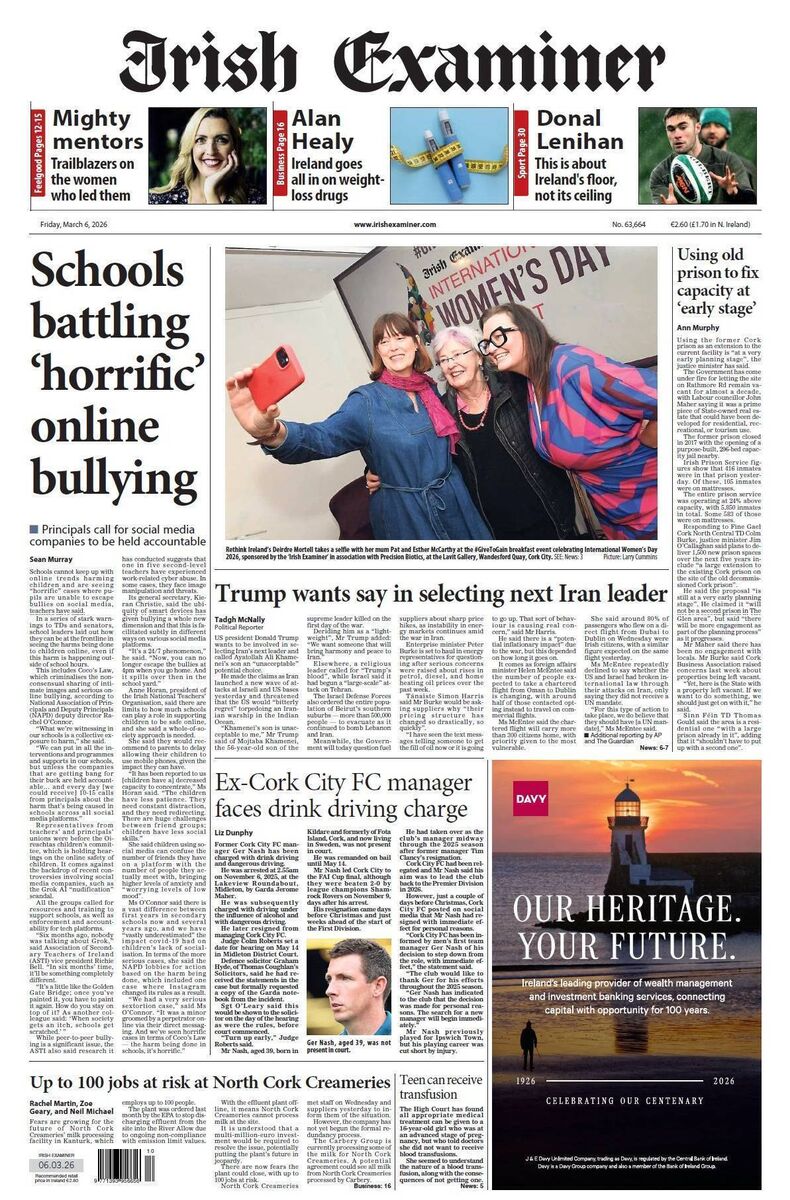
However, it is quite sad to see that this story was paired with a picture of a group of people taking a picture of themselves.
‘Selfie’ culture and horrific online abuse are not independent entities but feed off each other. If we want to beat one we can only do it by inducing a cultural shift. Similar to road safety or smoking policy where small changes can have large effects.
The message to children should be that not everything needs to be photoed or shared. To quote Hillary Clinton: “You can’t keep a snake in your garden and hope it will only bite your neighbours.”
As someone who has provided short-term accommodation in Ireland for over 16 years, I feel compelled to respond to the ongoing debate around short-term rentals and their alleged role in the housing crisis.
Much of the current commentary overlooks an important fact: The requirement for planning permission for certain short-term letting activity was introduced in 2019 as part of regulations linked to rent pressure zones.
Under these rules, property owners in rent pressure zones must seek planning permission if they wish to let an entire property on a short-term basis for more than 90 days a year, unless it is their principal private residence.
Local authorities were given the powers to enforce these rules several years ago. However, enforcement has been inconsistent and limited. While councils have investigated suspected breaches, the number of formal planning applications or enforcement actions has remained very small relative to the scale of the sector.
Over the years, rent pressure zone designations expanded rapidly across the country, and in 2025 the entire State was designated as an rent pressure zone. This effectively changed the regulatory landscape overnight for many small accommodation providers, including those in rural areas where tourism is a critical part of the local economy.
What is often missing from the discussion is the human dimension of short-term accommodation provision. Many operators are not large corporations but individuals or families who provided accommodation to tourists for decades.
A significant proportion are women who rely on this activity to supplement their income, particularly in rural communities where employment opportunities may be limited.
Ireland’s tourism sector depends heavily on this type of accommodation, especially outside major urban centres where hotel capacity is limited. Removing or restricting these options without careful consideration could have unintended consequences for rural economies.
Of course, housing supply is a serious national issue and deserves urgent attention.
But attributing the crisis primarily to short-term accommodation providers risks oversimplifying a far more complex problem involving planning, supply, infrastructure, and long-term policy decisions.
My hope is that policy responses will strike a fair balance — addressing housing needs while also recognising the legitimate role that small-scale short-term accommodation providers play in supporting tourism, local economies, and family livelihoods.
Read More