Letters to the Editor: Water is a sacred gift denied to many
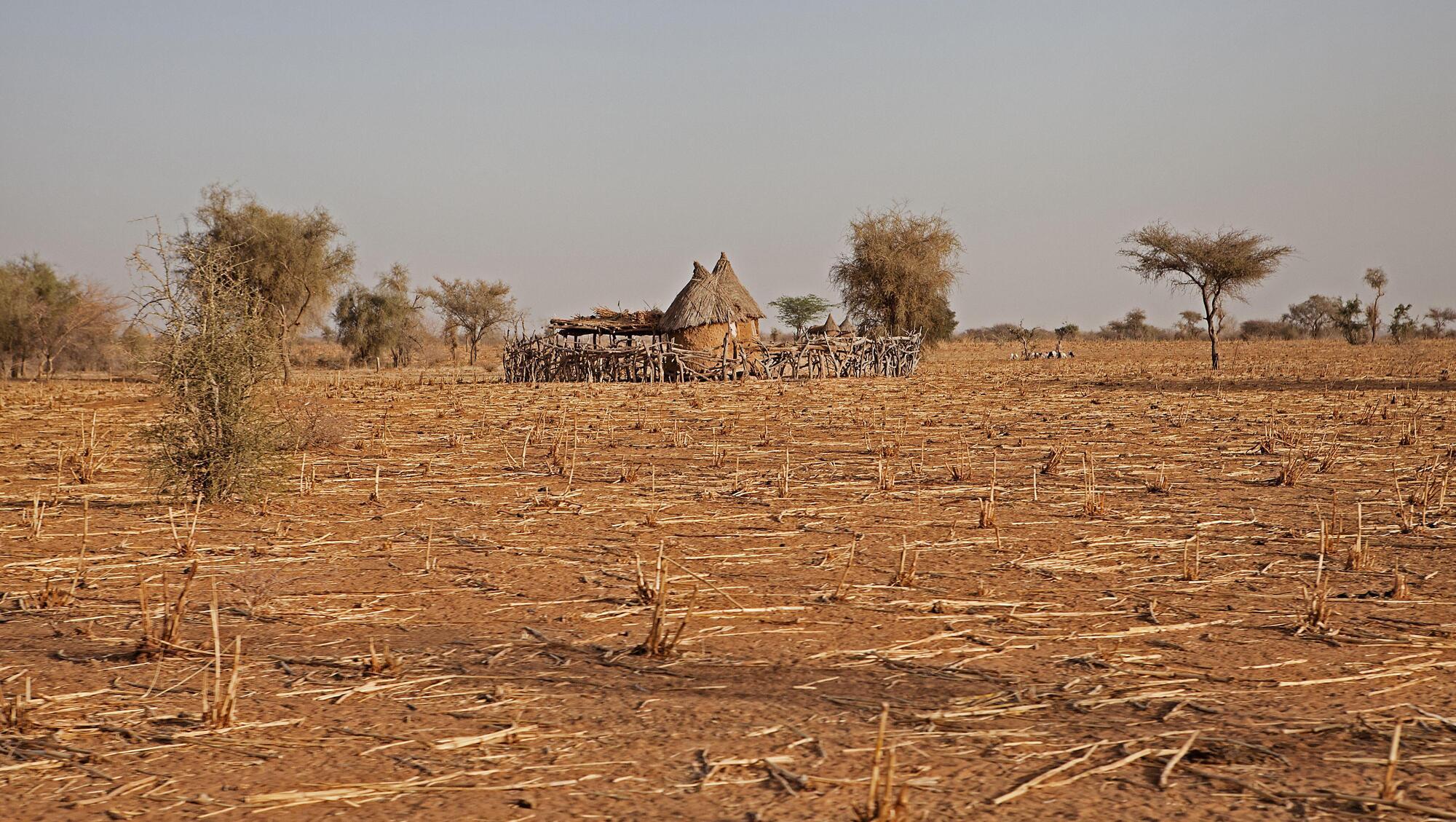
The lack of water in parts of Africa, sometimes due to the failure of the normal 'rainy season', steals strength, dignity, and hope. Stock picture
Ireland is an island shaped by water. We are surrounded by it, softened by it, and sustained by it. The sea presses in on all sides, shaping our weather, our history, our language, and our imagination.
Rain falls generously on our fields. Rivers carve their way through towns and memory. Water is so woven into Irish life that we rarely stop to notice it, let alone name it as the miracle it truly is.
And yet, every time I enter the sea, I am reminded.
I swim regularly in Irish waters, sometimes in calm, silvery stillness, sometimes in wild, breath-stealing cold and each time feels like a quiet act of prayer. As the water closes around me, I become acutely aware that I am being held by something ancient and life-giving.
Each breath between strokes feels borrowed. Each moment afloat feels undeserved and precious.
It makes me wonder how easily we forget what water really is. In Ireland, we turn on taps without thinking. We grumble about rain.
We see water as an inconvenience or background noise, rarely as the sacred gift upon which all life depends. Yet that forgetfulness has been gently undone for me through my work in drought-affected regions of Africa. There, water is not a metaphor. It is survival.
I have walked alongside mothers carrying empty containers for miles under a relentless sun. I have held children whose bodies and futures have been permanently altered, not by war or disease, but by thirst. I have watched crops wither, animals die, and communities unravel as drought tightens its grip.
In those places, the absence of water is not dramatic, it is slow, grinding, and devastating. It steals strength, dignity, and hope, day by day.
When I swim in the sea at home, I carry those faces with me. Each stroke reminds me that what holds me afloat here is absent elsewhere. Each breath reminds me that what refreshes me daily is something millions pray desperately for.
The cold, life-giving waters that surround our island stand in painful contrast to the cracked earth and empty wells of communities living on the edge of famine.
And yet, the sea also teaches me hope. It teaches me that we are deeply connected, tide to tide, shore to shore, human to human. It teaches me that gratitude, if it is genuine, must grow into responsibility. And it teaches me that compassion, like water, must be allowed to flow outward if it is to remain alive. Ireland knows what it means to suffer scarcity. Our own history is marked by hunger, migration, and loss. We know, in our bones, what it is to depend on the land and the mercy of the elements. Perhaps that memory, buried though it may be, can still soften our hearts.
We cannot solve global drought on our own. But we can refuse indifference. We can allow the ordinary miracles of our lives, clean water, full glasses, flowing taps, to awaken care for those who live without them. We can choose to let awareness disturb us just enough to change us.
If any reader feels moved to learn more, to speak up, or to quietly support the work I am involved in with the Irish charity Self Help Africa that brings clean water, nourishment, and dignity to families living with drought and famine, I would be deeply grateful. Even the smallest act, offered with love, can become a lifeline.
The next time you hear rain on the roof, walk by the sea, or hold a cold glass of water in your hands, I invite you to pause.
Remember those for whom water is not a pleasure, but a daily prayer. If that pause leads to compassion in action, then the water that surrounds our island will have done what it has always done best: give life.
I refer to the useful description by Bobby Carty (Letters To The Editor, January 17) of techniques to reduce the risk of serious injury during falls. I am an octogenarian who likes walking, but had not previously heard of such techniques. I hope that some organisation (the HSE, perhaps?) will take up his excellent suggestion to set up, in a safe controlled environment, using thick floor mats etc, a correct fall method programme for older people.
I offer another suggestion to help minimise injury risk during falls. Some years ago during a hill walk, the leader of the walk told me, in no uncertain terms, to take my hands out of my pockets. He explained that a few weeks previously he had to organise the evacuation from the hill of a hands-in-pockets walker who had been seriously injured during a fall.
His hands had not completely exited his pockets by the time his head contacted the ground. The same precaution, I think, might be taken whether one is walking on the hills or on any other rough or uneven ground. In cold conditions, gloves would be a safer alternative to pockets for warming hands.
Fintan Lane (Letters, January 19) objects to calls for the EU to organise a standing army and argues that ‘militarism leads to the intolerable horror of war and this should not be normalised’.
Unfortunately, the history of Europe is one of almost continuous war and the general peace experienced since the Second World War is not the norm.
This peace, which has been recklessly taken for granted by those who would like to see the end of the EU, has already been breached by Putin and a European country now faces the previously unimaginable prospect of an attack from the US.
What choice does Europe have now other than to organise the capacity to defend ourselves? Does Fintan seriously think remaining defenceless will somehow keep us safe? We should of course continue to argue loudly for peace but we have to prepare for the fact that war might come regardless.
In an ideal world there would be no military superpowers, no small-minded bullies like Trump and Putin, and we would plough all our human energy and vast resources into bettering the lives of every child on the planet. But that is not the world we live in.
A new study has found that grief following the death of a beloved pet can be as intense as the loss of a family member.
For many people, pets are truly part of the family, and for some they are their only family or companion, often providing a reason to get up each morning. Losing them can be a devastating, confusing and lonely experience.
Pet charity Blue Cross is reminding people that its pet loss support team is available to help 365 days a year, because no one should have to face the loss of a pet alone.
Visit bluecross.org.uk/pls.
I was dumbfounded to read in an article by Jess Casey (Irish Examiner January 20) of the new “greyhound care’ course being launched by the Technological University of Shannon.
It is important to set the record straight. A certificate from a course funded by the greyhound industry will not help the 200 greyhounds who died on tracks in 2024, the worst since records began and a 50% jump on the previous year. It will not help the ‘retired’ greyhounds who mysteriously turn up on tracks in Pakistan and India, running for their lives in the blistering heat. It will not help the thousands of dogs who ‘disappear’ every year simply because they could not run fast enough.
It will not help the greyhounds who undergo the barbaric practice of surgical artificial insemination, one which is banned for all other breeds. It will not sway the 70%+ of the population who are opposed to this cruelty and who will never set foot in a greyhound track.
It will help those who profit from this industry and for whom the significant prize money is tax free. It will help politicians who have shares or who are directors of greyhound stadiums but who can still vote in the Dáil for State funding of €20m a year despite this being a clear conflict of interest.
So what’s next for the Technological University of Shannon? A course in puppy farming organised by puppy farmers?
How disheartening to know that taxpayers’ money is being spent in an attempt at ‘greywashing’ this toxic industry. It won’t work.
The statement by the German chancellor that “Russia is a European country”, referring to it as “our largest European neighbour” must be welcomed by peace-loving people worldwide. At the new year reception of the chambers of commerce in Halle earlier this month, Friedrich Merz said it is essential to find a compromise with Russia.
The chancellor said that, if we can find a balance with Russia, “we will have passed another test and then we can look to the future with great confidence beyond the year 2026”.
We will then have succeeded in finding a balance with Russia by communication and negotiation rather than by the EU’s Rearm Europe plan of spending €800bn on defence.
In following Mr Merz’s wisdom, we could thus avoid war and spend all of this money, instead, on the health and welfare of the people of Europe. We urge our Government and all of the governments of Europe to support Mr Merz in this honourable aim.