Letters to the Editor: Irish political parties must condemn call for EU army
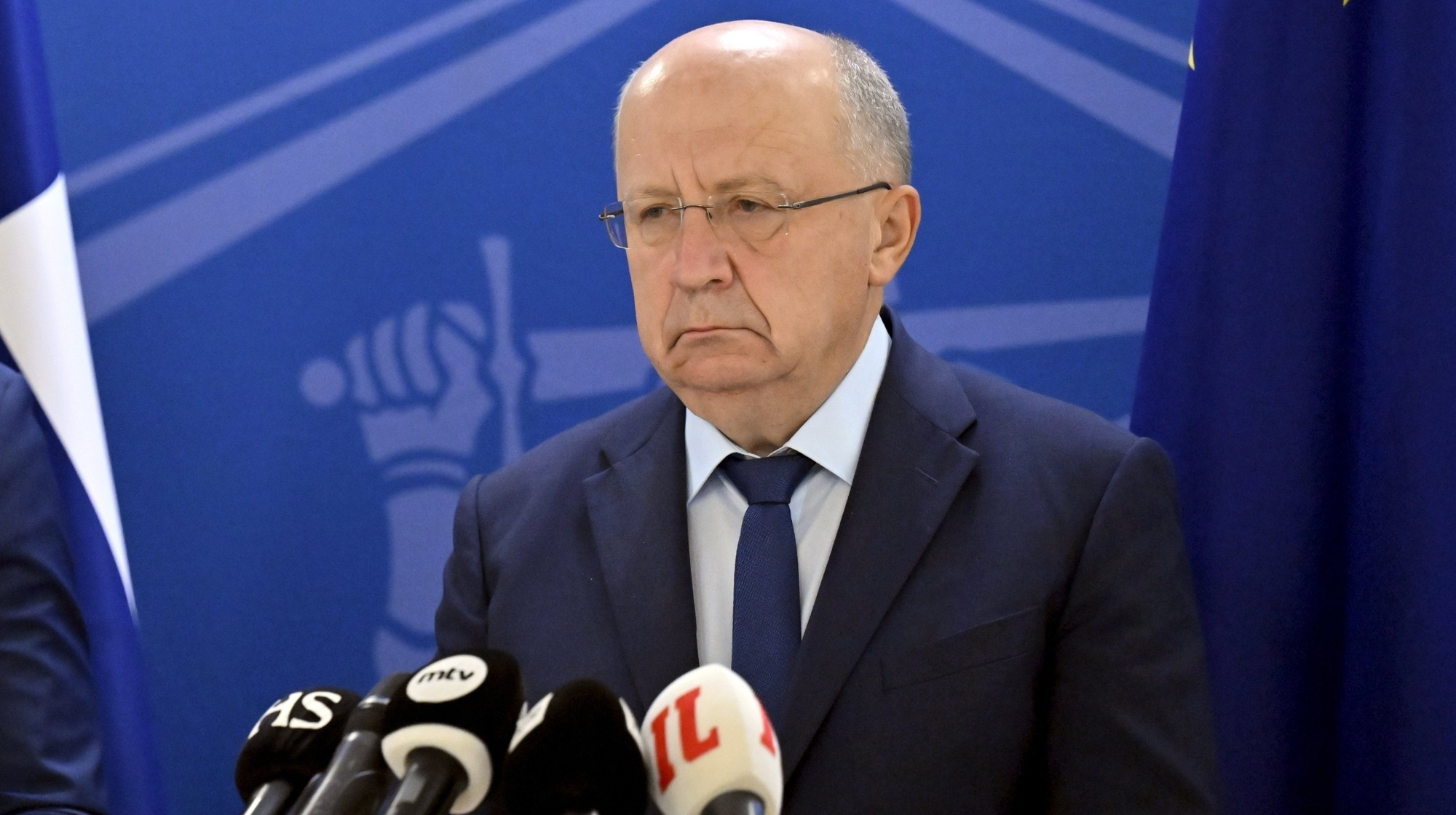
In the wake of Donald Trump's threats over Greenland, a Danish territory, EU Commissioner for defence and space Andrius Kubilius said EU states were obliged to assist if another member state faced military aggression. Picture: Markku Ulander /Lehtikuva/AP
European Union defence and space commissioner Andrius Kubilius has warned that the EU is obliged to come to Denmark’s assistance if it is faced with military aggression.
Mr Kubilius remarked that “definitely there is such an obligation [on] member states to come for mutual assistance if another member state is facing military aggression”.

Flying a kite in Sweden last Sunday, he also called for the creation of a 100,000-strong European standing military force — in effect, a federal army.
The development of an EU military apparatus has been quietly under way for some time and, strangely, the Government here has never considered Irish involvement to be in contradiction to the State’s traditional anti-war policy of military neutrality.
Of course, up to now, one assumption stoking European militarisation was that all threats would come from the east, and the idea that the US would seize EU territory seemingly never occurred to those who lean towards the bloc becoming a military superpower. However, militarism and imperialism can have unexpected outcomes.
So, what now?
Is the Irish State — as part of the EU — prepared for armed conflict with the US?
While unlikely, this is no longer a bizarre prospect.
Are Fianna Fáil and Fine Gael ready to sign up Ireland to a “coalition of the willing” in support of Denmark and Greenland?
It was easy to talk valiantly about the need for increased militarisation when the wars were likely to be on the other side of Europe. But what if war comes to our shores?
In a world beset by imperialist states led by dangerous authoritarians such as Vladimir Putin and Donald Trump, Ireland should be actively using its neutrality to argue for an end to militarism.
The precursor to the EU was supposedly planned as a peace project after the Second World War and no one in this country ever voted for it to become a military superpower, something we certainly need less of on this planet and not more.
Mr Kubilius’s call for a massive European standing army should be condemned by all political parties on this island.
Moreover, there must be a firm rejection of jingoistic rhetoric and toxic braggadocio.
Militarism leads to the intolerable horror of war and this should not be normalised.
The call cry of all racists, “go back to your own country”, is now becoming official policy with the Trump US Department of Homeland Security’s message to Somali people about cancelling their temporary protection status.
If this approach was used universally, then the US and Australia would be in a much better state as the First Nations people lived with the land rather than misusing it and destroying the environment.
Judge people by their hearts and brains, not by external factors such as colour or appearance.
In uncomplicated terms, ‘cyber’ warfare is based on the simple premise that very little is required to induce doubt in people’s minds about matters of national welfare and security. Some while ago, the Health Service Executive was hacked and an unknown quantity of service users’ details were, allegedly, compromised.
In fact, it does not matter whether personal details were held to monetary ransom or not. What matters is that vulnerable citizens, either well or unhealthy, believe that their confidentiality may have been breached.
This has the knock-on effect of reducing the public’s willingness to reveal personal details for fear that this information will no longer be private.
More recently, drone activity in the Irish Sea almost coincided with the arrival of president Volodymyr Zelenskyy of Ukraine, disrupting Dublin Airport, ultimately being foiled by the vigilance of our naval service.
Shannon Airport, a transit point for US troops, leaps off the page as a potential target for intentional interference.
As an island, we are dependant on reliable air and sea transport for domestic, commercial, and public service travel and utility. A shadow cast over Ireland’s access/egress routes would be very damaging to our reputation as ‘a place to do business/visit’.
Financial institutions have been the target of cyberspace interference but are understandably reluctant to admit its extent. It would be very damaging if account holders were either suspicious that their financial information was unsafe and open to fraud or, more easily achieved, unable to access their funds through ATMs or branches because of basic systemic weaknesses.
This is how ‘grey’ or hybrid operations work, undermining public confidence in state institutions and national organisations, subverting faith in the resilience of political and public services, and hobbling the State’s ability to defend itself.
There are very few accidents or coincidences in the prosecution of such a campaign.
Ireland’s presidency of the EU in the second half of the year puts all these hostile activities centre stage and makes them more likely to occur.
As I catch up on the news, having been away travelling over the holidays, I couldn’t help but notice the headline ‘Gardaí condemn drivers choosing to drink and drive’ (Irish Examiner, January 8).
During the festive season, I witnessed my husband being breathalysed during what I could only call ‘operation useless’, as the drivers in front and behind were not breathalysed. I hate to cast aspersions but this kind of treatment is quite regular for us and I have boiled it down to the fact that both I and my husband have dreadlocks.
As I read through all the statistics in the article, I couldn’t help but notice that the garda operation made absolutely no difference to the hazardous driving that continues to take place on our roads.
May I also address the matter that there appears to be an increase in medical practitioners asking people to take tests at home, such as purchasing devices that can read our blood pressure, for example.
Additional to this, gardaí are now requesting that we police ourselves by ratting each other out.
I can’t help but wonder what are our taxes being used for and how long we are going to stand for this lack of genuine leadership and change in Ireland.
Diageo’s announcement of a 7c increase in the price of a pint of Guinness from February 2 is enough to drive anyone to drink.
This is the fifth increase in three years and will leave a sour taste in the mouths of regular drinkers. It will add between 40c and 70c to the price of a pint of the black stuff and very likely push the cost of a pint over €6 in the country and beyond €7 in Dublin, so €20 will hardly cover a round of drinks for a man and his two mates. Will the regulars grin and bear the increase or reduce their consumption of the ebony nectar?
As expected, the Vintners’ Federation of Ireland (VFI) berated the decision, warning that many pubs will have little choice but to pass the increase on to customers. The VFI warned that repeated supplier price hikes by Diageo are contributing to the closure of rural pubs, which are at the heart of local communities. The VHI is correct in pointing out that the local pub is the centre of social interaction in most communities.
Indeed, the latest hike reminds me of one of the many stories my late father told about the customers of the family pub. The story grew legs with each telling but was all the better for it... Danny arrived at the pub every evening. He drank three pints of Guinness. He enjoyed the company of his fellow drinkers discussing football, greyhounds, horse racing, and the topics of the day. He then walked home, where he lived alone.
There came a time when the price of a pint of plain was increased. Dad reluctantly broke the bad news to his customers, placing the blame squarely at the door of the Guinness brewery.
Transferring the blame to the powers-that-be above in Dublin was an essential exercise in damage limitation. Despite the bad news, the porter continued to flow.
Making his way to Danny, who was contentedly playing cards by the fire, Dad asked: “Will you still follow the pint at the new price?”
“My dear man,” replied Danny, “I’ll follow it to Hell. Drinking the juice of the barley in such pleasant company is priceless.”
Diageo is well aware that most of its regular drinkers will do likewise.