Letters to the editor: Counting the environmental costs of Sitka spruce
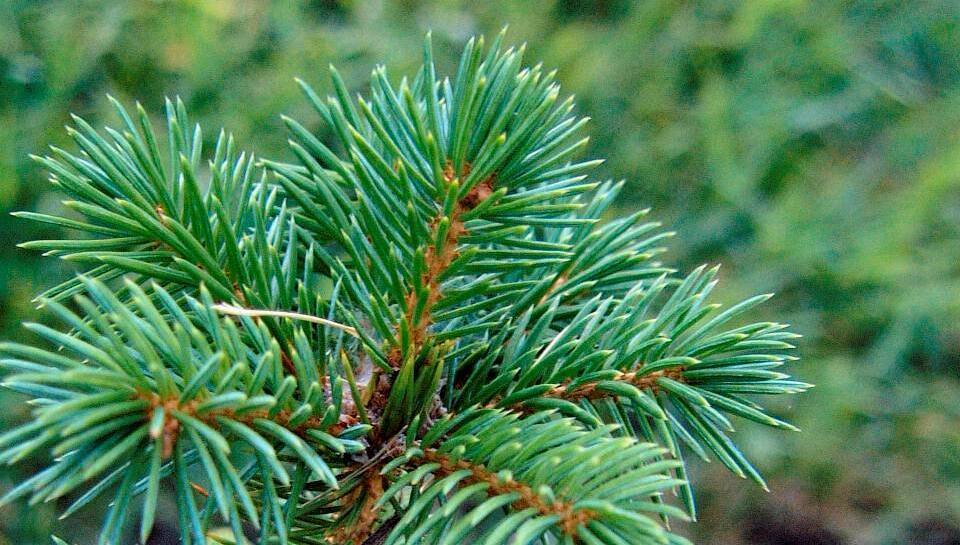
'Sitka spruce has been planted extensively on peatlands, floodplains, and wet ground. These places were not empty or useless. They absorbed water, stored carbon, and supported wildlife.' Stock picture
I have kept bees for over 60 years, and if bees teach you anything, it is to notice small changes before they become big problems.
In recent years, storms have made those problems hard to ignore. Roads blocked by fallen trees. Power lines down. Homes without electricity for weeks. More frequent flooding.
Many of these failures have one thing in common — dense Sitka spruce plantations planted where forests were never meant to be in land that cannot hold them. Sitka spruce has been planted extensively on peatlands, floodplains, and wet ground. These places were not empty or useless. They absorbed water, stored carbon, and supported wildlife.
To plant Sitka, peatlands must be drained. Those drains carry water and sediment into rivers. Floodplains lose their ability to spread water safely. When heavy rain comes, flooding follows — devastating agricultural land, homes, and wildlife.
Sediment from plantation drains smothers spawning gravels. Fish eggs fail. Dense shade strips rivers of insects. Without insects, fish decline. Without fish, birds disappear. Without insects, humans disappear.
As a beekeeper, I see another loss. Sitka provides no forage. Where plantations replace hedges and wet ground, bees lose food for much of the year.
Sitka planted on wet or shallow soils is vulnerable to storm damage. When storms arrive, trees fall across roads and onto electricity lines. Communities and power are cut off. Older people, farms, and families pay the price.
A growing number of Sitka plantations are corporate owned, others local. The impact is the same. Grants and incentives make Sitka attractive, but the costs are carried by neighbours and communities.
This is not about blame. It is about responsibility. A better choice is native woodland; designed for place, it offers resilience. Trees that belong; rivers that breathe; bees that survive, and communities that thrive. We can still choose that future.
Your editorial — ‘A concerning lack of action’ (Irish Examiner, January 9) — in relation to a National Security Strategy highlights once again the continuing failure by government to address our defence and security deficiencies.
With hybrid Russian attacks taking place across Europe and with some European defence chiefs now warning about a conflict with Russia in the not to distant future, you would rightly expect government action in order to address our defence and security crisis. With the Defence Forces unable to fulfil their primary role, defence of the State, due to decades of neglect and underinvestment, and an absence of political will, the crisis will continue.
Defending the State, its citizens, and infrastructure is a primary duty of government. What we have witnessed so far could be best described as a dereliction of that duty.
Why is it so difficult to join the dots between antisemitic attacks like the recent Australian one and the ongoing situation in Gaza and the West Bank? As long as Benjamin Netanyahu and his government pursue their heartless persecution of the Palestinian people, antisemitism will continue to raise its ugly head globally.
The people of Gaza are now at rock-bottom. Their water-supply turned off from Israel; displaced time and again; homes, schools and hospitals destroyed; pulling their dead relatives from the rubble; thousands now maimed and crippled; eking out an existence in flimsy tents pitched in flooded refugee camps as winter sets in with freezing temperatures and stormy wet weather, they watch their children wither and die of malnutrition and hypothermia. A whole population traumatised for life. Resentment beyond words.
We are all living witnesses to this human catastrophe: a genocide conducted in many ways and stages. First the relentless and indiscriminate bombardment of homes, hospitals, places of worship, and even so-called “safe” refugee camps. Then the orchestrated famine while food-supplies rotted at the border. And now the disgraceful embargo on foreign aid-groups providing critical life-saving assistance. No fewer than 37 international governmental organisations are being banned from helping the Palestinians, including Action Aid, Médecins Sans Frontières, Oxfam, and World Vision International. The pretext? According to the Israeli diaspora foreign ministry, the groups are not providing Israel with “complete and verifiable information regarding their employees”.
Considering that hundreds of aid-workers have been targeted and killed by the IDF over the past two years, who could blame the aid-groups for trying to protect their staff, operating in one of the most dangerous zones on earth?
Without reservation, I condemn the violent Bondi Beach attack with its loss of 15 Jewish lives and the injuring of so many more. Likewise for the brutal October 7 attack on Israel in 2023. But equally I condemn the massacre of more than 71,000 people in Gaza since that date and the ongoing daily killings (more than 400 since the ceasefire in October). Until Israel halts its systematic genocide of the Palestinian people and recognises their right to live in their own state in Palestine, similar attacks — sad to say — will continue against innocent Jewish people elsewhere.
How ironic that Netanyahu and his ministers — the very people who most vociferously decry hatred of Jews — are the very ones furiously fuelling the flames of antisemitism all over the world.
Might it be that the victim-complex suits the agenda?
The current defence posture in the four other neutral EU countries clearly establishes that only two — Malta and Ireland — shamefully fail to take their own self-defence seriously and are truly strategic freeloaders.
Austria which, unlike Ireland, has no ocean to patrol (our exclusive economic zone is 343,750sq miles), still has a supersonic fighter squadron of 15 Eurofighter Typhoons plus 12 subsonic Italian Leonardo M-346 light fighters/advanced trainers, while Croatia — with only 3.84m people and only 21,858sq miles — has 12 French-built supersonic Dassault Rafale fighters.
Pro rata for population, that would mean Ireland should have nine or 17 supersonic fighters, while the cost is very affordable as the total cost to Croatia at €999m for 12 fighters, is only €2.775m per aircraft per year, given the
30-year lifespan of a modern fighter. The Swedish Grippen is even cheaper.
There is no excuse for continuing to dodge our national and European responsibility. Time for all parties in Ireland to finally grasp the nettle and do what we did during the Second World War — regain self-respect and take our own small, vital but proportionate, share in protecting our mutual safety as both full and active participants in EU and also as close neighbours of the UK.
We have just learnt that Ireland will miss our binding climate targets by half . This comes as no surprise yet we could be leading the way. Emissions from agriculture account for 37.7% of total greenhouse gas emissions — down by just 1.7% in 2024 (relative to 2023) — according to the Climate Advisory Council. Agriculture is the elephant in the room. To put it in context, transport, energy industries, and the residential sector are the next largest contributors at 21.5%, 14.3%, and 9% respectively.
In Ireland cows outnumber people by almost 2m so it’s not a big leap to figure out that the way to cut our methane emissions is to reduce our livestock and change our diets. Scientists say methane has driven a third of global warming in recent years yet they argue it’s an easy one to reduce and cutting it could give the planet essential breathing space and fast.
As one leading scientist put it ‘cutting carbon dioxide is a marathon but methane is a sprint’. Substantial cuts to methane could delay key tipping points and reduce the likelihood of the Amazon forest dying back by about 8% and of disruption to the Indian monsoon by 13%.
It’s shameful that our Government went full on ‘fisticuffs’ to keep the nitrates derogation. Missing our climate targets by half and paying billions in fines does not inspire confidence, rather the converse. We have been climate laggards for quite a while now but I feel under the current government we have moved seamlessly into the dinosaur category at this point.
Since 1492 Latin America and the Native American people in general have had to suffer the consequences of imperialism — first by the European imperialist powers and since the beginning of the 20th century by US imperialism through its adoption of the Monroe Doctrine, a policy which regards Latin America as a US ‘sphere of influence’.
The recent attack by the US on Venezuela and the kidnapping of president Nicolas Maduro and his wife is only the latest episode in these bloody wars of imperialism that have exploited the people of Latin America and robbed their countries of their natural resources. The Irish socialist and one of the executed leaders of the 1916 Easter Rising, Roger Casement, was one of the first people to expose the oppressive practices western imperialism was inflicting on the people and environment of the Peruvian Amazonian basin.
The Irish Government must immediately condemn as a war crime this blatant US violation of Venezuelan sovereignty and the kidnapping of Mr Maduro and his wife.