Letters to the Editor: System fails people with disabilities

Eoghan Gorman at this home in Lucan, Dublin.
Your recent article detailing Eoghan Gorman’s denial of disability allowance due to his partner’s income highlights the inequities embedded in our system — ‘Man paralysed in accident denied disability allowance due to partner’s income’ ( , online, May 13).
It shows the damaging reality that moving in with your partner comes at the cost of losing your lifeline supports.
At the heart of the problem is means-testing that assesses household income, rather than focusing on the individual.
This results in people with disabilities losing vital supports simply because of their partner’s earnings or family circumstances.
Rather than enabling autonomy, it locks in financial dependency. This model of social protection is outdated and undermines the rights and dignity of people with disabilities.
The system should empower people, not trap them.
On top of this, people with disabilities face permanent extra costs related to transport, health and social supports, housing, and other daily needs.
Government policy has treated these as temporary costs, but these are lifelong and ongoing.
One-off payments have not — and will not — bridge the gap.
A recent ESRI report shows people with disabilities face extra costs of €488-€555 on average a week — more than double the disability allowance rate of €244.
This leaves too many people, and their households locked in a permanent cost-of-living crisis.
Last year alone, 19% of those unable to work due to disability or illness lived in consistent poverty, nearly four times the national average of 5%.
One in three were at risk of being pushed into poverty.
This is not an individual budgeting failure, but a failure of the system, and of political decisions.
It’s time for the Government to make different choices.
They must meet the longstanding demand of the disability movement and introduce a cost of disability payment in the next budget.
The glaring inequality in Ireland’s disability allowance system, as highlighted in your article on Eoghan Gorman, forces individuals with disabilities to rely on a partner’s income, effectively rendering them financially dependent.
This is not just unfair — it’s unsustainable.
To put this into perspective: In 2024, the Department of Climate Action spent €422,000 on 1,514 flights, averaging €278 per flight.
Minister Eamon Ryan personally took 207 flights, including trips to New York, Istanbul, and Baku.
Additionally, gardaí have spent nearly €1m on ministerial cars since 2022.
The cost of living in Ireland is rising — from rent to bills and food. No couple can live on €386 a week. Yet, this is the reality for many individuals with a disability.
The policy forces one partner to become financially dependent on the other, creating an imbalance in relationships and potentially leading to emotional and even abusive situations.
I urge the to reach out to the relevant ministers for comment.
Ask them does the social protection minister believe any couple can live on €386 a week?
When will they realise that stripping people of their dignity and independence is no way to treat citizens?
Enough is enough.
I have two sons with severe autism. Like many other families, we are beyond burnt out and again facing another summer alone without supports.
I can’t begin to describe what a day in the life is like for families like us.
AsIAm, Inclusion Ireland, and many more who are starting to become the loudest voices for autism in this country are in no way supporting, advocating, or speaking for our children or families.
They refuse to respond to any correspondence I have sent highlighting our side of the spectrum.
They continue to ignore this type of autism exists; that it’s all a superpower and if we apply acceptance, awareness, and sensory equipment, our children will magically be able to function in society. This is so far from the truth.
Our children need and require a wraparound care system that is impossible to provide in the home environment.
We need a care-led education system that runs all year round offering life skills as the foundation of its ethos.
Our children and young adults need constant supervision day and night and the fact is families are drowning; we are exhausted and broken.
I meet parents like me who are in the same position all the time.
Our voices are not loud enough and as long as these huge organisations continue to link with the Government and the education system nothing will ever change for us.
They continue to ignore, dissociate, and pretend that this type of autism does not exist; it exists and we live it daily.
Kevin Callinan said it well in his article ‘Working from home is a political issue’ ( , May 13). It was refreshing to read his take against the sometimes troubling narrative of ‘back to the office or else!”
I am lucky enough to work in a hybrid role — two days in the office and three days at home.
On the days I am in the office, I leave at 6am (to avoid congestion on the N7) and am at the desk at 7am.
On the days I am at home, I am up at 7am and at the desk by about 8.30am. I am available to do the college drop-off and pick-up. I am able to spend time deciding what’s for dinner and able to take my time with it.
At lunchtime, I am pottering in the garden, putting on a wash, or running a quick errand.
My evening commute takes five minutes so these summer days I head to the garden to check on the seedlings and the progress of the vegetables.
Working from home saves me a minimum of eight hours a week commuting time. It means I can give more time to family, pets, hobbies, and to being part of the art, culture, and community life of Newbridge.
Employers need to trust employees and likewise employees working from home need to be mindful of the extra benefits and never take it for granted.
The covid years have much pain and trauma attached to them.
But one small chink of light and revelation that came from the WFH experiment was that we had the whole work-life-office-commuting balance all wrong.
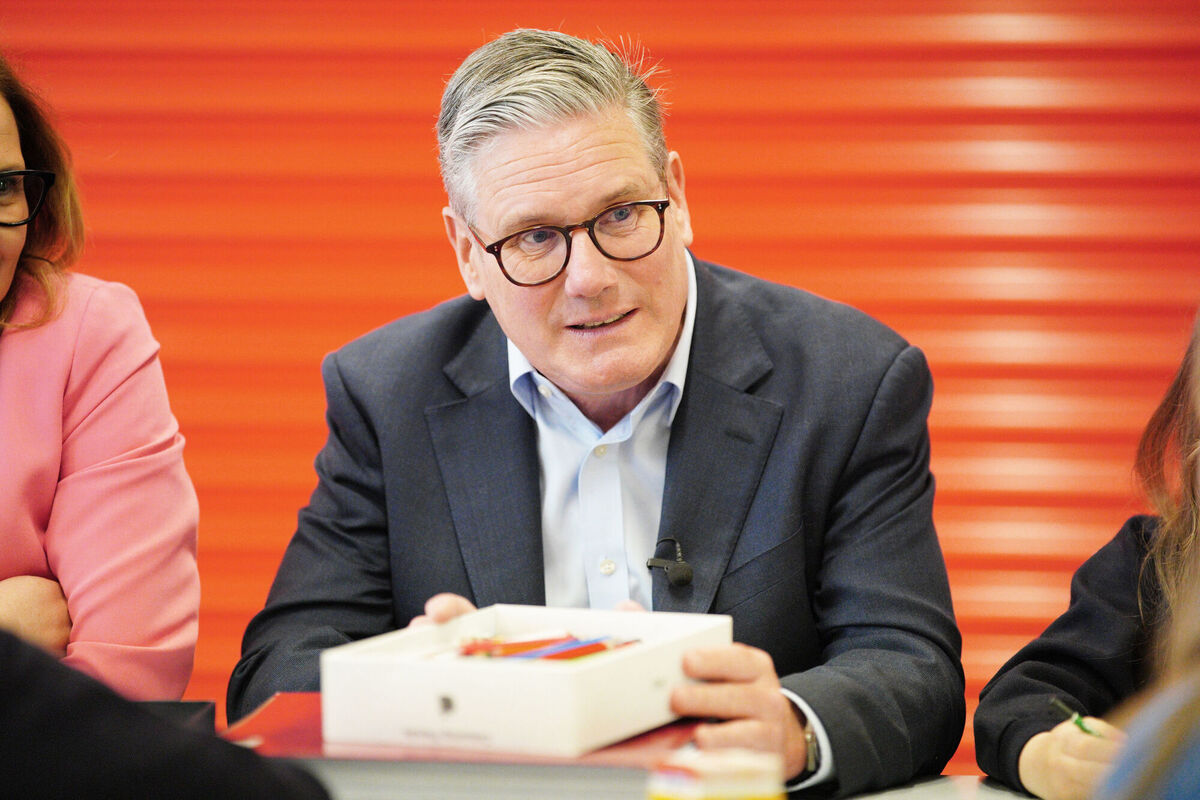
In British prime minister Keir Starmer’s speech apropos the proposals to change the UK’s legal immigration system, he has not to put a target on immigration, although it’s been suggested he hopes to bring immigration down to 300,000 a year or less.
Starmer’s focus is on bringing in what he calls high-value immigrants, in other words, people with specific skills and generally those with a university- level education or above.
It seems to me that the Labour government are making it more difficult to get British citizenship.
People are now going to have to wait 10 years rather than five years in realising citizenship.
It leaves me wondering whether this will have a potentially negative impact on the economy.
Many economists would proffer the notion that immigration is actually good for the British economy.
Regarding Peter O’Mahony and the road between Limerick and Cork: It’s not just Limerick and Cork, it’s Galway, Limerick, and Cork — ‘Cork-Limerick road a ‘torturous bastard’ we’ve just been accepting for decades’ ( , May 14).
That’s six higher learning institutions, two airports, three ports, a bigger living space than Dublin with parts of Tipp and Kerry included.
A potential counter economic industrial social cultural area to Dublin without the crowding of population into one city.
Other countries would have done it long ago but we continue to spend billions on Dublin infrastructure rather than a properly developed regional development plan, free from political interference.
The new motorway would facilitate the new events centre in Cork but it must have fallen in the same bin as the new M20.
It’s without doubt a major improvement for the economy of the south and west of the country but will central government and vested interests in the capital allow it to happen?
Reams of newspaper column inches, multifarious media broadcasts, and relentless social media denouncements galore all woven with pointedly real-life complaints about the protracted ineffectual delivery of child disability services, seem to have had little impact on self-same services, which continue to languish in stagnation.
Frustration ‘in extremis’ flourishes for both parents and relevant children’s disability network teams alike, to say nothing of the blatant affront to the extremely needy children in the midst of the fray.
Totally unrealistic expectations from HSE middle management from their poorly planned and under-resourced template of delivery, conjures and achieves nothing but exasperation and debilitation of all those struggling at the coal-face.
Parents’ anger and therapeutic teams’ managers collective vexation fester apace with little hope of improvement looming on the horizon.
HSE management responses to this shameful morass are both grossly inadequate and blatantly retro-productive in authentic practical solution terms, with continuous obsessive focus on ‘stats’ and data accumulation, without any real positive progress delivered.
The shoddy treatment of those least able in our society grimly illuminates an ingrained disregard for their urgent developmental needs and the core and crucial timeliness thereof.
All in all, shameful indictment of priority provision and a farcical farrago of appalling management from the HSE top-table.
However, ultra-generous salaries are still being drawn down without a bother or any guilt attached.
Welcome to ‘mé féin’ land.