Letters to the Editor: I hope the 'Irish Examiner' continues to ask the hard questions

Paramedics and demonstrators carry symbolic stretchers and posters with names and pictures of relief workers who lost their lives in the line of humanitarian duty, during a symbolic funeral for 48 fallen Palestinian Red Crescent Society members during the Israel Hamas war in Gaza. Picture: Nasser Nasser/AP
“The whole world should be reporting what they have learned up to this point. The whole world owes the journalists and people that documented and appealed to stop a war mongering regime.”
Those were the words of US-born Palestinian writer Mariam Barghouti in Elaine Loughlin’s searing analysis on where the world now stands on Gaza (‘Do you ever wonder why you’re not seeing as many reports from Gaza?’).
Whether it is Louis Theroux’s shocking BBC documentary, , on the treatment of Palestinians in the West Bank or last year’s Oscar-winning film , Israel is unquestionably a pariah state.
The rightly asks: What more can be done by Ireland and the international community to try and bring a stop to the murderous campaign of vengeance on defenceless people in the ever dwindling Gaza strip?
Why not doorstep Bono or even Bob Geldof, who have been noticeably silent on the massacre unfolding before our eyes?
Or the Tipperary brothers, the multi-billionaire Collinsons — one of whom posted on social media recently: “Great to be back in Tel Aviv.”
I hope the continues to ask the hard questions — not just of our politicians, but also the celebrities and industrialists who are complicit in the horrors of Gaza and the West Bank through their silence and inactions.
We sadly live in a world of twisted values where, on one hand, we can rightly celebrate and recognise the sacrifice of those who fought to liberate Europe 80 years ago from the Nazis and, at the same time, we witness the hypocrisy of the US, Britain, the EU, and Nato as they continue to shamelessly arm, finance, and collaborate with the belligerent Israeli occupiers of Palestine.
Shame on them all with their entitled mindset and their double speak on freedom and democracy, as they deny life and liberty to the Palestinians while giving political cover to Israel — which continues to control and deny access to the free press who would expose their ghastly lies and war crimes.
In every country, all free peoples must act to liberate the Palestinians by righteous actions — including:
- Challenge the narrative which portrays an apartheid Israeli state as a normal democracy and allows them to promote their lies and propaganda;
- Seek the truth from reliable sources such as the UN, Amnesty International, Israeli human rights groups, and independent news media;
- Demand a referendum on sanctions if our political leaders do not act to cut all political, economic, and travel links with the Israeli regime;
- The UN should remove Israel from the assembly and proscribe their military as a brutal terrorist organisation;
- Boycott Israeli goods;
- Support the banning of all Israeli football and sporting fixtures at international events in freedom-loving nations;
- Remove Israel from the Eurovision Song Contest until they respect international laws;
- Church leaders of all dominations should use their moral authority to challenge the active support of members of their congregations for the extremes of Israel’s ultra-nationalists;
- Provide financial support to NGOs and the UN — who supply humanitarian aid to the suffering, trapped, and starving people of Palestine.
The New Zealand government is looking to ban social media access for people under the age of 16 by 2026.
This will come as a great surprise for them as they probably don’t read newspapers and social media sites might not publicise their own partial demise.
A number of countries are working on restricting access to social media, but with little success so far.
Banning anything is difficult given the freedoms most countries promote and protect.
Banning social media will be more difficult given some — probably most — will lie or cheat to maintain their youthful drug of addition, likes, and followers.

Any technological bypass will be sent around the world before their parents can finish a nice cup of tea.
Social media, once the realm of cat videos and family photos, has broadened to include dangerous Instagram challenges and videos of the consequences.
It has great potential — as did nuclear power, although the ex-citizens of Chernobyl might see a different future.
Rather than ban, Governments should monitor, clean, and promote the positive while punishing the negative.
End-of-life care can make a huge difference to those in their last months of life.
Recent research from the Irish Hospice Foundation tells us that more than seven out of 10 Irish people would wish to die in their own home.
However, we learn that getting access to palliative care at home or to hospice care can sometimes be difficult .
I was emboldened to glean that the Irish Hospice Foundation is now hoping to address the gaps in home care in their strategy, Dying well at home, over the next five years.
We have a growing population in Ireland and, over the next two decades, we will see an increase in Irish deaths.
It would be true to say that not everybody will require specialist palliative care.
This is where the role of other healthcare and social care professionals will kick in.
I applaud the Irish Hospice Foundation in highlighting this emotive subject.
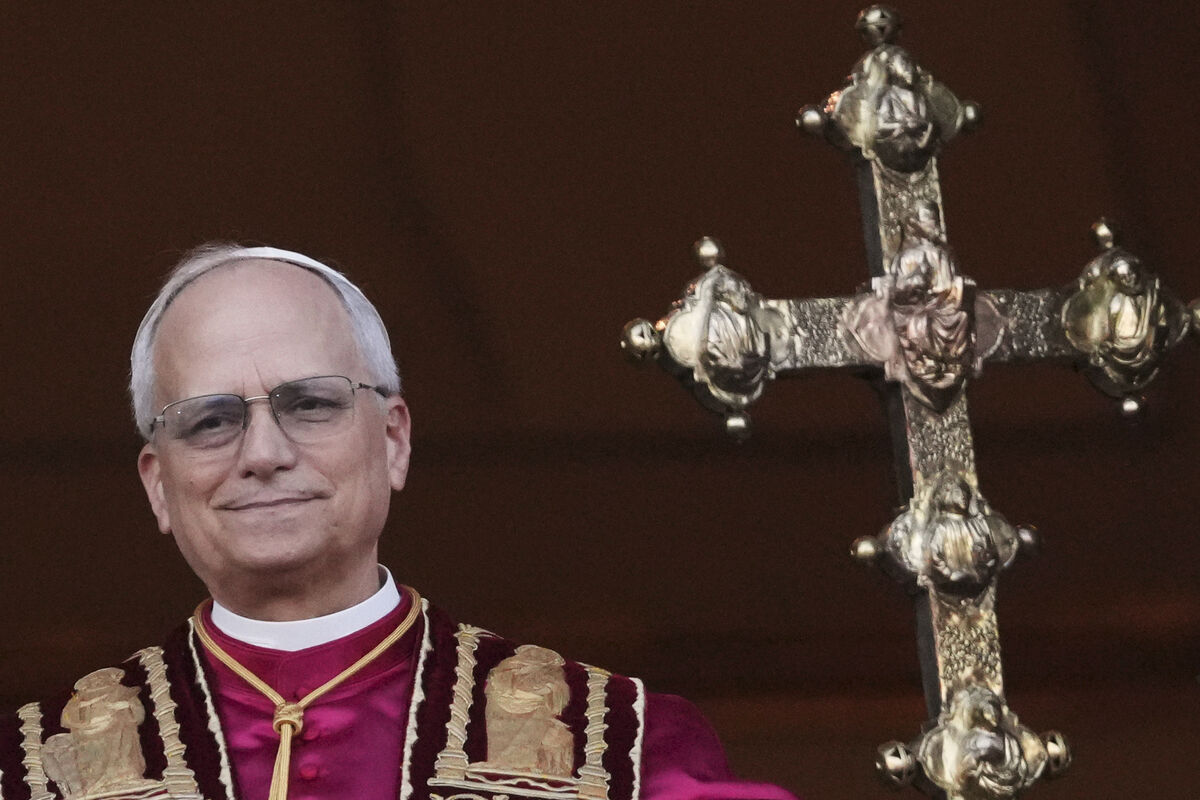
The election of a relatively unknown cardinal, Robert F Prevost, to the papacy has catapulted another Augustinian to world fame.
History will judge if his pontificate is to be as influential as the actions of two other Augustinian friars: Martin Luther — much influenced by St Augustine, who spearheaded the Reformation — and Gregor Mendel — who in his monastic garden, experimenting on peas, laid the foundation for the science of genetics.
It may also be noteworthy that Leo XIII (died 1903) lived into his 94th year — successor to Pius IX (died 1878), who reigned for 32 years — the record to date.
Of further interest is that this Leo, in 1892, appointed the first apostolic delegate to the US.
This was followed in 1899, however, by his censuring of “Americanism” — which sought to adapt Catholicism to contemporary ideas and practices.
When, on May 8, cardinal Prevost accepted his nomination as pope, he was doubtless aware of these considerations — in addition to having probably anticipated the somewhat exaggerated plaudits now directed at his predecessor’s most famous encyclical (he devoted 11 to the Virgin Mary), Rerum novarum.
Leo XIII also supported the study of the natural sciences and said that Catholic historians should write objectively about topics.
These initiatives continue to be relevant in a world plagued by “alternative realities”, as the new pope will surely appreciate.
The new Pope, Leo XIV, promises to follow in the reforming steps of the late Pope Francis.
It is reliably reported that at a pre-conclave meeting of the assembled cardinals in Rome, it was agreed that clerical sex abuse must be one of the first challenges to be faced by of the incoming pope.
From his time as Bishop of Sufar and apostolic administrator of Chiclayo, Peru, and as a Peruvian citizen he must be painfully aware of the controversy of clerical abuse and its fallout that continues unabated in Peru.
Indeed the scandal of sexual abuse followed him to Rome in the person of Cardinal Cipriani, former Archbishop of Lima, and a member of the traditionalist Opus Dei organisation who has been accused of sexual abuse — a crime of which he declares he is innocent.
Francis accepted his resignation as Archbishop of Lima, but imposed several penal restrictions on him — which he has largely ignored —including the wearing of the distinctive red robes and the associated regalia of a cardinal.
In spite of this prohibition, he attended pre-conclave meetings and public events in the Vatican in his cardinal attire.
This is just one example of the serious challenges that Pope Leo faces.
Hopefully, he will confront them with courage and tenacity.