Letters to the Editor: Fergus Finlay is right — justice system fails to protect vulnerable people
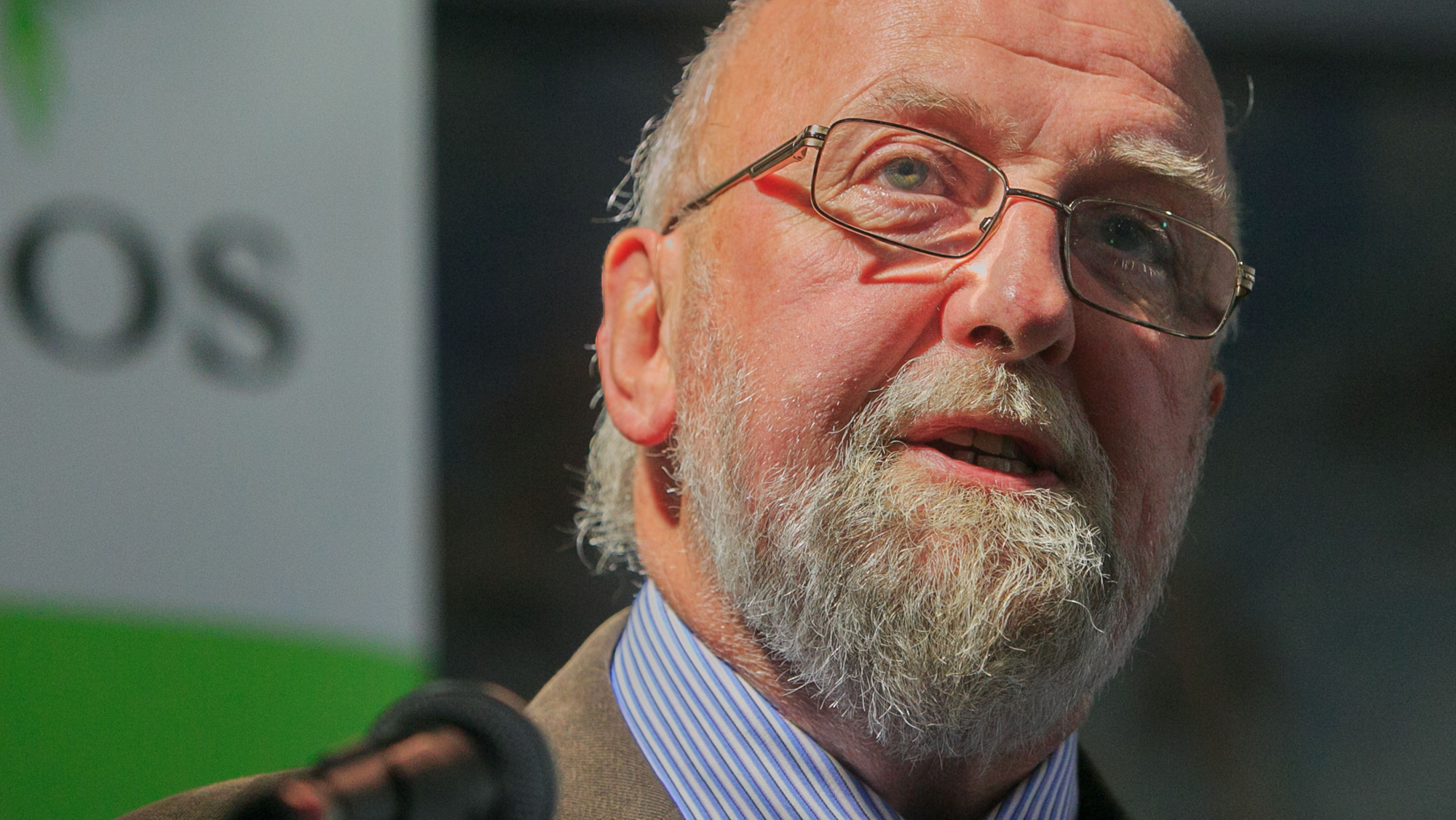
In response to Fergus Finlay's column, Pat Kenny in Mullingar writes: 'Creating a citizens’ assembly with binding powers, tasked with proposing changes within 12 months, funded at €10m, makes sense.' File picture: Gareth Chaney/Collins
I recently read Fergus Finlay’s article, (‘Ireland is set up to deny truth’, Irish Examiner, April 15) and I am deeply moved by his critique of our justice system’s failure to protect the vulnerable. His examples — families of children with scoliosis and mother and baby home survivors — highlight a systemic bias that shields the powerful while delaying truth for victims. I agree with his frustration and believe urgent reform is needed.
Creating a citizens’ assembly with binding powers, tasked with proposing changes within 12 months, funded at €10m, makes sense. This body could design an independent accountability commission to investigate swiftly and transparently, avoiding the adversarial trauma Fergus Finlay describes. I also support a no-fault compensation scheme and time-limited inquiries (two to three years) with victim support, streamlining justice and cutting costs compared to decades-long tribunals.
Transparency campaigns would be helpful, coupled with accountability measures for officials who obstruct progress, addressing the “clever” denial Mr Finlay laments.
By using savings from the tribunals, we could launch the citizens’ assembly and counter resistance with international oversight. This could deliver justice that’s fair and transformative, a stark contrast to our current “never-ending circus”. I urge policymakers to act, as the pain of affected families demands more than promises.
Thank you for facilitating this critical discussion.
The decision of the UK Supreme Court regarding biological sex and the rights of transgender women reminded me of our own history.
The Irish Supreme Court, in 1983, upheld laws criminalising homosexuality. In 1993, homosexuality was decriminalised. In 2015, same-sex marriage was legalised in this country by enormous public vote.
Sometimes the law takes a while to catch up.
This is Easter — a time of hope and the start of the spring and summer seasons.
It is hard to see hope when there is so much barbarism in the world at the moment. It is sad to see the inaction of the US to put brakes on Israel sending missile attacks into Gaza killing many civilians for well over a year now. Israel justifies it as attacks on where they believe Hamas fighters are. A recent missile attack killed six members from one family.
The UN has completed its investigation on how a wealthy Middle Eastern country is continuing to illegally send arms to one group in a war in Sudan where aid workers and children were massacred in a recent attack by this group. Some 12m people in Sudan have had to flee their homes in the two-year civil war. Peace talks are to begin in London.
Last year, RTÉ Investigates showed men in an Irish abattoir, hitting and bullying a horse. They were ganging up on it rather than trying to calm it. Who would choose to do that in that environment? How are horses treated in abattoirs when humans decide to end those horses’ lives? Can horse racing be called a clean sport when these horses end up mainly as dog food? (Although not all dog food contains horse meat, but some overseas brands do).
We don’t think much about it. Horses are beautiful animals. At least, end their lives in a humane way.
In the Bible, it says God gave humans dominion over the Earth. This was intended to mean being a guardian of the Earth — not to unleash cruelty, violence, and abuse over all things to the point of destruction. But we do. We see it in the wars that seem to happen all the time. I still find Easter to be one of my favourite times of the year and I wish a happy Easter to all readers.
With children dying in war, leaders such as Keir Starmer and Micheál Martin parade out clichés. “We must...” is a favourite phrase. Intentions don’t feed children.
While thousands of children die in war, nobody is held accountable. In 1996, the EU depended on Bill Clinton to stop massacres in Bosnia. That’s just one such example of EU failure, alongside a totally ineffective UN which has been rendered powerless.
We need to take a stand in the name of every child that is murdered, every child who cries in pain in these war zones. Yet nobody is listening. How many more children need to die before the EU, Vatican, and Trump supporters wake up?
Two things are clear: China will win this contest, and Trump will be shown to be a mere buffoon led by narcissists fed on ignorance, racism, and hatred. So far, rounds one to three to China.
Round one: China declared it would play snap tariffs, and quietly sold US treasury bonds. When the brat, America, realised there were almost no buyers for those bonds, it had to ditch its tariff leader board for a flat 10%. Confidence in the dollar as a reserve currency was breached for the first time.
Round two: When the brat realised most parts for mobile phones and computers were made in China and elsewhere, the brat was forced to drop his tariffs to the flat 10%.
Round three: The brat wanted more investment in the US, especially in manufacturing, but China had other ideas, and cancelled further investment in the US and restricted its banks’ purchase of US dollars. Others are following suit, and confidence in the dollar as a reserve currency was breached for a second time.
While few countries want to do deals with an uncertain brat that discards deals at a whim, China will trade with the world outside the US as it has done for 30-plus years while the brat spends, spends, spends on warring abroad.
Watch the market in US treasury bonds between now and September, if it’s still there in September.
The Mental Health Bill is a long time coming and it’s still not there yet. This is 10 years nearly in the works since the committee made its recommendations.
The bill basically fell with the last Dáil and it’s now on the spring legislative programme. The main aim of the legislation, is to strengthen regulation around people consenting to the type of treatment that they can receive.
It will also regulate the Child and Adolescent Mental Health Services (Camhs), which are currently falling out of the scope of the original 2001 act.
There have been some questions around provisions in the new bill, particularly when there is going to be this overhauled approach to consent for treatment for involuntarily admitted people and they will also be legislated for. But the problem with that arises if you are involuntarily admitted to hospital with a severe mental health issue and where there’s no decision made on what type of treatment you will get until it basically falls to a judge to make that decision.
There’s no timeline really in the provisions of the bill for when that will happen.
The bill is thankfully now on the Government’s radar.
I can recall an amusing TV advert from the 1980s where a music talent scout told some young people who were seeking success in the music industry that because they couldn’t sing or dance he thought they’d “go a long way.”
But I feel the most optimistic message that can be derived from that amusing advert is that success, in something as important as the music industry, can potentially be achieved by anyone at all no matter what their circumstances.
But now, with today’s AI technology and with the help of selected bird songs, I believe that any person anywhere, rich or poor, can make beautiful music by simply randomly pressing buttons with their own fingers or even with their own toes and so potentially make music that a music producer who may be listening to them from a faraway place might declare aloud that they have the potential (with some added adjustments) to go “a long way” too in today’s music industry.
AI technology can be a great equaliser in the way that it can now help very ordinary people produce nice music.
Even the great Beatles back in the 1960s had a hit song with a little help from a few beautiful notes that were produced by a blackbird.
Read More