Letters to the Editor: Irish interest in weapons industry is disturbing
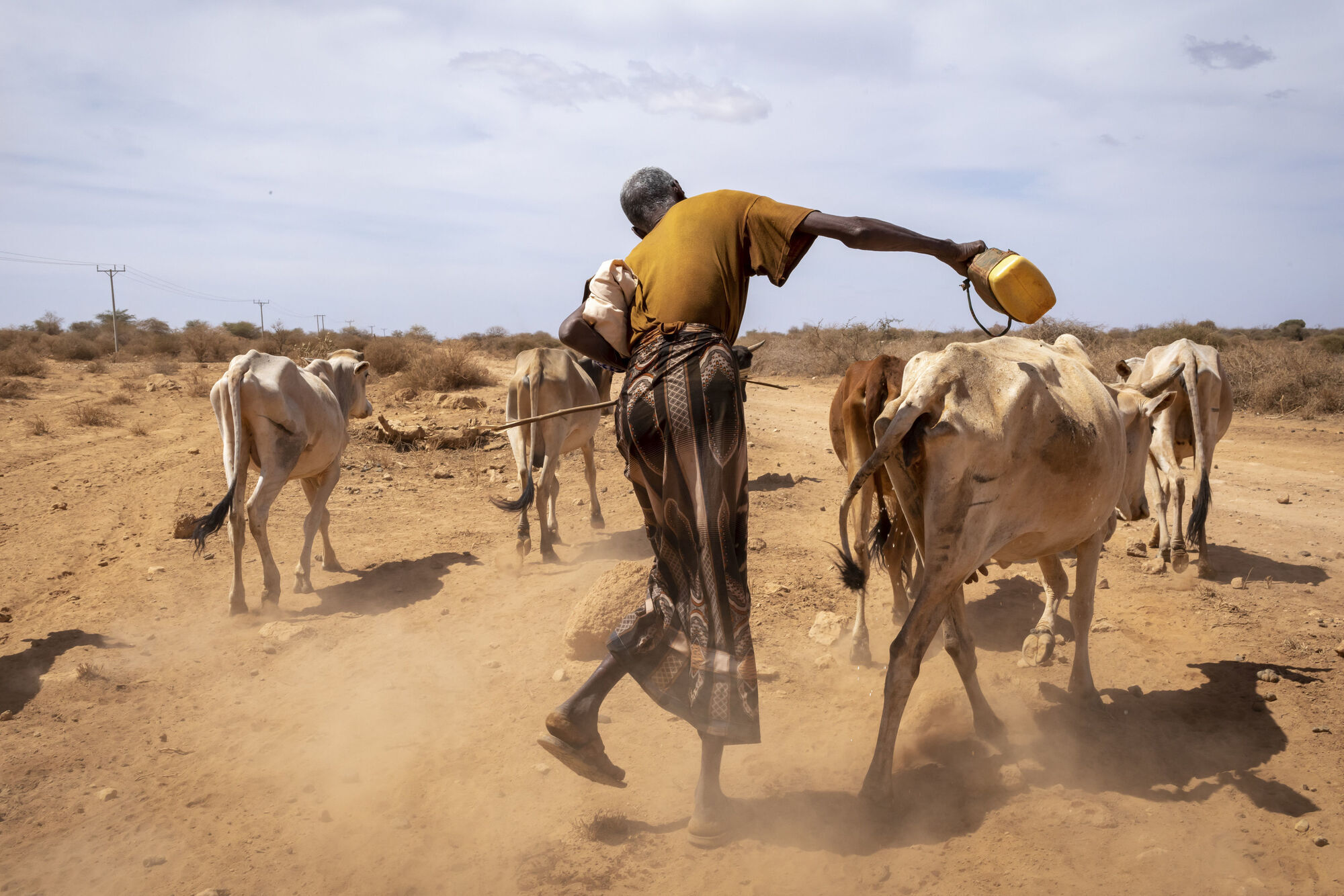
Agencies struggling to cope with the consequences of war and conflict, and indeed victims themselves, must be centrally involved in future discussions on ‘defence’. Picture: Mulugeta Ayene/UNICEF via AP
In our work with schools and colleges over four decades, Afri has highlighted the impact of war and militarisation, particularly on countries and peoples of the global south.
This work is informed by our partners, one of which is located in strife-torn Northern Kenya, on the border between Ethiopia and Somalia.

We are aware, from their experience and otherwise, of the devastating impact of war and weapons on the most vulnerable people on the planet.
As a result of conflict, tens of thousands are forced from their homelands and then must risk life and limb by attempting the treacherous crossing to Europe, where the weapons that drove them from their homes often originate.
Other Irish development agencies are involved in rebuilding efforts after conflict in places such as South Sudan and Ethiopia; this critical work is funded by Irish Aid, as part of the excellent work they support throughout the global south.
It is in this context that the Government’s recent hosting of a seminar to involve Irish companies in the weapons industry is so disturbing.
It is equally disturbing that the Government is proposing the spending of millions, even perhaps billions, of euros on more military equipment and weaponry.
The Stockholm International Peace Research Institute recorded more than $1,900bn (€1,677bn) spent worldwide in 2020 on weapons and the war industry.
Imagine what could be achieved if this money, or even a percentage of it, was used instead to tackle poverty and climate change.
In a world vastly oversupplied with weapons, the last thing we need is for Ireland to become further embroiled in this deadly trade.
Our security and the welfare of our fragile planet are too important to be left to those who display what US president Dwight Eisenhower called the military-industrial mindset.
Agencies struggling to cope with the consequences of war and conflict, and indeed victims themselves, must be centrally involved in any future discussions on ‘defence’.
At school in West Cork in the 1950s we learned the words of a song which
included the lines “God save Ireland, said the heroes”.
I had forgotten about it until I saw the outcome of deliberations of the Dáil committee on pensions.
What a gutless lot. They’ve dumped on our grandchildren for short-term popularity, shamefully adding to our poor record on the care and protection of children.
They’ve ignored the fact that a pensions time-bomb awaits, particularly in the public sector.
The number of working people for every pensioner is reducing steadily; it stands at four-and-a-half to one at present and is forecast to drop to two to one by 2050.
There are small businesses in every parish in the land and they make an enormous contribution to the economic and social life of the country, providing employment and supporting local charities and sports organisations.
However, they do not seem to get the respect from the political and media class that their contribution warrants.
Meanwhile, they can only dream of the kind of pensions that are available to public servants.
So what do our heroes of the committee recommend? Small businesses and their workers should contribute by way of increased PRSI to support those with much better pensions and job security than themselves.
The opposition, who give us so much guff about bringing about change, have joined the cosy establishment through which they themselves benefit from public sector pay increases.
We must have hope, however. At least, based on recent comments, Micheál Martin and Paschal Donohoe recognise the problem.
So what’s to be done? At the risk of upsetting the cosy club, could we not get even minimal changes, for instance ending the practice of giving public servant
pensioners the same increases as serving officials?
This practice does not apply anywhere else. We could also require new recruits to begin contributing to their own pensions.
Private sector pensions pay out what the fund can afford, unlike the situation where politicians consider pension issues in the light of whether they can win or lose votes.
Perhaps the Taoiseach could call together the leaders of the Dáil parties and attempt to get them all to appreciate the seriousness of the issue and to agree the tough decisions that need to be made in the national interest.
Ibec and SFA might do well to commission their own pensions report on behalf of their members and stand up to the powerful public sector unions and their allies in parts of the media.
Time for a new generation of patriotic giants to emerge.
Remember Noel Brown, Labour; Seán Lemass and Donough O’Malley of Fianna Fáil; Liam Cosgrave of Fine Gael and the great public servant, Ken Whittaker. God save Ireland.
I heard on the radio this morn that there were 50ft waves off our shores, due to storms.
Was Vladimir Putin perspicacious enough to supply the fleet he sent on exercise in the Atlantic with enough sick bags to go around?
“Honesty and transparency make you vulnerable. Be honest and transparent anyway” — Mother Teresa.
Telling the truth is the expected and usual way for most people, even when it may not be the best option for them personally.
This applies especially to our leaders who guide us and set the standards to follow. If only it was that simple though.
There have been two recent cases, US ex-president Donald Trump and England's Prince Andrew, and in both cases they have faced court challenges.

Former president Trump and two of his children must testify in court to an investigation by the New York state attorney general into their business practices.
He has also been investigated in relation to the 2021 Capitol riots, although in both cases he has claimed his innocence, and this must be presumed correct unless there is more information made available that creates doubt.
The recent court appeal to stop the investigation seems odd if there is nothing to be hidden and surely he would want the truth to be out there.
With Andrew, the matter has been into the courts, but a private and unknown settlement has been reached.
He has been accused of horrible things and has also always maintained his innocence, as is his right, although an open court procedure would have given him the opportunity to clear his name publicly.
When people are honest and their word is true, then the best approach is to confront their doubters openly and resolve it in the court of public opinion rather than use a lawyer to attempt to stop legal court actions.
Everyone should be brave and honest and stand up to defend what they have done and what they believe in.
I’d like to float the idea of retrofitting excess cruise ships to provide short-term accommodation around the ports of Ireland.
They could be especially useful while the building industry builds new properties and retrofits older ones over the coming years.