Letters to the Editor: Restrictions are [still] in place to protect the most vulnerable
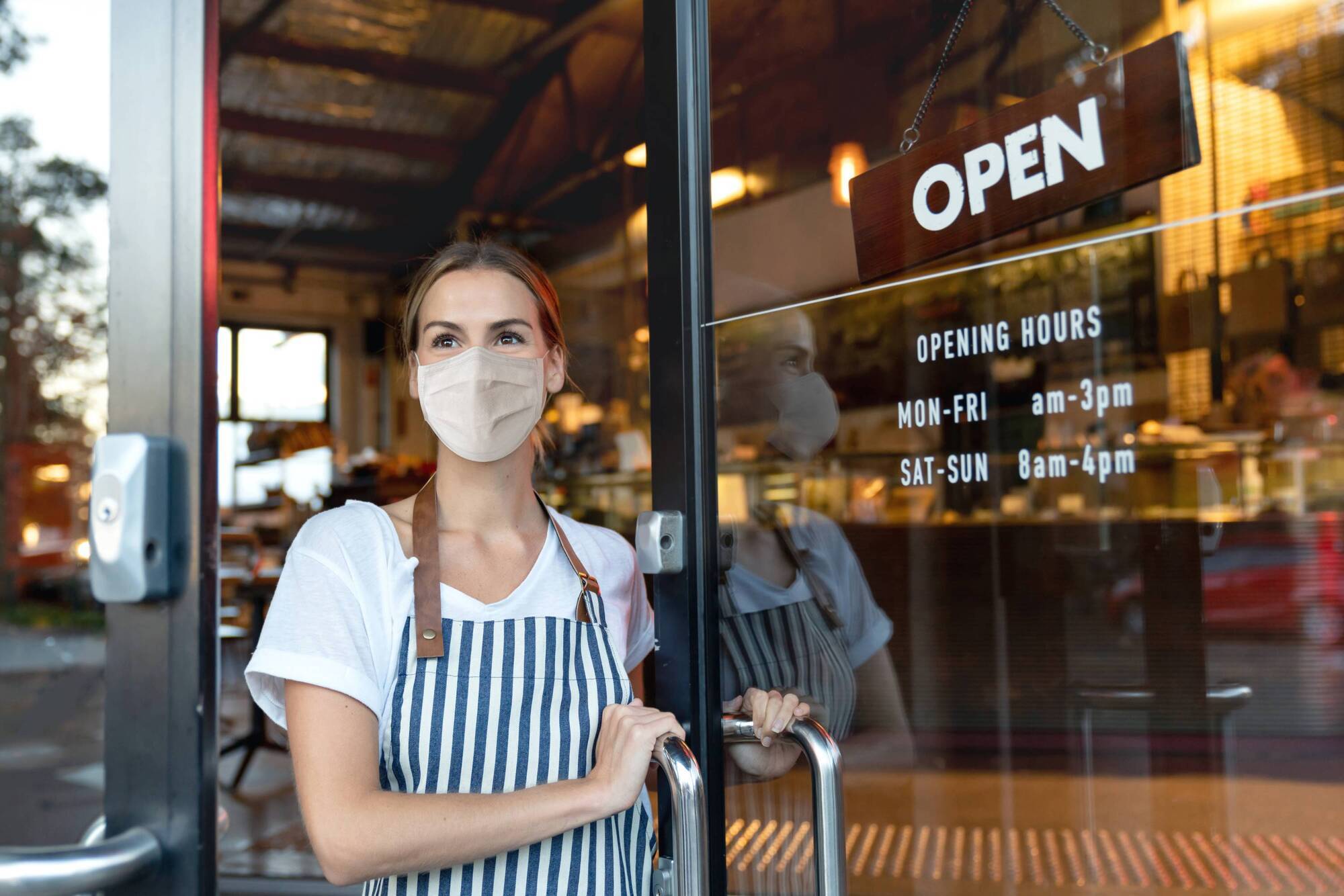
Wearing masks and other restrictions continue to protect the more vulnerable people in society.
In his column — Public will not stand for shifting the goalposts of Ireland's 'freedom day' (Irish Examiner, October 23) — Daniel McConnell held nothing back in showing his disdain for public health officials, his frustration with restrictions, and his contempt for the decisions which resulted in them.
He and I are equally entitled to express our views — though my views are unlikely to be heard by the whole country.
The restrictions have affected us all and I sympathise with people who yearn for normality, but we are not out of the woods yet.
I have a relative with Downs syndrome and her life has been more curtailed than most — cut off from services and friends since it all began.
I ask Mr McConnell: Is her life expendable?
Whether we’re talking about the virus — or the continued limitations she and other vulnerable people must live with so that others can go “back to normal” — Mr McConnell was clear that any further restrictions would, in his view, be unacceptable.
When we were told that “we’re all in this together”, that was because the point of restrictions is to ensure the safety of the vulnerable in dangerous times.
Daniel McConnell’s article was like feeling a breath of fresh air.
Further to Daniel McConnell’s article. Firstly I need it to be clear that I am writing to you, not as an ‘anti-vaxxer’ or a conspiracy theorist; rather I am writing to you as a member of the 7%. Those of us who have chosen not to be vaccinated. Because it is a choice.
I am writing to you as a mother of two young children, who has worked her entire adult life to advocate for equality, human rights, and the social justice of marginalised communities including in health and care settings.
I am writing to you as someone who is therefore acutely aware of the pressures our health system is under and the devastating consequences that Covid-19 has had on individuals, families, and communities.
But I am also writing to you as someone who is a new mom and breastfeeding.
I am not satisfied that now is the time for me to take this vaccine, as is my choice.
Throughout my time working in human rights, the overriding principle has always been proportionality and balancing rights and responsibilities.
I am not, therefore, disputing the responsibility, I, like everyone else needs to play a part in stopping the spread of the virus by following public health guidelines including wearing a mask, social distancing, and washing hands.
However, I am extremely concerned that there is no proportionality.
Many have reflected on the type of society we want to see when we emerge from this pandemic, I hope it can be one that values equality and freedom of choice, one where we can all work together in addressing the challenges that will emerge as we go forward, not one where we are divided along the line of vaccination status.
I wish to express my concern about consent and the lack of issued sex education in post-primary schools.
I read the article regarding a survey by NUI Galway — One in five boys ‘neutral’ on consent being required for sex (Irish Examiner, August 24): Based on the views of 613 secondary school students between 15-17 years old, 93% of females and 79% of males agree that consent is always required for sexual activity.
However, 18% of boys surveyed are neutral as to whether consent is always required, with 3% disagreeing, versus 6% of females who were neutral and 1% disagreeing.
The survey also found 62% agreed that consent for sexual activity always needed to be verbal.
There was a significant gender gap in personal comfort with being sexually intimate with someone they had just met at a party, with females less likely to be comfortable than males.
While 7% of females were comfortable with intimate touching, 51% of males said they were comfortable.
The gender and percentage gaps are frightening. In a perfect world, we would like to think attitudes towards sexual harassment are changing but evidence shows us we have a long way to go.
We read books from authors like Sally Rooney where consent is cemented right through the novel before we are brought back to reality in today’s society.
This perception gap reveals an internalised social pressure felt by many to engage in actions they may not actually want to do.
Girls were more likely to reference a fear of disappointing their counterpart as a barrier to talking about consent, while boys were more inclined to point to a fear of rejection.
As a 16-year-old, I think this issue must become part of a mandatory and compulsory programme that needs to be made part of the SPHE course from third year up.
We need to reduce the stigma related to sexual harassment and consent. It will reduce sexual harassment, anxiety, rape, depression and will equip students with self-confidence to speak up about something that they are not comfortable or unhappy with
Irish schoolteachers get paid too much.
They should start off on a small wage and, as they get more experienced, get an increase every year based on results and the size of the school.
It is hard to believe that in a school with only 20 children a principal gets paid as much as a school with 100 children.
I attended secondary school from 1979-1983 in Cork city; I attended a reunion of that group of students/teachers approximately 15 years ago.
Some of those teachers were still teaching at that stage and I’d become a teacher myself by then, mostly teaching adults.
I asked one of the teachers who had taught me what it was like teaching teenagers, at that time (ie, in 2005-’06).
The gist of her response was as follows: “We do great work between 9am and 4pm, but often that all falls apart, because the parents don’t follow it up and do the work that they need to do with their children, at home.”
If we take the 24-hour day as a whole, it should be immediately obvious that children are at school for less than a third of that time; consequently, their teachers can only work with them, during that time.
It should be equally obvious that our school-goers are (or should be) in the company of their parents/guardians for most or all of the remainder of those 24 hours.
Yes, the formal education system can (and should) draw up programmes in behavioural education and carry them out (to teach empathy, the correct use of technology and social media, etc); but that will be entirely futile if parents don’t do their bit, in the home.
That ‘work’ entails parents educating their children directly by helping with homework and directing their general behaviour, but perhaps more importantly, by giving their children good example when they are with them.
This ‘work’ by parents should also include education and good example in the use of technology and social media.
I’m an atheist and I finished school in 2013. While attending school, I stated on numerous occasions that I did not wish to take part in religious education as it was against my views.
I got my mother to write notes saying I did not want to attend [religion class] as it was against my beliefs. I was told it was a Catholic ethos school and to get over it.
We should teach students how to look after themselves and their mental health, and give them life skills that are useful.
Teach students about LGBT+ and acceptance and include information on the environment. Education should be about moving forward, not being stuck in the past.
I really hope that by the time I have children, I will be able to send them to a school without having to worry about a religion class.