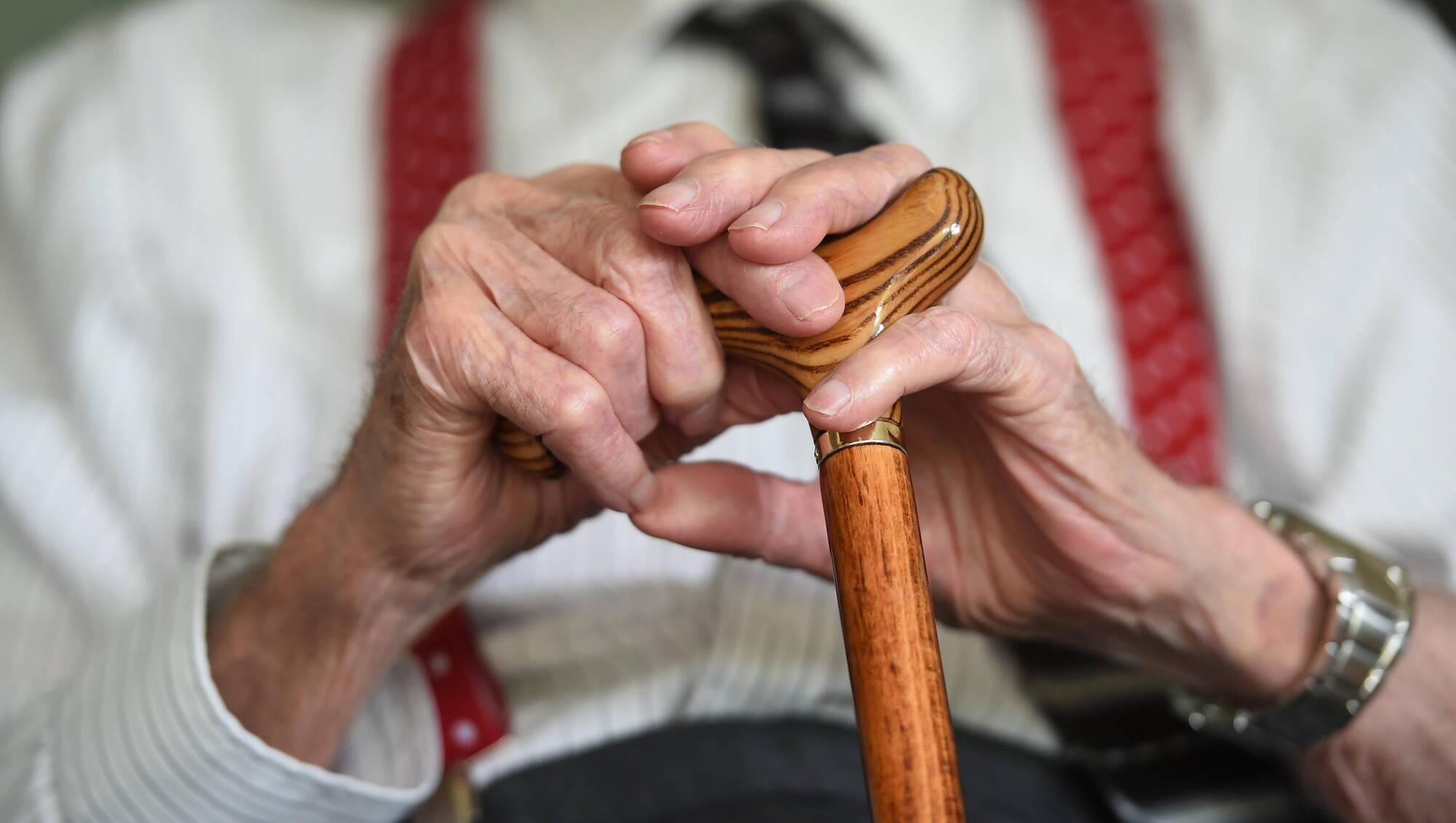
It has become fashionable in the media for older commentators to decry ageism and what they perceive as the victimisation of older people in our society, but the reality is that many older people have never had it so good.
Ireland’s life expectancy continues to increase, and older people are consuming an increasing proportion of Ireland’s ballooning health expenditure.
Older people have been favoured by earlier access to vaccines despite many younger frontline workers being more exposed to potential infection.
Unemployment is hugely skewed against younger people in our society, with 59% of people aged 15-24 currently unemployed.
Wealth inequality has never been higher in Ireland with most of the wealth owned by older people, while the current generation of younger people may be the first in living memory to be poorer than their parents.
Many older people were given council houses at low rents which they were later able to buy at knockdown prices and sell on at market prices making huge profits and increasing the cost of housing for younger people generally.
Many older people were able to live quite well on one salary coming into their household while today’s young married couples need two salaries coming in to pay the rent. They cannot afford to buy a house until much later in life and having children often has to be postponed until their late thirties to ensure that some semblance of financial stability has been achieved.
With both parents having to work, today’s parents of younger children are also faced with crippling childcare costs, longer commutes, and a “free” education system that is anything but free.
Many older people had secure jobs for life while today’s young are increasingly employed in the precarious gig economy where there is no certainty of income and where obtaining a mortgage is almost impossible.
Many older people saw the size of their mortgage eroded by inflation and paid off within 25 years whereas today’s young people are paying some of the highest interest rates in Europe on mortgages often lasting more than 30 years.
An Intermediate or Leaving Certificate was all many older people needed to land well-paying jobs whereas today’s young often require a third-level degree, sometimes at masters level; indeed many with doctorates are living in relative poverty with no prospect of securing well-paid employment until well into their 30s.
Older people today can take advantage of free travel on public transport and much reduced prices for travelling to exotic holiday destinations abroad in off-peak periods, whereas younger parents are confined to expensive peak holiday prices during school holidays.
I’m not suggesting that everything in the garden is rosy for older people, but I do feel a little more appreciation for how hard today’s young have to work — to achieve a foothold on the housing ladder and raise a family — might be in order.
Younger people are being failed by our political system, controlled largely by their elders, and then people wonder why political extremism is on the rise.
Frank Schnittger
Blessington
Co Wicklow
An Taisce’s cheese plant court appeal
An Taisce are appealing a High Court decision to grant planning permission for a €140m cheese plant in Kilkenny. In a statement, in support of their appeal they state: “Dairy production, and the supporting chain of industrial activity and animal husbandry, is a substantial contributor to Ireland already breaching key European metrics for emissions and environmental controls.”
One has to ask what is their vision for rural Ireland and do they really represent what the people of Ireland fund them to do? Seems they are a quango for those who support their policies, but who are primarily unaffected by the downsides of their policies.
While their vison is vague it seems there is no room for farmers and their animals in rural Ireland. They seem to have no empathy or understanding for the people who live and work in rural Ireland and who suffer the consequences of their divisive policies.
The people of Ireland and the politicians they elect need to realise that, rather than An Taisce, it is the farmers and those living in rural Ireland who are best placed geographically, physically and intellectually to protect the environment and its biodiversity. Farmers and those who reside in the countryside do have a grá for our flora and fauna, despite the constant attempts to undermine the decency of rural people by the supporters of the policies of An Taisce and animal rights organisations. It is these decent men and women that provide the food to keep the country going, while battling to support their families in the process, and doing their best for the environment under the circumstances.
The government should defund these quangos, such as An Taisce, which seem to have lost their way and instead fund the many excellent voluntary organisations which are located on the ground, across many communities in rural Ireland. They’ll get more bang for their buck.
Tom O Connor
Leamlara
Co Cork
Pig production on multi-storey levels
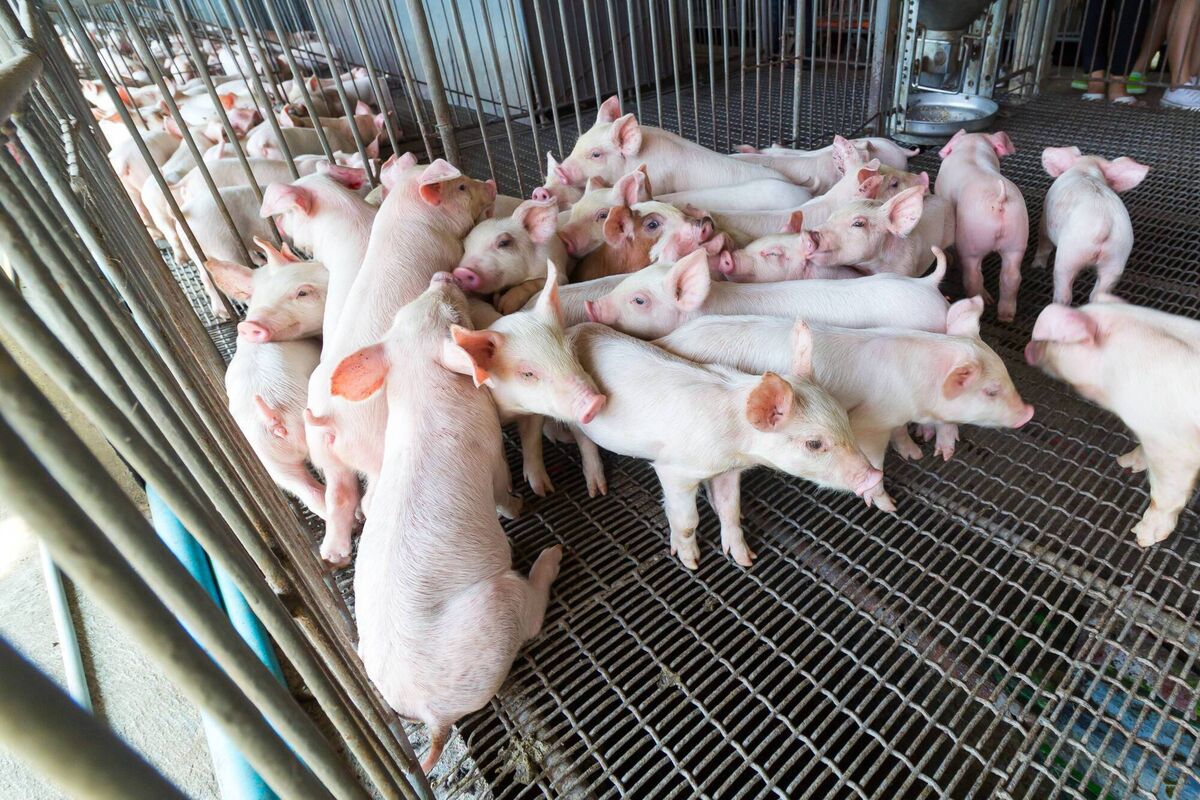
Pigs are highly intelligent, extremely sociable animals. They are also — along with the farmed chicken and the intensively-bred dairy cow — the most exploited animal on the planet.

There’s a 99% chance that any pig will never see the light of day and they will be slaughtered when they’re about six months old. A breeding sow has it worse, her life will be longer but considerably more stressful, before a premature slaughter at the age of three or four.
Alas, the future for pigs is not looking good, either; indeed, it’s looking much worse. China, by far the largest producer, is moving rapidly into a multi-storey system of production. A project under construction near Nanyang will see 84,000 sows and their offspring housed in 21 multi-storey buildings. These new factory farms employ fewer people and use more technology, such as intelligent feeding systems, manure-cleaning robots and infrared cameras to detect when pigs have a fever. Inside the pig housing, air is filtered, and thermal imaging cameras are being trialled to check pigs’ body temperatures.
The global pig industry functions on the basis of cramming as many animals as possible into as small a space as possible and rearing them in the shortest time possible. It treats pigs as commodities, ignoring the fact that they are sentient animals with a complex range of emotions and an ability to experience pain and distress. It is without question an industry that has lost any sense of a moral compass.
Gerry Boland
Roscommon
There may be a ‘will’ but no legal way
Legal ingenuity was not in short supply in the aftermath of the economic collapse that saw this country ruled from abroad. Very eloquent and ingenious reasons were advanced in favour of “insuring” the bondholders and finance houses who turned up at the kitchen door with the hand out. “Special purpose vehicles” and all sorts were devised with presumably good intentions.
If only we could harness that same legal ingenuity to enable the State to build houses in a housing crisis. The law is an inherently conservative profession. Legal ingenuity is a sight to behold when the interests of the haves are at stake. It’s always “how we can and why we should”. Not so much can-do spirit when the welfare of of ‘ordinary’ people is at stake. Then it’s always “why we can’t and why we shouldn’t”. Watch this Government quote legal advice on “why we can’t” in the coming weeks and months. Then see what happens at the next election.
Michael Deasy
Carrigart
Co Donegal
Draconian laws of Special Powers Act
Further to Billy Fitzpatrick’s excellent letter — ‘Government of Ireland Act the mother of all gerrymanders’ ( Irish Examiner, April 8) — regarding the Government of Ireland Act of 1921, it is also worth mentioning that the unequal nature of the gerrymandered state of Northern Ireland was reinforced in April of the following year with the introduction of the Special Powers Act, by the then Stormont minister Richard Dawson Bates.
The new legislation granted widespread search and arrest powers to the newly established RUC and B-Specials. The legislation also retained the right to deploy hanging and flogging in certain circumstances, as well as the right to ban political parties and newspapers. Internment without trial, primarily aimed at the nationalist community, was also key component of the act.
In fact, so draconian was the legislation, that in 1963, the then apartheid South African justice minister, John Vorster stated that he “would be willing to exchange all the legislations of that sort for one clause of the Northern Ireland Special Powers Act”.
Ultimately exclusion and the coercion of the nationalist population failed, however there are lessons in the past. Going forward we must ensure that everybody on this island has a fair say in the event of any future constitutional change. The Seanad’s vote of May 10 calling for a citizen’s assembly to plan and prepare for constitutional referendum is a significant step in the right direction.
Micheál Browne
Naas
Co Kildare