Government must focus on affordable, secure homes
Government must focus on affordable, secure homes

Why does the government seems hell-bent on propping up the failed housing policy based on privatisation and outsourcing principles, asks Irish Examiner reader Jim O'Sullivan.

It is not surprising that the Government plans legislation to allow the sale of public lands to the Land Development Agency with no proper scrutiny by elected representatives. (“Councils to transfer land to Land Development Agency without vote from councilors”, Irish Examiner, February 5). Incredibly, regardless of what the plans are for such lands, elected councilors will not be allowed intervene. This diminution of democratic scrutiny is even more remarkable given the long list of scandals associated with such matters. We all can still remember the infamous Galway tent and there must be now real fears that there remains some in the corridors of power who yearn for those opaque ways.

The press release issued by Government gives a strong indication that this “plan” warrants the most stringent scrutiny, as it will not address the core causes rendering housing inaccessible for citizens. A recent report from the Society of Chartered Surveyors found that the cheapest two-bed apartment available in Dublin, “which would be a low-spec build in a low-rise suburban development, had a sales price of €375,000”. This would require a deposit of €37,500 and an annual income of at least €96,000. The average income is €44,000. This small apartment is even beyond the means of two people both on the average income. Nowhere does this “plan” address that and, indeed, the Land Agency has not as yet given any indication that it intends to either. What we are seeing is the same system of delivering housing, which will deliver the exact same result, dressed in semi-state clothing.

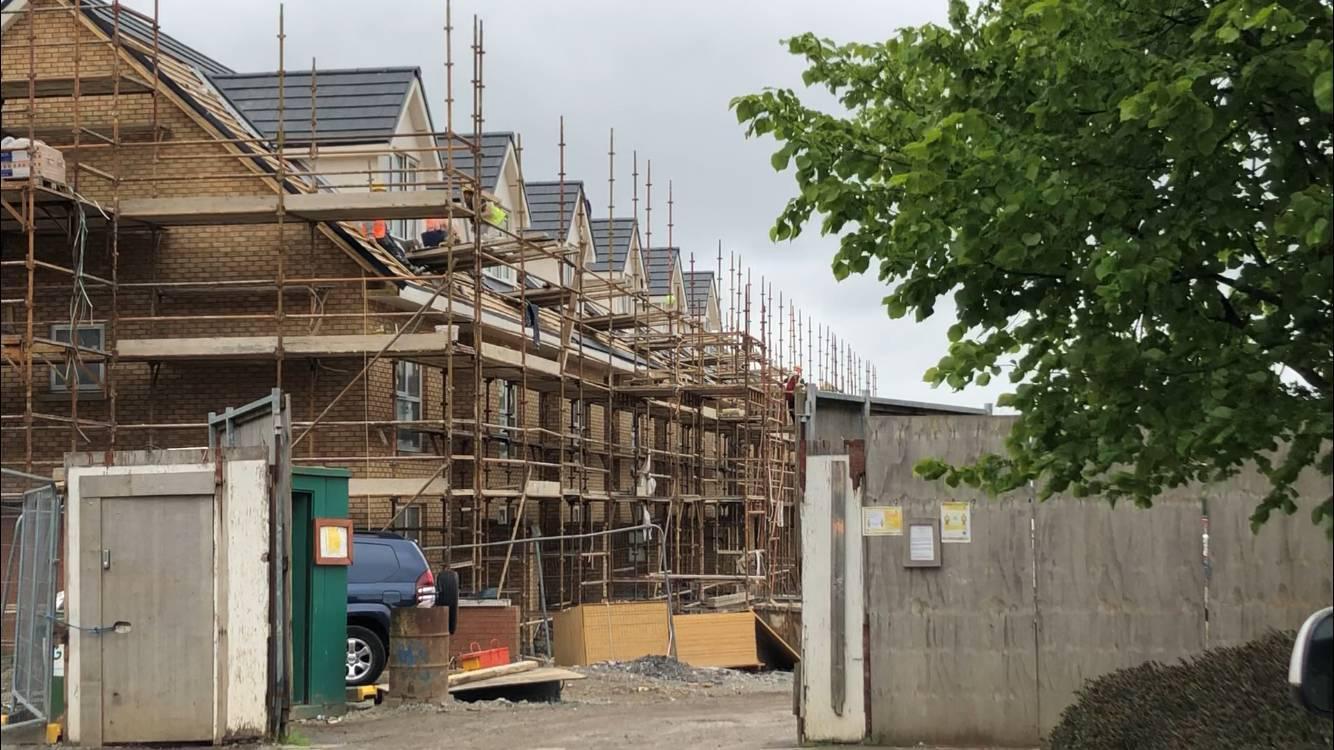
What a government should be totally focused on is the building of accessible, affordable secure homes. These developments should comprise a mix of real affordable homes, free of the speculators’ mark-up, for those who wish to buy and State-owned and managed houses with rents related to income for those who cannot. There must be no question of private
buy-to-rent units or any other form of speculation involved on any such public lands.

The mystery to all this — given the housing crisis that abounds — is why the government seems hell-bent on propping up the failed housing policy based on privatisation and outsourcing principles which lie at the core of this latest “big idea”?

And if the government gets its way on this one, no one will be even allowed to ask such questions.

Jim O’Sullivan

Rathedmond, Sligo

EU doesn’t care a whit about Ireland

I respectfully take issue with the assertion that “EU membership is the best thing that happened this island since independence” ( Irish Examiner, February 3) The foul-up of activating clause 16 of the Northern Ireland Protocol is excused just because EU Commission president Ursula von der Leyen apologised. Considering the magnitude of the blunder and the message it sends to this darling little island, she had little option.

 European Commission President Ursula von der Leyen.
 European Commission President Ursula von der Leyen.

The message is clear. It is “we forgot you”. The message is a continuation of what has been coming for years with the exclusion of the period when EU negotiators thought the border question might bludgeon Britain into submission. We didn’t want to hear the message however; so for 30 blood-soaked years we never wondered why the EEC or EU did so little to help. It was only when the Yanks had done the heavy lifting that the EU came on board. Neither did we want to hear the message when European banks had their loans go belly-up but slightly more than 1% of the EU population was forced to undertake full repayment loans under threat of having “a bomb explode in Dublin”.

And we like to forget the contempt shown for two referendum results which we were forced to re-run to get the right answer.

Finally to debunk the great myth — “the EU has made us rich”. The EEC, an organisation of commerce rather than politics, which we joined in 1973, was of immense help. The EU is different; the EU has taken more from Ireland over most of the last decade, than it has given. So where is our wealth coming from?

We were made rich by technology and our inordinate ability to excel in its development and Charles Haughey’s tax system to accommodate a fledgling Apple which enticed multinationals to our shores. The great irony is that the EU may enforce a uniform tax regime which will nullify any advantage Ireland has. The veil of concern for Ireland slipped recently. We would be wise to heed the message it sends.

Padraic Neary

Tubbercurry, Co Sligo

Covid-19: No one’s safe until all are safe

The number of Covid-19 cases and deaths we are faced with is grim. Despite a huge effort, new infections remain high, and far too many die.

It will take some time before vaccines reach all of us. But until then a world free of Covid-19 will not be achieved without a coordinated local and global response.

We need to give communities power to take action to stop, minimise and eventually eliminate new infections in their areas. This can be done working closely with local public health professionals to test, trace and isolate all infections, and also by enforcing travel restrictions.

In the 14 countries where Goal works we are using the community-led approach to help communities developing plans to isolate, shield those most at risk, and manage cases of infection. This approach has been part of the strategy which allowed Goal to reach over 17m people since March.

However, local responses alone are not enough. They need to be complemented by unified global leadership. There is cause for optimism with the arrival of the Biden administration in the US. That country can assume a leadership role, rallying the EU, the African Union and other countries. With Ireland now a member of the UN Security Council, we can also be a facilitator of a global response.

It is only with coordinated action that we can dream of an Ireland and world without Covid-19. As WHO head of emergencies, Irishman Dr Mike Ryan has put it: “Nobody is safe, until all of us are safe”.

Dr Enida Friel

Goal

Dún Laoghaire, Co Dublin

Ryanair: It’s all about the money

We are fortunate that “freedom of speech” allows us to express our views. It even allows us “exaggerate” on occasions to suit our needs.

Ryanair's business practices have been the subject of much concern/discussion.

Ryanair has made multi-millionaires of its senior staff. Well done. That should be borne in mind whenever statements are issued by Ryanair management. That being said, its business practices have been the subject of much concern/discussion. Still, millions fly with the airline. I have flown many millions of miles over the years but I have never booked a Ryanair flight and I never will. Thereby exercising my democratic right to ignore Ryanair and its management team.

Michael A Moriarty

Rochestown, Cork

Let’s work together to make new medicines

Trinity’s James O’Mahony, ( Irish Examiner, February 5) argues that the fate of patients is a choice between access to basic care or access to the latest medicines. That would be a significant under-estimation of our capacity to give patients the best standards of care — on a par, if not better, than what patients in other developed countries in Europe can get.

Mr O’Mahony claims that it is “unfair and inefficient to press ahead with groundbreaking new treatments when basic care is neglected”. Faster access to new medicines can keep people out of hospital. Innovation in medicines has helped to improve life expectancy. We are making progress in improving Ireland’s poor record in adopting new medicines, with the Government allocating €50m for their reimbursement this year. We are still over two-and-a-half times slower to reimburse new medicines compared with other western European countries. Delays, according to the National Cancer Control Programme, are causing Ireland to slip “below the current international standard”.

Between 2014 and 2019, health spending increased by €4bn. About 90% of that went to areas other than medicines, like pay and pensions. Only 10% was on medicines. Ireland’s medicines expenditure as a percentage of total health expenditure is around 15% — on a par with the EU average — and yet many of our peer countries are able to combine high standards of basic care with faster access to new treatments. Working with the health authorities to make latest breakthrough treatments available to patients faster is a priority for our industry. Arguing against the move makes little clinical sense. Let’s work together to make Ireland as good as making new medicines as it is at making them available to patients.

Bernard Mallee

Irish Pharmaceutical Healthcare Association

Dublin

What a mess

If this government was sitting the Leaving Cert this year in the following subjects, cervical screening, mother and baby homes, how to buy a photocopier that fits the intended space, a date for reopening schools, a schedule for Covid-19 vaccination that does not keep changing, they would be lucky to scrape a pass.

Why is it nothing gets done in this country without a big mess being made of it?

Jim Byrne

Silverheights Drive, Cork

More in this section

Revoiced

Newsletter

Sign up to the best reads of the week from irishexaminer.com selected just for you.

Cookie Policy Privacy Policy Brand Safety FAQ Help Contact Us Terms and Conditions

© Examiner Echo Group Limited