Letter to the Editor: Women had more than it takes to go into space
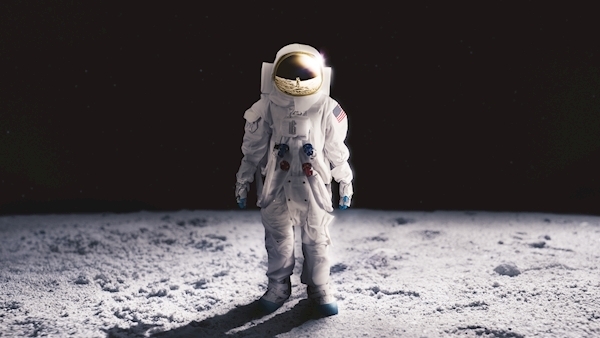
It appears the world is getting ready to celebrate the fact that Neil Armstrong became not the man in the Moon but the first man on the moon 50 years ago (July 29, 1969).
Fair enough but should there have been, and could there have been, a woman on the moon? Consider the following facts. In the early days of space travel, the Soviets were way ahead in their thinking.
In September 1960, while attending a seminar in Moscow, the director of the Lovelace Institute, Dr Randolph Lovelace, heard rumours that the Soviets were training men and women for their space programme. Meanwhile back in the USA prospective astronauts, all men, were put through first phase testing for the Mercury Space Programme.
Of the 31 men selected only seven came through. They became known as the Mercury Seven.
On returning one of the first people Lovelace contacted was Jerrie Cobb. At this stage, the 28-year-old Cobb had logged more than 10,000 flight hours as opposed to John Glenn’s 5,000 and Scott Carpenter’s less than 3,000.
When Lovelace saw the results of her first phase tests he wasn’t surprised, he was astonished. These were the same tests the Mercury Seven had come through and 24 of their colleagues had failed. In one isolation test, Cobb was immersed in water and left in total darkness.
The aim was to establish how long she could cope. The men had lasted less than two hours. After 10 hours and no sign of stress it was thought best to take Cobb out.
Of course, Cobb might just be a one-off so 24 other women were tested. Of these 12 came through. This provided sufficient data for Lovelace to conclude that women were better at coping with heat, cold, noise, silence and pain, were less prone to heart attack, weighed less, used less oxygen and, surprise, surprise, the poor tender dependent little dears coped better with loneliness.
The obvious next step was to proceed to phase two tests, right? Ha, forget it, Nasa said no.
Why? In the best political tradition Nasa came up with a classic catch-22 answer, astronauts had to have jet experience.
The only place a woman could get jet experience was in military aircraft and the military did not allow female pilots to fly jets. It was pointed out thatat this time Wallace (Wally) Funk was employed by the US military as an instructor but she was not allowed to fly jets.
Later John Glenn, now a national hero as the first American to orbit the Earth. (The fact that Yuri Gagarin had beaten him to it was blissfully ignored.) Playing down the test results Glenn said:
“A real crude analogy is we have here in Washington the Redskins football team. My mother could probably pass the physical exam they give pre-season for the team but I doubt she would play many games for them. Men go off and fight wars and fly aeroplanes; women are not astronauts because of our social order; that’s the way of life.”
There were hearings but these were behind closed doors. One quote that leaked out was:
“The thought of a US spacewoman makes me sick to my stomach. I’d prefer to send a monkey into space than a bunch of women.” When one individual was accused of making the quote he replied:
“I don’t recall using those precise words.” (The American version of the Irish “I have no recollection”.)
When Eileen Collins became the first female shuttle pilot in 1995 she invited all 11 surviving members of Mercury 13 to watch the take-off. One of them, Jerri Truhill said:
“I just burst into tears as she headed into the sky. She had with her everyone of our souls and dreams.”
The women gathered in Truhill’s home again in 1998 to watch Glenn rocket into space at the age of 77 to become the oldest man in space, a record which still stands.
Ostensibly the purpose of the flight was to study the effect of zero gravity on older people but they believed this was a payoff from Nasa for Glenn’s political support.
In fairness, Glenn, who died in 2016, must be given some credit for having the wit to observe: “As I hurtled through space one thought kept crossing my mind — every part of this rocket was supplied by the lowest bidder.”