Letters to the Editor: Disposal of last tracked State vehicles
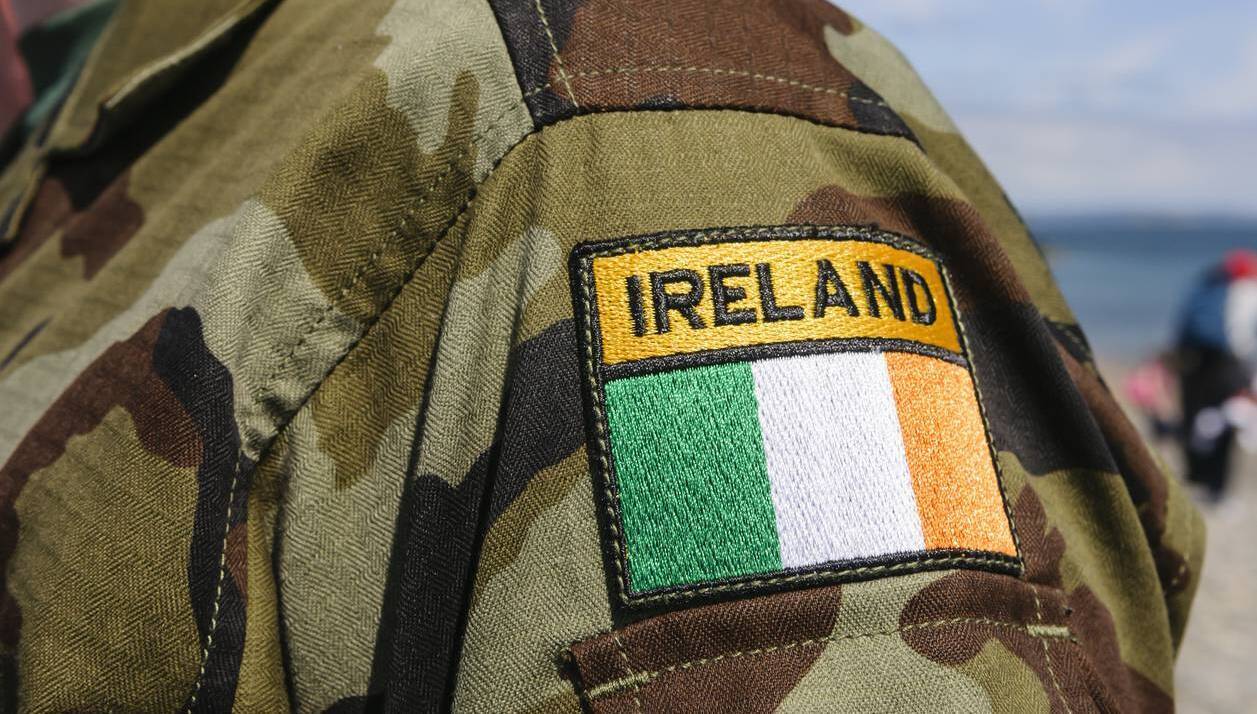
'A quiet departure has occurred of Ireland’s last tracked vehicles in service to the State, both in the military and civilian services'
Letters to the Editor: Disposal of last tracked State vehicles

'Only over the weekend, members of the cavalry corps of the Defence Forces won first place in the Bradley category of the Sullivan Cup 2026 in the USA. It’s essentially an armoured warfare competition.' File picture

A quiet departure has occurred of Ireland’s last tracked vehicles in service to the State, both in the military and civilian services.

The first to go were the Irish army’s fleet of tracked vehicles in the cavalry corps, the FV101 Scorpion CVR(T) — a combat reconnaissance vehicle with various armaments such as a 76mm main gun and a key aspect to the vehicle was its mobility.

There were 14 vehicles in total which were based in the Curragh Camp, Co Kildare. They were in service from 1980 until being quietly stood down in 2017.

The Irish army also had seven Bandvagn BV206 that were brought into service in 2008 and based in the Curragh Camp.

They were used as an air defence asset in the artillery corps, utilising the Giraffe MK IV short range radar which was attached to them. The vehicles were all terrain, tracked, armoured, and were amphibious.

They too were quietly stood down and, according to reports, some were gifted to Ukraine in 2025.

Both vehicles have now entered into Irish military history.

Finally, the civil defence had two second-hand Hägglunds as national assets, managed by Dublin Civil Defence, and were brought into service in 2010 and used for search and rescue, logistical support, extreme weather events such as heavy snowfall, flooding, and access to inaccessible areas off road such as in bogs were even 4x4 vehicles can have limited access.

Both were also quietly decommissioned in early 2026.

Only over the weekend, members of the cavalry corps of the Defence Forces won first place in the Bradley category of the Sullivan Cup 2026 in the USA. It’s essentially an armoured warfare competition.

The Bradley is a tracked fighting vehicle, a tank in other words, and the Irish team received training on the vehicle only before the competition started and proved more than capable.

So, the question is: Where are the replacements to these vehicles and assets to the State?

Aaron Crampton, Killester, Dublin 5

Treating Kilkee’s wastewater

I wish to respond to the article by Pádraic Fogarty on the current controversy on Uisce Éireann’s proposed wastewater treatment plant on the famed cliff walk at Kilkee, Co Clare, under the deeply misleading headline: ‘Kilkee’s bathing water is filthy — so why are people objecting to a water treatment plant?’

What local residents and cherished visitors alike object to is this deeply flawed proposal being imposed on one of Ireland’s most iconic coastal landscapes without any meaningful consultation, while failing to solve the very environmental problem it claims to address.

The central fact omitted from Mr Fogarty’s article is this: The proposed development is a primary treatment plant, not the tertiary treatment system Kilkee has been promised for decades. This distinction matters enormously.

Under this proposal, the same outfall pipe currently discharging into Kilkee Bay will continue to be used.

The wastewater will not receive any biological or tertiary treatment.

Solid brown waste will be screened out and trucked away several times a week along the cliff walk, sloshing its way past walkers and through the town.

The remaining effluent, including bacteria, pathogens, and untreated liquid waste, will still be discharged into the bay at the same location as today; So this proposal does not end the discharge problem local people have been highlighting for years. It merely alters the form of the discharge while branding it as progress.

Residents are also entitled to ask why Uisce Éireann is advancing a system that is already obsolete under tightening EU wastewater standards. There is widespread concern that this proposal is being rushed through before newer environmental rules take effect, rules under which such limited treatment systems will no longer be acceptable.

These are not irrational objections. They are legitimate environmental concerns.

Nor is it unreasonable to question the visually intrusive industrial facility on Kilkee’s renowned cliff walk, one of the town’s greatest natural amenities and a landscape of major tourism and ecological value.

Would such a structure be permitted overlooking the Cliffs of Moher or within the Burren landscape? It is difficult to believe it would.

Protecting sensitive coastal environments should not involve dismissing those raising legitimate questions about them.

I would respectfully invite Mr Fogarty to visit the proposed site in Kilkee to examine the actual details of the scheme, and engage directly with local residents before making further public pronouncements about a community and landscape he appears not to fully understand.

Ellie Byrne, Kilkee, Co Clare

Israel’s dubious ‘values and norms’

Israeli prime minister Benjamin Netanyahu said the way national security minister Itamar Ben-Gvir dealt with the flotilla activists in Ashkelon “is not in line with Israel’s values and norms”.

In certain respects, Netanyahu may be right. Ben-Gvir’s behaviour, while dreadful, was not in line with Israel’s values and norms, because Israel’s values and norms in recent decades have been far worse than Ben-Gvir’s behaviour at Ashkelon. The ethnic cleansing and genocide against the Palestine people have been enabled by, and would not have been possible if, Israeli values and norms had not been reduced to a similar level that existed in Nazi Germany.

The international community must take appropriate actions in a timely manner to deal with genocide and other war crimes being committed by Israel, assisted by the US and others in Palestine, Lebanon, Iraq, and Syria.

International leaders are expressing outrage at the treatment of the Global Sumud Flotilla courageous human rights activists.

The very justified actions by the flotilla activists are only necessary because international leaders and organisations including the UN, EU, the International Court of Justice (ICJ), and the International Criminal Court, have failed to prevent crimes against humanity and to stop the genocide.

Francesca Albanese, the UN special rapporteur for the Palestinian occupied territories, said the activists’ hardships were “a luxury treatment compared to what is inflicted on Palestinians in Israeli prisons”.

The ICJ issued an inadequate verdict on January 26, 2024, saying there was a plausible risk of genocide in Gaza, but it has failed to take effecting actions to hold Israel to account or to end the genocide.

Edward Horgan, Castletroy, Limerick

More in this section

Revoiced

Newsletter

Had a busy week? Sign up for some of the best reads from the week gone by. Selected just for you.

Cookie Policy Privacy Policy Brand Safety FAQ Help Contact Us Terms and Conditions

© Examiner Echo Group Limited