Irish Examiner view: We need to enforce litter laws
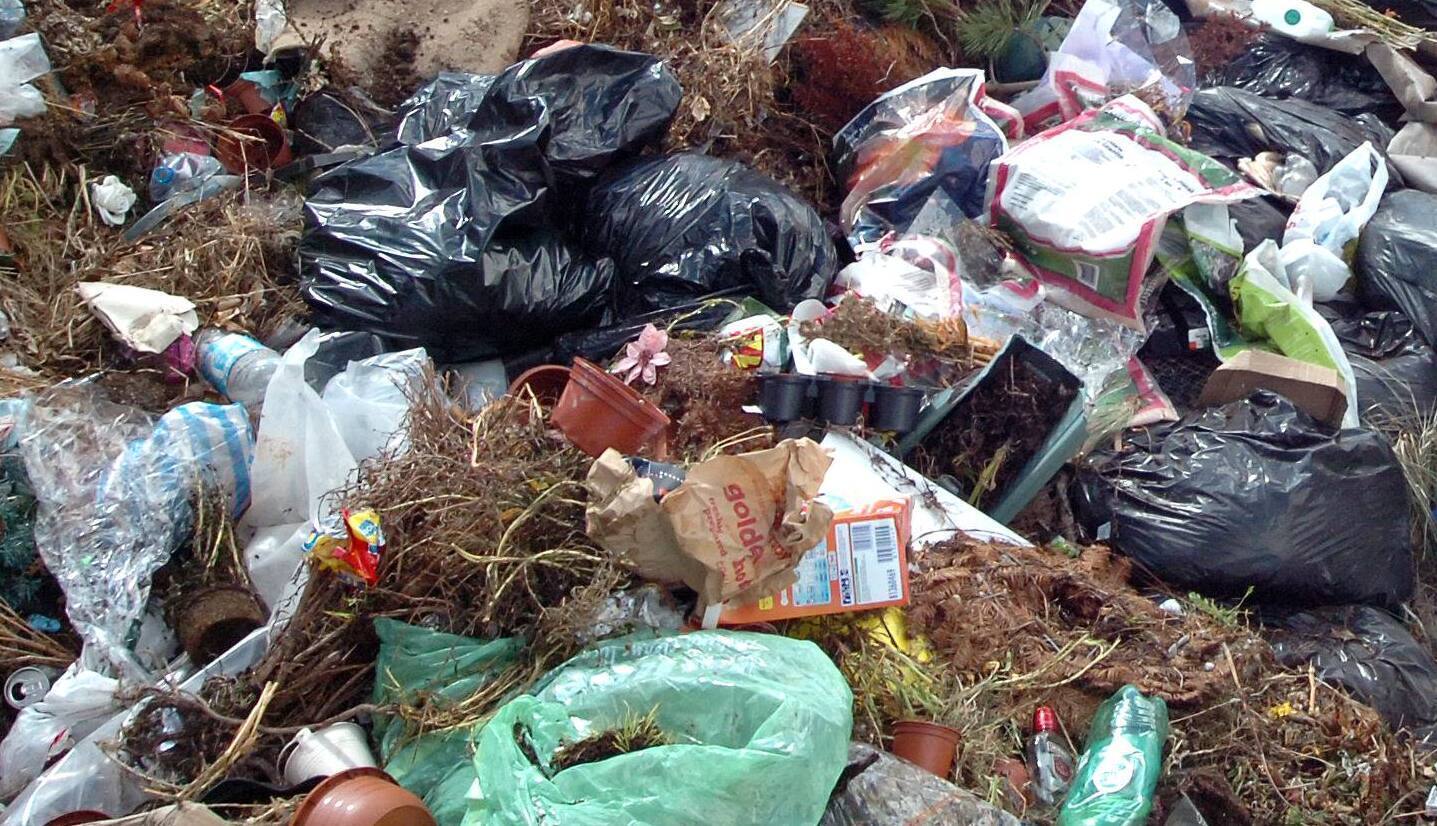
Illegally-dumped waste. Stock picture: Larry Cummins
Fines for littering and dog fouling are to be increased significantly in September, an acknowledgement of a long-standing issue all over Ireland.
Illegal dumping is an ongoing headache in many places, and it is encouraging to hear that minister of state for the circular economy Alan Dillon is to deliver a €3m investment in anti-dumping initiatives across all local authorities — funding which may be used for CCTV systems, for instance.
On-the-spot fines will rise from €150 to €250 for dumping offences like these, as well as for dog fouling.
Read More
The latter is a different challenge, but many readers will be familiar with the daily experience of trying to side-step the dog waste which litters our roads and streets.
This can be a far more significant problem than one of inconvenience: These new initiatives coincide with the announcement that swimming in the sea at the Dún Laoghaire Baths complex has been banned because the water has been polluted by sewage overflows and dog faeces.
However, well-meaning though these measures are, readers will instantly identify the most obvious flaw involved here: It is not the September start date for these measures, though that means the old dispensation holds for the whole summer.
The problem here is that it hardly matters how punitive fines are if the law they are based on is not enforced, and it is clear that there is little enforcement of the legislation which governs dog fouling or illegal dumping. Doubling the financial penalty for an offence is meaningless if there is no real chance that anyone committing that offence will be caught and prosecuted.
The other sad conclusion to be drawn here is the confirmation of many people’s selfishness. It should, of course, be a matter of personal responsibility to dispose of one’s domestic refuse or dog waste properly out of respect for one’s fellow citizens.
These measures are welcome, but it will likely take more than increasing fines by €100 to make people accept their responsibilities to others.
For most of us, a hospital stay is one of the most stressful experiences imaginable, with specific health concerns compounded by the stress of a different environment. Unless one has a medical background, unfamiliarity with medical terminology and procedures can add to that sense of stress.
In that context, the Irish Patients’ Association (IPA) called this week for a national central electronic database of patient records makes eminent sense — though it does raise an immediate question.
If we do not have such a database, then how are patient records compiled and maintained? Although it may be surprising to learn in 2026, most Irish hospitals use either a largely paper-based record-keeping system or electronic systems that do not link up with each other.
This is an extraordinary situation at a time when digital access has never been more widespread, and so much of our lives — commercial, social, recreational, work — is conducted online.
Neither paper forms nor isolated electronic systems are acceptable methods of record-keeping now, and the proof of that is visible in the resulting administrative mess. It is reported that almost 100,000 legal requests for information from the HSE were made in just the last three years, most of which came from patients looking for their own personal medical records.
It is completely unsatisfactory that people must go through a legal process to obtain or piece together their own medical information, particularly when the information may relate to a stressful experience to begin with.
As Stephen McMahon, of the IPA, stated this week: “When someone dies or someone is injured or there is a question mark over care, they want to find out what happened. And they find it is not a compassionate way to go through the legal process to get access to those records.”
The State is due to spend €2bn on an electronic record system for the health system. It is urgently needed, to judge by the present administrative chaos.
Readers who are devoted Spotify users may have noticed that the music streaming app released a new feature for its users this week.
The feature ‘Spotify 20: Your Party of the Year(s)’ was launched on Tuesday to mark the app’s 20th anniversary and gives users the chance to look back at their use of the app. It shares information such as the first song the user ever streamed, and the user’s all-time most-streamed artist.
Read More
Last month, Spotify reported a higher-than-expected rise in monthly active users — 761m in the first three months of the year — and a 9% rise in paying subscribers, to 293m.
The app has revolutionised how people listen to music in its two decades.
Older readers may recall the time when practically every song ever recorded was not instantly accessible through a pocket device, but now that is an unremarkable fact of modern life.
Spotify has also faced plenty of criticism along the way, for its negative impact on musicians’ earning power given its policy on royalties, for instance, with artists requiring 1,000 streams per year to qualify for payment.
There have also been allegations that some artists have had their streams artificially boosted through AI and online bots.
However, the app is an integral part of many people’s lives. The new feature released this week underlines just how central it is.


CONNECT WITH US TODAY



Be the first to know the latest news and updates