Irish Examiner view: Belief is what sustains authority
current disquiet may harden into something more consequential
Irish Examiner view: Belief is what sustains authority

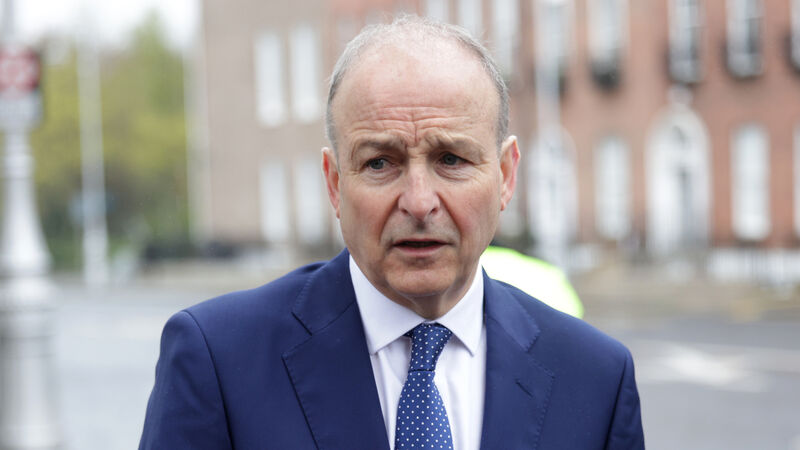
Taoiseach Micheál Martin insists his position is not under threat 'in any shape or form'. A coup appears unlikely to materialise immediately, and ministers have rallied publicly behind him. But leadership crises are seldom resolved by declarations of confidence. They are measured instead by the mood of a party — and that mood is shifting. Picture: Leah Farrell/RollingNews.ie

The tremors running through Fianna Fáil this week may yet subside, but they carry a familiar warning from Irish political history: When a leader loses the confidence of their own parliamentary party — the “dressing room”, in the well-worn phrase — recovery is rare.

The immediate catalyst is clear. The Government’s handling of the fuel protests has exposed a deeper unease within Fianna Fáil about tone, direction, and connection with voters. Younger TDs spoke of “real and deep concern” at how events unfolded, while senior figures quietly canvass support for “leadership initiatives” to restore trust.

Taoiseach Micheál Martin insists his position is not under threat “in any shape or form”. A coup appears unlikely to materialise immediately, and ministers have rallied publicly behind him. But leadership crises are seldom resolved by declarations of confidence. They are measured instead by the mood of a party — and that mood is shifting.

The proximate crisis — fuel shortages, protests, and a faltering Government response — has been politically damaging. The Coalition has seen its majority cut, a junior minister resign, and internal criticism spill into the open. Even as the Government survived a confidence vote, the episode reinforced a narrative that it is reactive rather than in control.

More troubling for Martin is what the unrest has revealed inside his own party. Complaints about a “centralised” leadership style and a lack of consultation have been voiced for years; now they are being echoed by a new generation of TDs. Others concede that the Government’s tone lacked empathy — a telling admission in a cost-of-living crisis.

This is how authority ebbs: Not in a single dramatic rupture, but in an accumulation of doubts. A leader can survive electoral setbacks or policy missteps. It is much harder to withstand a perception among colleagues that they are no longer being heard. Fianna Fáil, more than most parties, understands the consequences. From the fractures of the arms crisis to the slow erosion of leaders in more recent decades, the pattern is consistent: Once internal confidence drains away, it rarely returns in full. Leaders may linger, but their authority is diminished, their decisions second-guessed, their position contingent.

None of this means Martin’s leadership is immediately terminal. The absence of a clear successor, and the risks of destabilising a Government mid-crisis, weigh heavily on
potential challengers. There is also genuine loyalty within the party, and recognition of Martin’s experience on the international stage. But loyalty is not the same as belief. And belief is what sustains political authority.

The coming weeks will be decisive. If the Taoiseach can reassert control — not just of events, but of his party — this moment may pass as another test survived. That will require more than policy adjustments; it will demand a recalibration of how Fianna Fáil listens, responds, and governs.

If not, the current disquiet may harden into something more consequential. Because history offers a stark lesson: Once the dressing room turns, the clock on its leadership has already begun to run down.

Less space for compromise

The composition of the American delegation to the latest Iran negotiations offers a striking illustration of the slow death of international diplomacy. Vice president JD Vance, cast as a “reluctant defender” of the conflict, leads talks of enormous geopolitical consequence despite limited diplomatic pedigree.

Alongside him are figures like Jared Kushner and Steve Witkoff, whose primary qualifications lie not in statecraft, but in real estate deals, and sycophantic proximity to power. This is not simply a critique of individuals. It is a reflection of a broader shift in how diplomacy is conceived — away from expertise and towards loyalty, deal-making instinct, and political messaging.

Set against this is the Iranian delegation, composed largely of career technocrats and academics. Their ranks include ministers and senior officials with doctorates in political thought, economics, geography, and law. Whatever one’s view of the Iranian state, its negotiating team reflects a traditional model: Diplomacy as a discipline grounded in study, continuity, and institutional memory.

The contrast is stark. On one side, a cohort shaped by business, politics, and personal networks. On the other, a cadre of specialists trained to navigate complexity over years, not news cycles. This matters. Diplomacy is not merely transactional; it is cumulative. It requires an understanding of history, culture, and nuance that cannot be improvised in the moment. When negotiations are reduced to the logic of “final offers” and personal rapport, the risk is not just failure, but miscalculation. None of this guarantees success for the Iranian side, nor failure for the Americans. But it does suggest a troubling trend: The erosion of diplomacy as a profession.

If negotiation becomes an extension of domestic politics by other means, the space for quiet compromise narrows. In conflicts as volatile as this, that may prove a dangerous loss.

Economic power

Boston Scientific’s €75m investment in Galway is a welcome boost for Ireland’s medtech sector. But beyond the headlines, it carries a more instructive message for Government.

Multinational investment is not an act of political goodwill. It is a commercial decision. The firm is expanding in Galway because of talent, research capability, and a proven industrial base — not because of diplomatic alignment or deference to Washington.


Global companies will continue to invest where it makes economic sense. 

Too often, policy debates are framed by an unspoken caution: That challenging US positions risks deterring investment. This deal suggests otherwise. Firms of this scale do not allocate capital based on political sensitivities. They follow value, skills, and market access. That should give Government greater confidence. Ireland does not need to be confrontational. But nor should it be overly cautious. Where there are disagreements with US policy, they should be expressed clearly. The lesson is straightforward: Economic strength, not political deference, underpins Ireland’s appeal.

More in this section

Revoiced

Newsletter

Sign up to the best reads of the week from irishexaminer.com selected just for you.

Cookie Policy Privacy Policy Brand Safety FAQ Help Contact Us Terms and Conditions

© Examiner Echo Group Limited