Irish Examiner view: Stryker cyberattack shows how easily we are caught in the crossfire
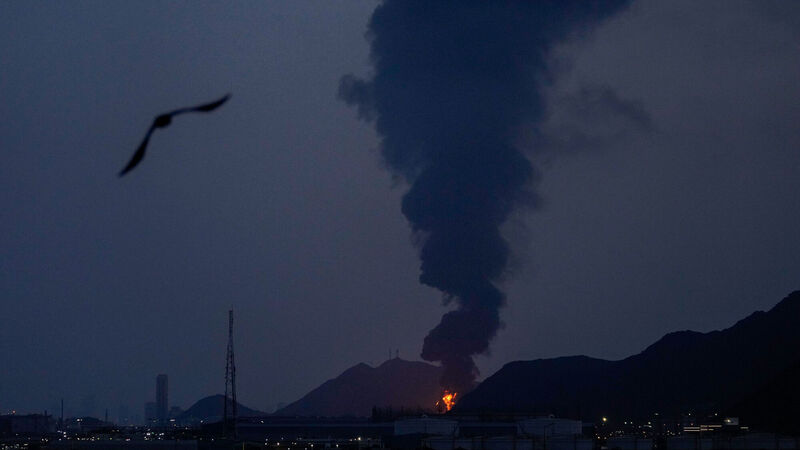
Fire and smoke issue from the Fujairah oil facility in the United Arab Emirates after debris of an Iranian intercepted drone hit it, according to UAE authorities. Picture: Altaf Qadri/AP
The cyberattack on the global medical technology company Stryker — which employs thousands of people in Cork, Limerick, and Belfast — is a reminder that modern conflict no longer respects geography.
Wars that begin thousands of kilometres away can now reach directly into offices, factories, and hospitals through the digital networks on which modern economies depend. In this case, the disruption was not caused by missiles or military force, but by code.
Reports that an Iranian-linked group claimed responsibility underline how cyberwarfare has become an increasingly familiar feature of geopolitical confrontation.
The targets are rarely governments alone. Companies, infrastructure, and public services are often caught in the crossfire.
For Ireland, the implications are particularly clear.
Read More
The country has built a successful economy by embedding itself deeply in global supply chains — particularly in pharmaceuticals, technology, and medical devices. Companies such as Stryker have made Ireland a centre of advanced manufacturing and innovation, sustaining thousands of highly-skilled jobs across the country.
Global integration brings exposure as well as opportunity. When tensions rise between major powers, the consequences can ripple outward in ways few could have imagined.
A cyberattack launched on the far side of the world can halt operations in Cork or Limerick within minutes. This is the largely unseen dimension of modern warfare. While television screens show explosions and troop movements, another struggle is taking place across servers and networks worldwide.
Cyberattacks can interrupt supply chains, threaten sensitive data, delay medical production, and inflict major financial damage. Their effects may lack the drama of conventional conflict, but they are no less disruptive.
Governments and businesses therefore face an urgent task. Investment in cybersecurity, system resilience, and international co-operation is no longer a technical afterthought, but a strategic necessity.
The sophistication and frequency of cyberattacks have grown dramatically, and sectors such as healthcare and medical technology are particularly attractive targets.
Read More
Yet stronger defences, while essential, address only part of the problem. Cyberattacks do not arise in a vacuum. They are frequently the indirect consequences of geopolitical escalation.
As tensions between states intensify, retaliation increasingly takes asymmetric forms. Cyber operations allow actors to cause disruption and signal strength without triggering the full consequences of open war.
The latest escalation involving Iran — following the deeply controversial decisions of US president Donald Trump and Israeli prime minister Benjamin Netanyahu to launch military action — illustrates how quickly conflict can spread beyond its original theatre. Modern warfare rarely stays neatly contained. It spills into energy markets, financial systems, and now the digital infrastructure on which global commerce relies.
For workers in Cork, the strategic calculations behind such events can seem distant and abstract.
Yet the cyberattack on Stryker demonstrates how quickly international tensions can land on a local doorstep.
Cybersecurity will rightly remain a priority, but the most effective defence against such attacks ultimately lies elsewhere. When diplomacy collapses and military escalation becomes the chosen path, the consequences rarely remain confined to those who made the decision. In an interconnected world, war is no longer something that happens elsewhere.
If ever there were a moment for Ireland’s climate movement to make its case, this is it. The escalating global energy crisis — driven by conflict in the Middle East and the resulting volatility in oil markets — has laid bare the weakness in Ireland’s energy system: Dependence on imported fossil fuels.
As environmental commentator John Gibbons argued in this publication, Ireland still spends billions each year importing oil and gas while the vast potential of clean, locally produced energy remains underdeveloped.
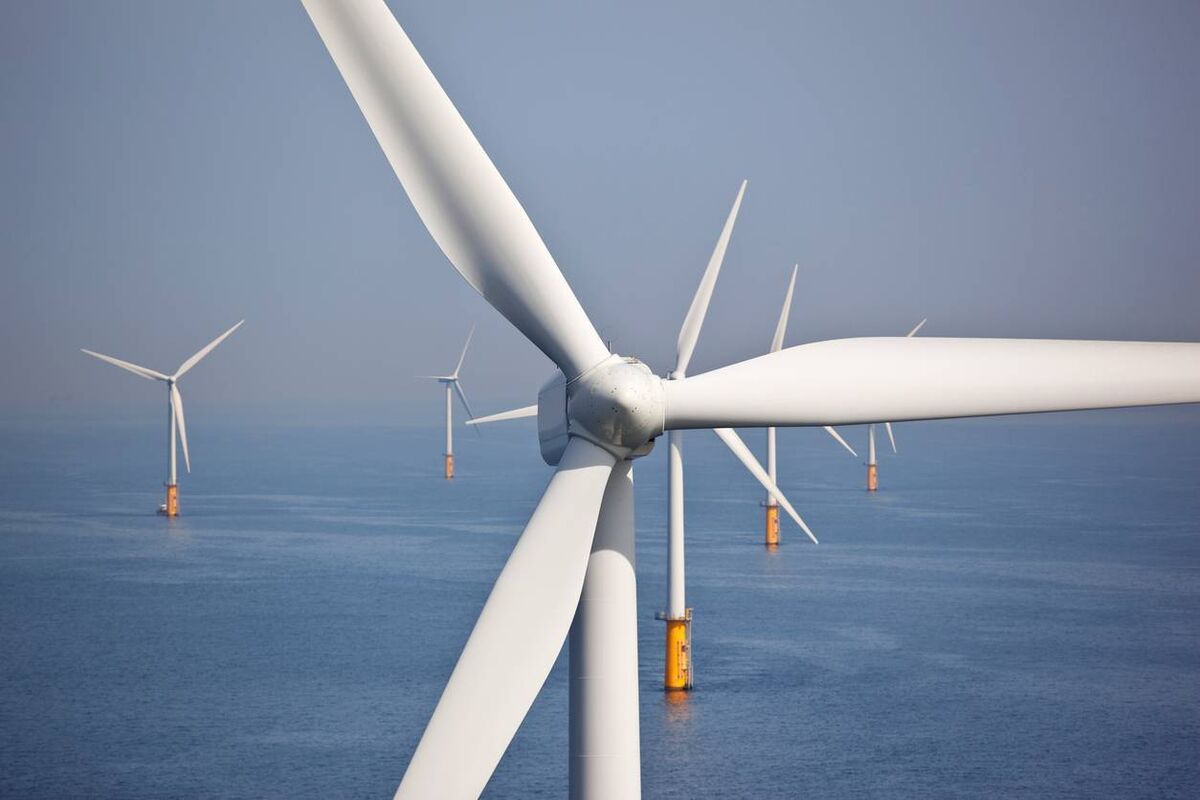
For those who have long argued for a decisive shift towards renewable energy, this should be an open goal.
High fuel prices, geopolitical instability, and supply insecurity are precisely the problems that advocates of wind, solar, and electrification have warned about for years.
If the public is asking why their heating, transport, and electricity costs are tied to events thousands of kilometres away, the answer is simple: Because our energy system still relies heavily on fuels extracted elsewhere and shipped here at enormous cost.
Yet the voices calling most clearly for a transition to clean energy have been surprisingly muted. Perhaps campaigners have grown accustomed to framing the argument almost exclusively in terms of climate responsibility and environmental protection. Those remain compelling reasons, but the present crisis shows that energy independence, price stability, and national resilience are just as powerful arguments.
Ireland’s renewable resources — particularly wind — are among the strongest in Europe. Harnessing them more aggressively would not merely reduce emissions; it would reduce exposure to precisely the kind of global turmoil now driving up costs. Moments like this do not come often. If the energy crisis tells us anything, it is that fossil fuels come with risks that extend far beyond the environment. Those who want a cleaner energy future should say so — loudly.
The death of Ronnie Delany at the age of 91 closes a remarkable chapter in Irish sporting history. For many, Delany will forever be the young man who surged past the field in the final lap of the 1500m at the 1956 Olympic Games in Melbourne, winning gold in an Olympic record time and giving Ireland one of its most memorable sporting triumphs. He was just 21 years old.
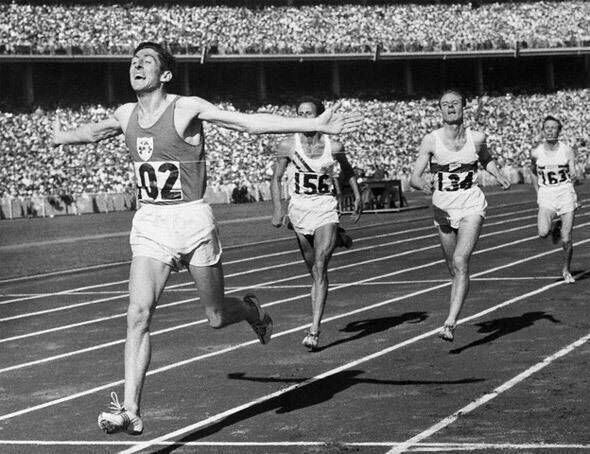
Yet Delany’s importance went far beyond that famous race. At a time when Ireland was still a relatively isolated nation with limited sporting infrastructure, his achievement showed that Irish athletes could compete with — and defeat — the very best in the world. His win sparked huge interest in athletics at home and inspired generations who followed.
Delany also broke the mould in another sense. Through his success at Villanova University in the US, he helped establish a pathway that many Irish athletes would later follow, combining elite competition with education abroad.
But perhaps his most enduring quality was the grace with which he carried his success. For decades, he remained a proud ambassador for Irish sport, embodying the Olympic spirit he so cherished. Delany’s victory in Melbourne was a moment; the standard he set has lasted for generations.


CONNECT WITH US TODAY



Be the first to know the latest news and updates