Irish Examiner view: Humanitarian crisis in Cuba 
Once you accept that this is a crisis with a human toll, silence becomes complicity
Irish Examiner view: Humanitarian crisis in Cuba 

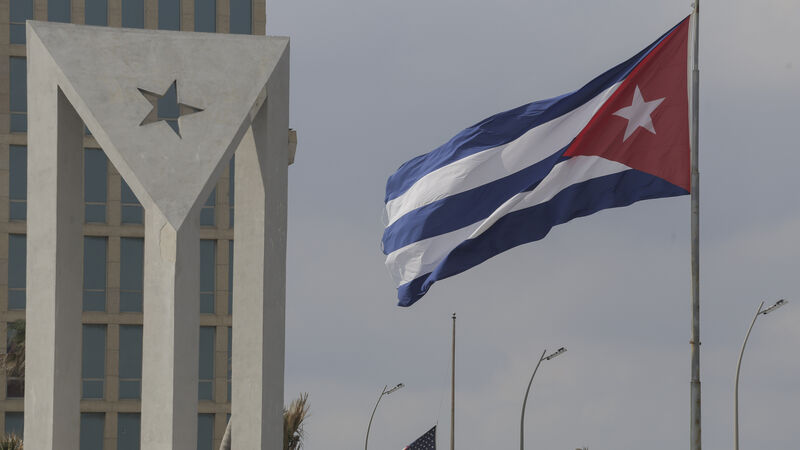
This is an 'All Eyes on Cuba' moment, precisely because it is so easy for Cuba to fall between the cracks. Picture: Ariel Ley/AP

Cuba rarely makes it onto our front pages unless a hurricane hits, a flotilla arrives, or Washington changes the dial on sanctions and the island shudders in response. Then the story slips away again — nudged aside by the next election, the next war, the next scandal. That’s how humanitarian crises become background noise: Not because they end, but because we stop looking.

Right now, the warning lights are flashing. The UN has cautioned that Cuba faces the risk of humanitarian “collapse” as fuel supplies dwindle, with cascading consequences for transport, hospitals, food distribution, and basic services. This is not abstract geopolitics. It is blackouts, rationing, delayed procedures, empty pharmacy shelves, and families spending hours chasing essentials.

We can argue about Cuba’s governance, but it is impossible to discuss the daily realities on the island without naming the external pressure that tightens every shortage: The US blockade, embargo, call it what you like. It is now so embedded in the landscape that it can appear almost natural. But it is a deliberate policy choice, renewed and refined.

A UN-appointed independent expert, special rapporteur Alena Douhan, has urged the US to lift its sanctions, describing how their effects fall across the entire population, including healthcare, nutrition, and education. Her critique is not that Cuba is perfect; it is that “maximum pressure” is a blunt instrument used against ordinary people.

And the world’s view is hardly mysterious. Year after year, the UN General Assembly votes overwhelmingly to condemn the embargo and call for its end. The EU, too, has repeatedly underlined that the embargo damages Cuba’s economic situation and harms living standards, arguing that lifting it could benefit the Cuban people.

Whether one frames the embargo as unlawful under international law, or as a moral failure in plain sight, the practical outcome is the same: It constricts trade, finance, and energy; it encourages over-compliance by banks and suppliers; it turns routine purchases into diplomatic gymnastics. And once you accept that this is a crisis with a human toll, silence becomes complicity.

This is an “All Eyes on Cuba” moment, precisely because it is so easy for Cuba to fall between the cracks. The country is small, distant, and politically unfashionable. That makes it the perfect candidate for the slow-motion catastrophe we will later commemorate with regretful documentaries and parliamentary speeches that begin: “We did not know how bad it was.”

Ireland should not wait for that script. As a small island that has long claimed a values-based foreign policy, we have both standing and experience. At a minimum, Ireland can use its voice — bilaterally, through the EU, and at the UN — to press for humanitarian space: For sanctions relief that allows fuel, medicines, medical equipment, and financial channels to function without fear. We can insist that collective punishment is not an acceptable tool of diplomacy. With a trip to the Oval Office on the agenda next month, we could also show some courage in the causes we choose to fight.

We should also remember Cuba’s own record of solidarity. Its Henry Reeve medical brigades have been deployed to disasters and epidemics abroad, including responses to ebola and covid-19, with Cuban clinicians working in multiple countries under immense pressure. Whatever one thinks of Havana, the impulse to send doctors rather than weapons is a kind of internationalism the world could use more often.

€60k in bar tabs at Dáil Éireann 

There are plenty of reasons bar sales in Leinster House might rise by 34% in a year. The Dáil sat late. December was busy. Guinness remains, as ever, a steady friend in stormy seas. None of that is especially shocking.

What is shocking, however, is that politicians can still put drinks (that are generally cheaper than elsewhere) on a tab. According to figures obtained under the Freedom of Information Act, almost €60,000 worth of sales in the Oireachtas bars in 2025 were charged to politicians’ accounts. In the same year that families were counting every euro at the supermarket checkout, elected representatives were ordering tequila and sambuca shots, and €27 measures of Midleton Very Rare, with the comfort of paying later.

This should not be read as a call for puritanism, nor for the Dáil to go dry. 

The Members’ Bar is a workplace canteen of sorts. People will have a cathartic pint and network. Fine. But a tab is not a pint. A tab is an entitlement — a quiet little exemption from the ordinary rules the rest of the country lives by. Most workers in Ireland don’t have the option of racking up a running bar bill and settling it when they get around to it. Most people would be mortified to even ask. Yet in Leinster House, it remains part of the furniture, a relic of another era when politics was a club and the public were outside in the rain looking in.

Public confidence in politics is already brittle. The cost of living is still grinding people down. In that context, the optics are not a side issue — they are the issue. Politicians cannot control inflation, or global energy prices, or housing supply overnight. But they can control the controllables. And one of those controllables is this: Pay for your own drink at the time you buy it, like everyone else.

Ten years wasted on Cork Event Centre

Ten years ago this week, then taoiseach Enda Kenny turned a sod on South Main St and promised Cork an event centre. It was the kind of moment Irish politics loves: Hi-vis jackets, hard hats, a smiling photo, and the comforting illusion of progress.

A decade on, the only thing Cork has been left with is a
derelict site and a “bridge to nowhere”. This is not simply a planning delay. It is a monument to a performative, vacuous kind of politics — the sort that prizes announcements over outcomes, press releases over delivery, and ceremonial “milestones” over the boring, difficult work of actually building something.

Big tours bypass Cork. Conferences go elsewhere. Opportunities for local jobs, hospitality, and culture are quietly squandered. An event centre should not be a luxury. For a city of Cork’s scale and ambition, and in today’s economy, it is basic infrastructure. The real scandal is not that the project has stalled. It is that no one seems to pay a political price for wasting 10 years. If Cork is serious about being treated as a second city, it should stop accepting third-rate delivery.

More in this section

Revoiced

Newsletter

Sign up to the best reads of the week from irishexaminer.com selected just for you.

Cookie Policy Privacy Policy Brand Safety FAQ Help Contact Us Terms and Conditions

© Examiner Echo Group Limited