Irish Examiner view: HSE’s lack of ‘serious incidents’ data raises a red flag

In a world that is lubricated by the collection of statistics of every kind it is a surprise to find just how little we know about some areas of public activity and policy
Irish Examiner view: HSE’s lack of ‘serious incidents’ data raises a red flag

Some of the 488 cases are defined as 'serious incidents' that 'may result in death or serious harm' while others are 'serious incidents' which need to be examined to determine if 'safety was compromised'. File picture

It’s one of the aphorisms of the business world that you get what you measure.

Where management decides to place its ruler usually determines what defines an enterprise as “successful”. Many people will have heard of profit-to-turnover and debt-to-equity ratios, or costs per employee and return on capital employed. In soccer, it’s barely possible these days to get through a match without a commentator or a pundit mumbling about xG — the expected goals figure for a player or a team which arises from the data-heavy analysis of historic performance.

In a world that is lubricated by the collection of statistics of every kind it is a surprise, then, to find just how little we know about some areas of public activity and policy.

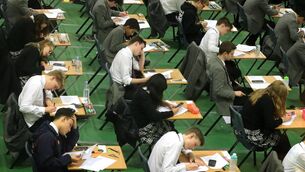
This week it was a shock, described as “gobsmacking” by safety campaigners, to learn that the HSE did not know or record the outcomes of investigations into nearly 500 baby deaths and injuries which took place over the past four years.

Some of the 488 cases are defined as “serious incidents” that “may result in death or serious harm”. Others are “serious incidents” which need to be examined to determine if “safety was compromised”.

These are predominantly cases where a baby was either stillborn, died within a month of birth, or suffered brain dysfunction.

It is mandatory that such cases, which constitute ‘serious reportable events’, are reported on the national incident management system and through a formal escalation process.

Although the need for inquiry is initiated at national level, there is no requirement for the results to be reported back centrally within the four-month timetable laid down. Or indeed, ever.

And recording all outcomes in one location is precisely what is not happening. Questions are asked locally, and the answers stay there.

For that reason, the HSE was unable, when asked by the Irish Examiner, to say what proportion of probes resulted in a negative finding.

A spokesperson said their system “is principally used for the purpose of learning from incidents” and was not intended for data collection.

This seems opaque, to put matters at their mildest. And it is difficult to comprehend how improvements can be made for collective learnings if queries are raised but responses are not collated and reviewed regularly.

If this is one example of a lack of curiosity about data — sometimes described as “the new oil” when it has been refined — then what are we to make about the revelation that landlords with more than 100 properties account for over 11% of all registered tenancies across Ireland?

That figure increases remarkably in Dublin where the centurions account for 22.55% of all private tenancies registered in the first three months of the year. This compares to a nationwide average of just 2.56% when Dublin is excluded.

This hasn’t happened overnight, and for this insight, we are grateful for new reporting techniques implemented by the Residential Tenancies Board. It casts a different complexion on the role of the frequently maligned small landlord and a useful pointer as to where the Government should be focusing its major attention.

Those in authority require accurate and timely information before they can suggest changes. In one case this week it is a matter of family safety; the other concerns the hot topic of housing. But decision-makers and the citizenry must have yardsticks which are reliable and easily available.

Tracking back to the future

Amid the responses to the expansive plans contained in the ‘All-Ireland Rail Review’, it was left to Transport Minister Eamon Ryan to strike the most wistful tone.
“One hundred years ago we were probably the best example of a rail-based country,” Mr Ryan said. “We’re not there now today. Now we are coming back, we need to come back strong.”

It’s not unusual for people of a certain age (Mr Ryan is 61) to think nostalgically that things were better in the old days. But with all the sunny talk of Los Angeles tearing up its freeways (unlikely); of 200kmh intercity trains; shiny projects to connect to Dublin Airport; and of the contribution an improved network will make to decarbonisation, there’s a valid point here.

Railways served wider areas a century ago. And so did horses. The arrival of the internal combustion engine, and the inexorable rise of personalised transport, did for them both. Even by the outbreak of the First World War, there were fewer than 20,000 motor vehicles in Ireland. The last census showed that there are now around two million. That’s a very large and costly scrappage scheme in waiting.

But readers can make their own suggestions about other facets of life that are not as they once were, and where their rediscovery would do us a power of good: Spirituality and respect for the church, for example; community spirit and good manners; reversing the sense of entitlement so frequently on show; and putting tawdry, celebrity culture back in its box.

Of course, there is a multiplicity of things which are better and which we can define as progress. But perhaps there is a price to be paid for being healthier and wealthier, and that is a corresponding fall in wisdom, perspective, and modesty.

Magnificent fortnight sous le ciel de Paris

It is seulement quinze jours since the Olympics opened, making us, temporarily, a little bit Parisian.

On that Friday night on July 26, we watched, in bafflement, an armada of athletes floating across the city in a kaleidoscopic display of cultural, political, mythological, and national references as the pouring rain justified that oft-used phrase ‘biblical’. Now, as the closing ceremony looms on Sunday, we can put away the jokes about ‘Après-moi, le deluge’; row back on the croissants and baguettes; and stop pretending that we like the taste of pastis.

And tell the French, and the City of Light, and even Emmanuel Macron, that they have done a great job in taking our minds off the troubles of the world.

Every Olympics has its share of challenges and the 33rd Olympiad was no exception. It opened with a sinister attempt to disrupt the country’s high-speed rail network, frustrating thousands of visitors.

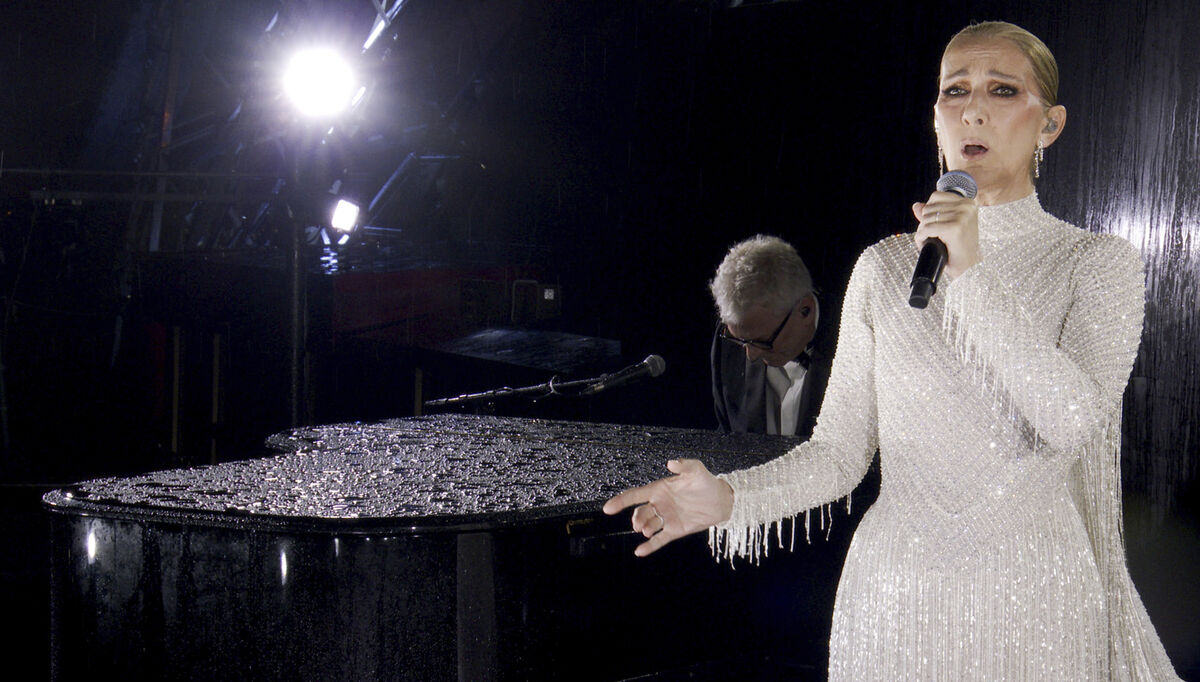
Canadian Singer Celine Dion performing on the Eiffel Tower during the opening ceremony for the 2024 Summer Olympics in Paris. Picture: AP

But there have been glorious memories, too. The achievements of Ireland, in our most successful Olympics ever, have been joyously documented and hymned and reflect all the additional efforts we have made for a decade or more.


But the glittering performances of many others will also reside long in our minds: Leon Marchand, Simone Biles, Cole Hocker, Noah Lyles, Summer McIntosh, Tom Pidcock, and a host of performers who have reminded us that ‘panache’ is a French word.

While the Olympics is about bread and circuses, it is also about enriching our collective consciousness and France 2024 has done that, and will no doubt sign off with style and a coup de theatre at 7pm. The closing ceremony has been designed by Thomas Jolly, the artistic director who delivered the opening spectacle.

“World-renowned singers” will be there, he says, although he will be hard pushed to top Celine Dion halfway up the Eiffel Tower, delivering a heartbreaking rendition of ‘Hymne A L’Amour’.

He might have a mission impossible to offer Tom Cruise, rappelling (another French word) down from the roof of the Stade de France to start the Olympic flame on its journey to its next destination, Los Angeles in 2028.

For a closing anthem they could do worse than some lines from Juliette Greco’s 1951 tribute, ‘Under Paris Skies’: “ . . . people by the thousands, Under the Parisian sky, Until evening will sing, The anthem of a people in love, With their old city.” Merci beaucoup Paree. Here’s to the Paralympics starting dix-huit days from now!

x

CLIMATE & SUSTAINABILITY HUB

More in this section

Revoiced

Newsletter

Sign up to the best reads of the week from irishexaminer.com selected just for you.

Cookie Policy Privacy Policy Brand Safety FAQ Help Contact Us Terms and Conditions

© Examiner Echo Group Limited