Irish Examiner view: Tech industry’s trial of the century
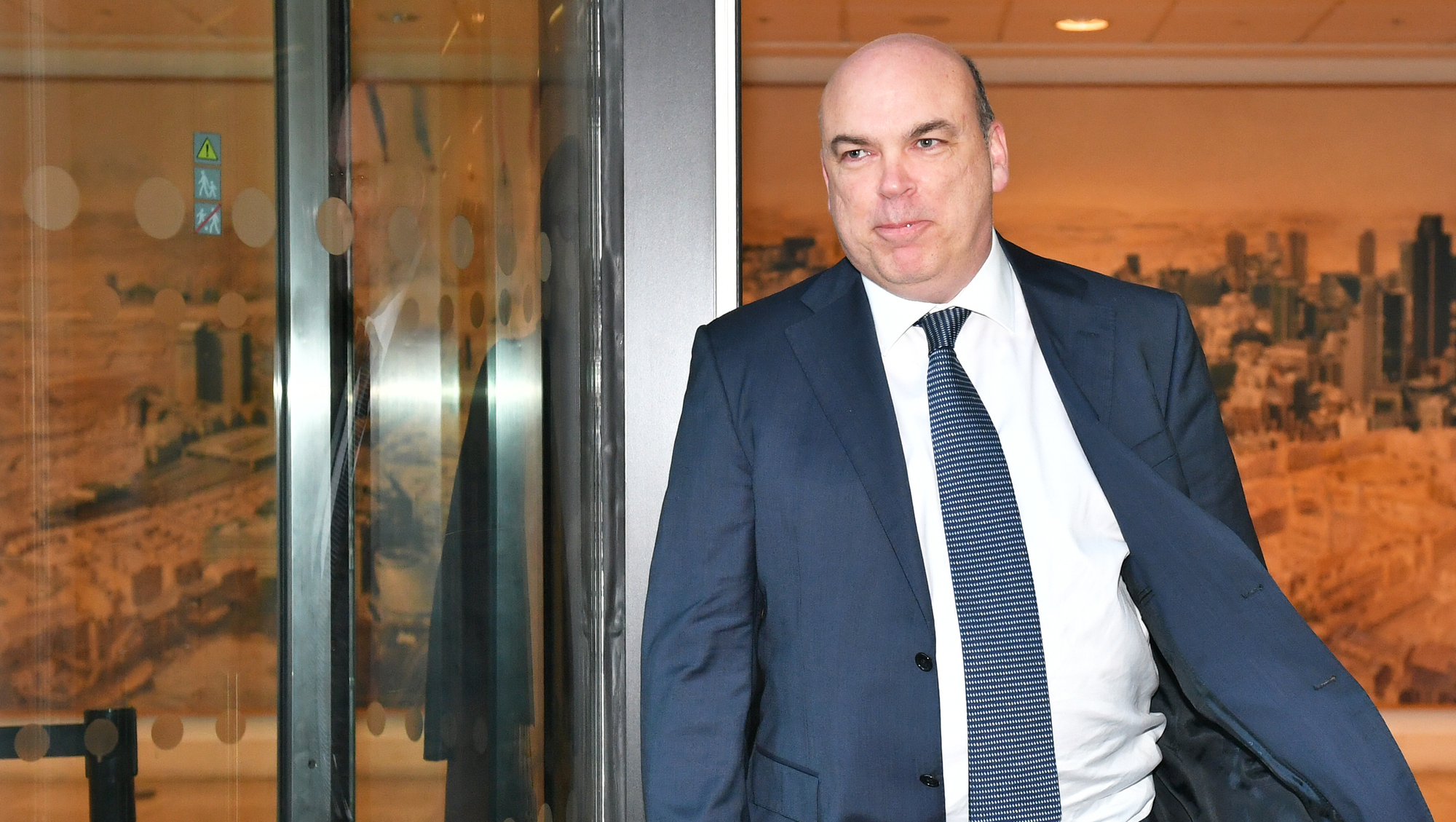
The case involving Mike Lynch will tell us much about the febrile atmosphere of technology takeovers. Picture: PA
It may not have immediate mass-market appeal as the trial of the century but there will be plenty to grab the attention over the next four months as the extradited tech tycoon Mike Lynch fights to clear his name in a San Francisco court.
There is, of course, the Irish dimension. The 57-year-old’s parents, a nurse and a firefighter, are reported to be from Tipperary and Cork.
Some accounts say Lynch was born in the Republic, others that he came into the world in Ilford, Essex, which was where he was brought up.
That he is an accomplished and colourful character is beyond argument. He won a scholarship to a leading private school before studying physics, biochemistry, and mathematics of mind-melting complexity at Cambridge University.
“Math at a pure research level,” he told an interviewer “is like playing jazz.”
It was there that Lynch established his first enterprise, specialising in recording products, with a €2,500 loan from a friend. His next venture was in the field of computer-aided fingerprint recognition before he launched a company in 1996 called Autonomy, which developed an algorithm based on Bayesian mathematics to help businesses retrieve information buried deep in emails and Word documents.
At its height, Autonomy was valued at around €50bn by some analysts and the American computer giant Hewlett Packard, seeking to diversify away from its computer and printer business because of the impact of smartphones on its core market, thought it spotted a bargain.
From Palo Alto a price of $11bn (around €10.2bn) seemed attractive in October 2011. Yet, within seven months HP had fired Mike Lynch before writing down their acquisition by $8.8bn due to “extensive accounting errors and misrepresentations”.
For Lynch, described as Britain’s Bill Gates, and once a personal advisor to former prime minister, now foreign secretary, David Cameron, it was the beginning of more than a decade of legal arguments.
His former finance director at Autonomy is already doing jail time in the US after being found guilty of fraud in relation to the deal while 15 months ago Lynch lost a six-year civil case brought by HP in the UK.
During that 93-day hearing, Lynch, who denies any allegations of wrongdoing, was in the witness box for 22 days, making it one of the longest cross-examinations in British legal history.
Now he faces the US courts and we will hear more about his flamboyant management style. Autonomy was the sponsors of Tottenham Hotspur FC; conference rooms at its HQ were named after James Bond villains; Lynch liked to drive 007’s ride of choice, an Aston Martin DB5.
He was a director of the BBC, and of the British Library.
An American jury will now have to decide whether Hewlett Packard, desperate to conclude a deal, got a rapid case of buyer’s remorse. Or whether, as federal prosecutors assert, Autonomy was an “elaborate, multi-layered, multi-year fraud”.
It is a case which will tell us much about the febrile atmosphere of technology takeovers, and how market valuations are arrived at.
We may not like what we hear.
One of the cheering riffs during the pandemic was that wildlife was getting along very nicely without us, thank you.
It would require a staggering act of begrudgery not to acknowledge that the Wild Atlantic Way campaign has been Ireland’s best marketing success since we sprung Riverdance on the world 30 years ago.
The 10th anniversary of the launch will be marked next month in Killarney at Meitheal, the annual flagship trade event organised by Fáilte Ireland in partnership with Tourism Ireland.
Since inception, the Wild Atlantic Way has become a household name throughout the country and a draw for the rest of the world.
It supports more than 80,000 jobs and over a million international visitors arrive annually. They are drawn not only by stunning scenery but by the holy grail which is at the heart of every travel ambition — the sense you can experience an authentic and unique cultural experience.
The achievement of the planners is not only in being able to market a diverse 2,600km of coastal route under a common banner but in finding ways to entice people further into the region with subtly linked experiences such as the Burren Discovery Trail, the Shannon Estuary Way, and the Mulroy Drive.
While the Wild Atlantic Way has had the most transformative impact in the north-west where counties such as Mayo, Sligo, and Donegal have seen considerably more tourists since it was launched, its benefits have been enjoyed everywhere.
For every euro spent by a visitor, 72c stays in the Irish economy and 23c comes back to the exchequer. Success has spawned numerous spin-off businesses servicing surfing, walking, and cycling as well as visitor attractions, retail outlets, craft stores, coffee shops, restaurants, and pubs. Return and off-peak custom is a key objective for the next decade. Nearly 50% of businesses expect visitor numbers to be up this year.
Many thousands of beds once available in tourist destinations have been redirected to deal with the multiple forms of housing demand which exist in Ireland.
Government ambitions to crack down on short-term lettings this summer, unlikely to be anything other than a symbolic act in respect of ameliorating the medium- and long-term housing crisis, are a discouragement for property owners to make rooms available. Whenever demand chases reduced availability, prices go north. And seasonality declines.
But it is not just accommodation. Local transport can be sporadic and, post-pandemic, some businesses worry that there are a lack of places to eat for up to half the week. This fuels anxieties that increases in costs driven by the exchequer will cause further service reductions.
These are challenges to be met. After a decade in which an identity has been brilliantly created and promoted the foundations are in place for further progress which would embellish Ireland’s reputation as a leader in sustainable and intelligent environment-friendly tourism.

CONNECT WITH US TODAY



Be the first to know the latest news and updates