Irish Examiner view: Florida plays politics with citizens’ lives
Irish Examiner view: Florida plays politics with citizens’ lives

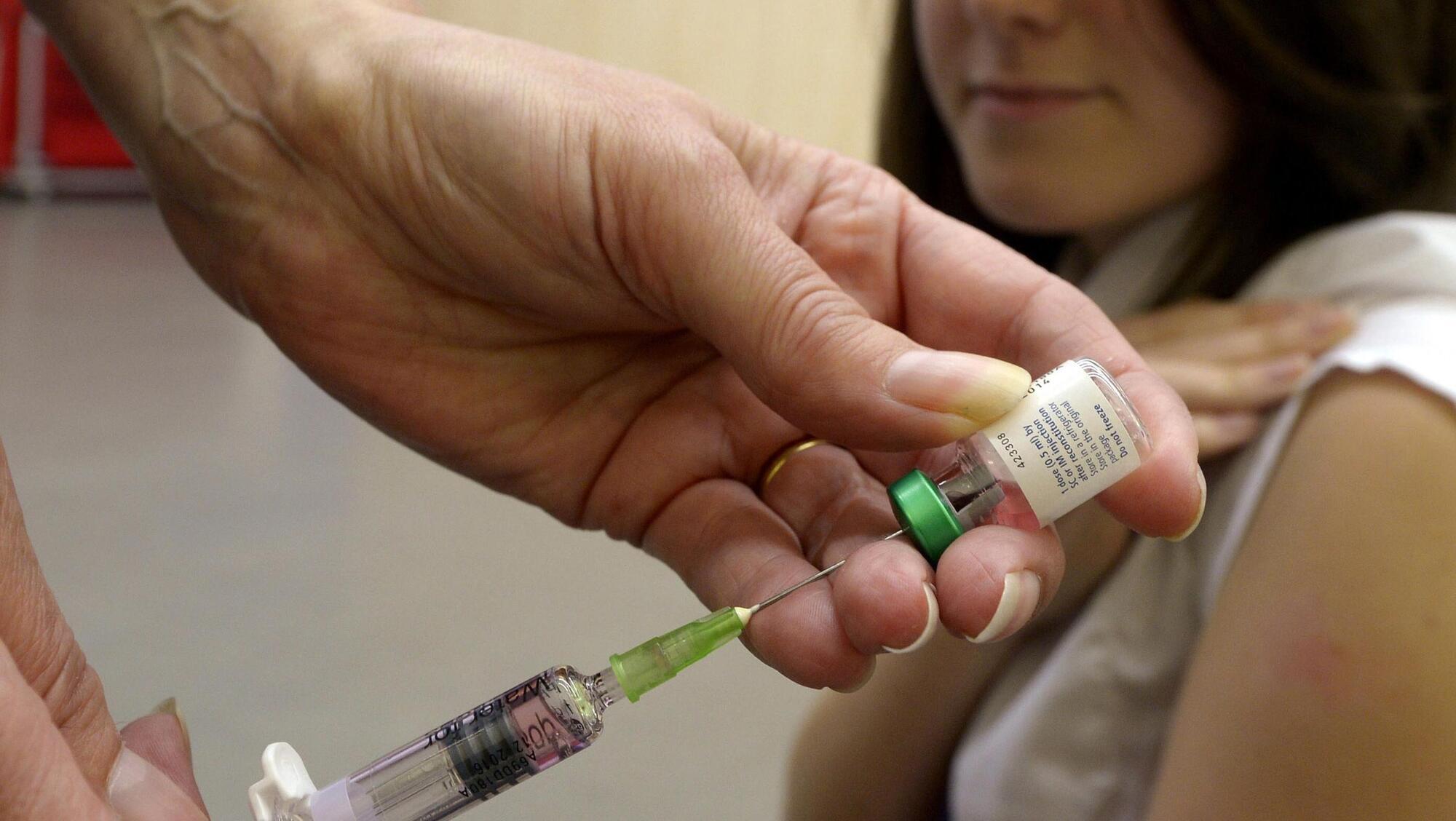
In a moment of medical crisis — such as this measles outbreak — failing to follow accepted medical and scientific guidelines is to play a very dangerous game with the lives of people. File picture

The Cabinet is expected on Tuesday to agree on a plan to offer a ‘catch-up’ vaccine to some 380,000 Irish people thought to be in danger of contracting and spreading the measles virus — a distinct and welcome difference from the stance being taken by the surgeon general in Florida.

There is an entirely preventable outbreak of measles spreading through America’s third most populous state right now and some experts are pinning the blame on the state’s chief medical officer, who is also a vaccine sceptic.

Joseph Ladapo was sworn in as Florida’s surgeon general in 2022 and he is widely seen as a politically appointed acolyte of the state’s far-right governor and failed Republican Party presidential candidate, Ron DeSantis.

Florida’s Broward County has seen an explosive outbreak of measles in recent days, and late last week Ladapo wrote to parents in a local elementary school telling them it was perfectly alright to continue to send their unvaccinated children to the school.

His advice directly contradicts the official recommendation of the federal Centers for Disease Control and Prevention (CDC), which advises a 21-day quarantine period for anyone without a history of prior infection or immunisation.

This patent quackery on behalf of Ladapo has raised serious alarms throughout the US medical world, especially as measles was eradicated there in 2000, and has revived the feeling among medical experts that, since the covid pandemic, Republicans are at war with medical science.

In a moment of medical crisis — such as this measles outbreak — failing to follow accepted medical and scientific guidelines is to play a very dangerous game with the lives of people.

It is something of a comfort, then, that the Irish authorities appear to be acting in a swift and decisive manner by offering measles catch-up vaccines to people who may be unprotected, especially as the disease is rapidly spreading across Britain and Europe and 12 cases have already been reported here, although only one is confirmed.

That one man has died here already indicates the immediacy of this problem and it is good to see expert advice being dealt with expeditiously.

Iranian regime in denial

A 41% turnout in the Iranian parliamentary elections (a record low) might not have been the jolt to the regime that many predicted and wanted. Rather, it might well have the effect of consolidating the power of the conservatives still in charge in the country.

Many observers from within Iran, as well as many exiled reformists, had predicted that mass abstention from the vote would be a massive spur for change, but the results have
instead copperfastened the grip of those holding the reins of power on fiscal and foreign policy.

Since the regime crushed the ‘Women, life, freedom’ protest movement, opposition hopes had rested on voter disillusionment while the middle classes in Tehran voted with their feet and only 24% of the 8m entitled to vote in the city actually doing so.

Despite media and regime claims of a high turnout, the election represents the lowest in the history of the Islamic republic’s legislative elections. The turnout in 2020 was 42.6% (a figure blamed on the covid pandemic) while in 2016 it was 61.6%, and in 2012 it was 63.9%.

Young Iranians maintain that few of their generation took part in this election, partly due to disenfranchisement and partly because of disillusionment. They maintain the parliament has no real power and that the country’s guardian council has to approve any laws passed there.

It seems painfully obvious by now that those ruling Iran have lost much of the public support and claims of both a high turnout and voter approval are painfully wide of the mark. The need to make parliament meaningful, and the need for structural reform are obvious.

As is so often the case when those in power do not get the right answers from an election, the result is obfuscation and blowhard refusal to accept reality.

Those in charge in Tehran are guilty of both, but that does not matter to them because they are still in charge.

Teachable moment for unions

The merger of two of the country’s largest teaching unions would end years of squabbling and senseless one-upmanship.

Both the Association of Secondary Teachers in Ireland (ASTI) and the Teachers’ Union of Ireland (TUI) are to survey members to measure the support for a single, 40,000-strong second- and third-level teachers’ union.

While details of the plan have not yet been made public, it appears that agreement has been reached by the leadership of the two unions to assess how their memberships would feel about a single representative body.

It has been obvious for some time that a single body to represent second- and third-level teachers would be welcome, and that spats between the ASTI and the TUI about poaching members have only highlighted the need for change.

Six years ago, this newspaper reported that the ASTI was trying to “woo” back members who had headed for the TUI. Since then, the organisations have begun the process of merging so as to focus on real issues.

A good idea is usually easily identifiable as such, and this certainly seems to be one of them.

More in this section

Revoiced

Newsletter

Sign up to the best reads of the week from irishexaminer.com selected just for you.

Cookie Policy Privacy Policy Brand Safety FAQ Help Contact Us Terms and Conditions

© Examiner Echo Group Limited