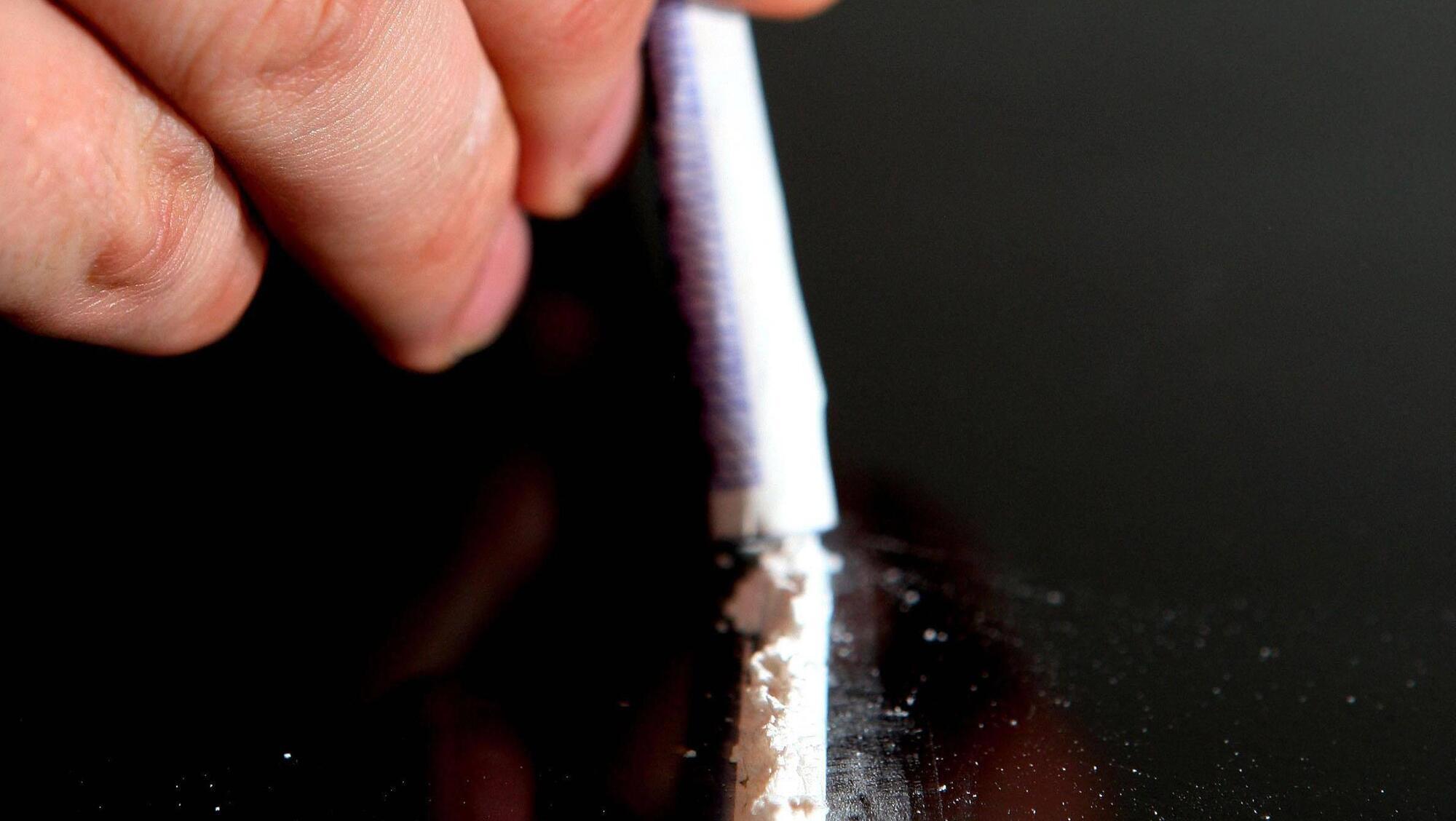
Two significant markers were put down this week in the debate over whether Ireland should liberalise its drug laws. And neither was particularly helpful for those who argue for deregulation or, indeed, decriminalising usage.
Firstly, the Republic’s leading police specialist, Assistant Commissioner Justin Kelly, warned open use will “surge” if Ireland decides to relax its laws and warned the Citizens’ Assembly on Drug Use — which is examining legislation and policies — should understand the “full picture” of the consequences of decriminalising or legalising use or supply.
AC Kelly, head of Organised and Serious Crime, directs all the major national serious crime and gangland units, including the Garda National Drugs and Organised Crime Bureau. When he says that there is an “insatiable appetite” for cocaine in this country we need to pay attention.
In an interview with Cormac O’Keeffe of the Irish Examiner, he also said that South American cartels are sitting on “huge stockpiles” of cocaine. He also sounded sceptical about the frequently touted “Portuguese model” — where possession is an “administrative” rather than a criminal offence and where users are diverted to a health intervention.
While this reform is being examined by the Citizens’ Assembly, and has been recommended by the Oireachtas justice committee, AC Kelly said that its benefits were theoretical rather than observed and no other country had introduced it.
The US and Canada, and particularly major cities such as Los Angeles, San Francisco, Vancouver, and Portland, have become the Petri dish for drug studies, and the experience there ranges much further than those who advocate a loosening of the regulations for recreational cannabis generally acknowledge.
Police in North America, said AC Kelly, have reported “huge problems” with legalisation, including their ability to respond to public usage in residential, business, and tourist areas. While North America is also experiencing an epidemic in opioids and fentanyl abuse, Ireland has not yet shared that experience to any great degree.
AC Kelly, who will address the next session of the Citizens’ Assembly, said: “So, at the moment, people are talking about open use of drugs in certain parts of Dublin, but if you make changes around decriminalisation, the experience from other countries is you’re going to see a surge in open drug use.” And organised crime still benefits because the gangs control supply.
Meanwhile in an interview with our political correspondent Ciara Phelan, comedian Rory O’Connor said the use of cocaine in society is “mind-blowing” and recounted his experience on a recent night out in Cork where there was a long queue for the men’s toilets, with everyone waiting to take their favourite illegal substance. “Things are in a very scary place at the minute in society,” he said on the podcast.
Cocaine heightens aggression. This week Irish Rail reported more than 250 cases of aggressive behaviour of one form or another on its trains in the April to June quarter. Antisocial issues involving drugs, alcohol, or cigarettes rose by 65% over the previous year to 360 incidents.
Drugs Strategy Minister Hildegarde Naughton has announced €3.5m in funding to maintain existing drug and inclusion services across all health regions on top of the €500,000 for cocaine and crack cocaine services she authorised last month. These budgets will be but drops in the ocean for what may be required in the future if Ireland’s love affair with drugs goes, as it is threatening to, out of control.
Space race returns
In a week when India staked its claim on the high frontier by placing two robots from the space mission Chandrayaan-3 on the southern polar region of the moon, we were forcibly reminded that the space race is alive and kicking.
The sub-continent’s achievement in becoming only the fourth country to make a lunar landing marks another giant step in its progress to world superpower.

India has already orbited the moon and Mars and has implemented a regular satellite programme with fewer financial resources than its competitors. Prime minister Narendra Modi was quick to celebrate, waving the national flag at the Brics summit, and prayers were offered for success in temples, mosques, and on the banks of the holy river Ganges.
Chandrayaan-3 — “moon craft” in Sanskrit — took much longer to reach the moon than the Apollo missions in the 1960s and ’70s. India is using less powerful rockets and the probe orbited earth several times to gain speed before commencing its month-long trajectory. While China is hoping to put astronauts on the moon by the end of this decade, they now have a major new competitor.
But skywatchers will also have noticed the news that the experiment by the space agency Nasa to knock the asteroid Dimorphos off track was governed by the law of unforeseen consequences when a storm of boulders whose potential impact may be “as deadly as Hiroshima” was unleashed during a deliberate collision with a spacecraft.
The trial, part of a project to demonstrate that the earth can be protected from an extinction-level event through deflection techniques, disgorged rubble, some of which measures 25 metres in width. The threat posed by asteroids was once customarily dealt with by the likes of Bruce Willis and Ben Affleck. India may have to step up to the plate next.
Inmate P01135809
Young people growing up in the US may aspire to many things, including entering the White House as president.
Becoming the template for honesty by confessing to cutting down the apocryphal cherry tree; creating the Declaration of Independence; saving the republic and emancipating the slaves; establishing a “New Deal” for the poor; becoming the first person of colour to hold presidential office.
It’s unlikely that anyone harboured an ambition to become Inmate P01135809 at Fulton County Jail in Georgia, much less scowl into the camera for the requisite mugshot.
But that’s the way Donald Trump rolls, and his Make America Great Again supporters love it. 2024 is going to be an epochal year in the history of the US. We should strap ourselves in from this point on.
CONNECT WITH US TODAY
Be the first to know the latest news and updates