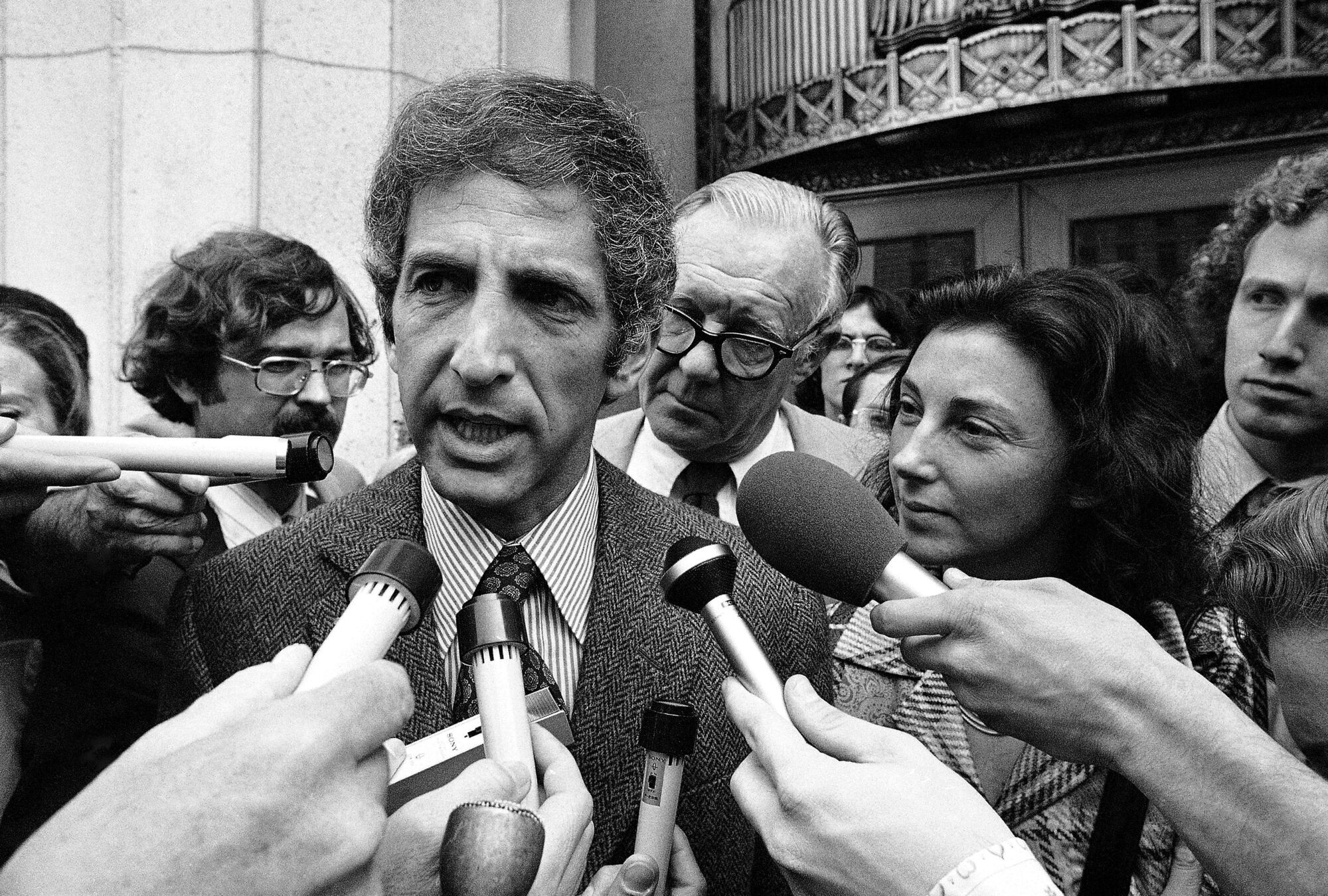
You have to be a certain age to remember the full impact of the disclosures made by Daniel Ellsberg who, through his leaking of the “Pentagon Papers”, demonstrated the lies and malfeasance that elected officials were prepared to undertake to dupe voters, opponents, and fellow citizens.
Before Ellsberg the illicit transfer of government information was the province of spies and traitors — Julius and Ethel Rosenberg who were executed for passing atomic secrets to Russia; the Portland Spy Ring; Burgess and Maclean and the “Third Man”.
They were part of the dirty world of espionage. After Ellsberg, it became possible simultaneously to be both a patriot and someone who could blow the whistle on the covert activities of our rulers and their agents.
It was Ellsberg who revealed the scope of the deceit which drew the United States into the Vietnam War by making more than 7,000 pages of highly classified information available to the New York Times and other newspapers, producing a series of revelations of such magnitude that it led Henry Kissinger to describe him as “the most dangerous man in America”.
It was these industrial-scale disclosures that provoked president Richard Nixon to create a “plumbers’ unit” to discredit Ellsberg.
It broke into the offices of his psychiatrist seeking his medical records, but also into premises at the Watergate in Washington, a burglary which was to lead directly to the Oval Office. And it forced a humiliating departure in 1974 for a president who won a landslide election two years earlier with 60.9% of the vote and control of 49 states.
Through the door opened by Ellsberg have walked many others: Frank Serpico, Julian Assange, Ian Fishback, Edward Snowden, Chelsea Manning, with numerous cases in Ireland depending on whistleblowing and the ability to make protected disclosures.
Many countries recognise that whistleblowing can assist good governance and create an equilibrium between organisational, corporate, and political secrecy and the proper interests of communities.
Worryingly, in a revealing interview with Politico shortly before his death, Ellsberg warned the odds are increasingly stacked against whistleblowers changing the policy of governments, not least because of more rigorous and targeted legislation.
One prominent human rights lawyer said Daniel Ellsberg was “the defining whistleblower” who recognised that political systems were so “self-sealing” that the only way they could be punctured was with the truth.
Another described his influence as “titanic".
Ellsberg declared that he had inoperable pancreatic cancer in March. He was, as one biographer proclaimed, “no ordinary man”. But one who decided he had to put principles before career and friendship.
With the never-ending rise of the surveillance state and the information wars over climate crisis, the cause of freedom and the right to know has lost a redoubtable ally.

Cancel anytime
CONNECT WITH US TODAY
Be the first to know the latest news and updates