Irish Examiner view: Consumer power is the only answer to air travel chaos
Without major Government direction, the unspoken attitude of the airport authority, and indeed the flight operators, is that the consumer has to suck up the difficulties in the short term
Irish Examiner view: Consumer power is the only answer to air travel chaos

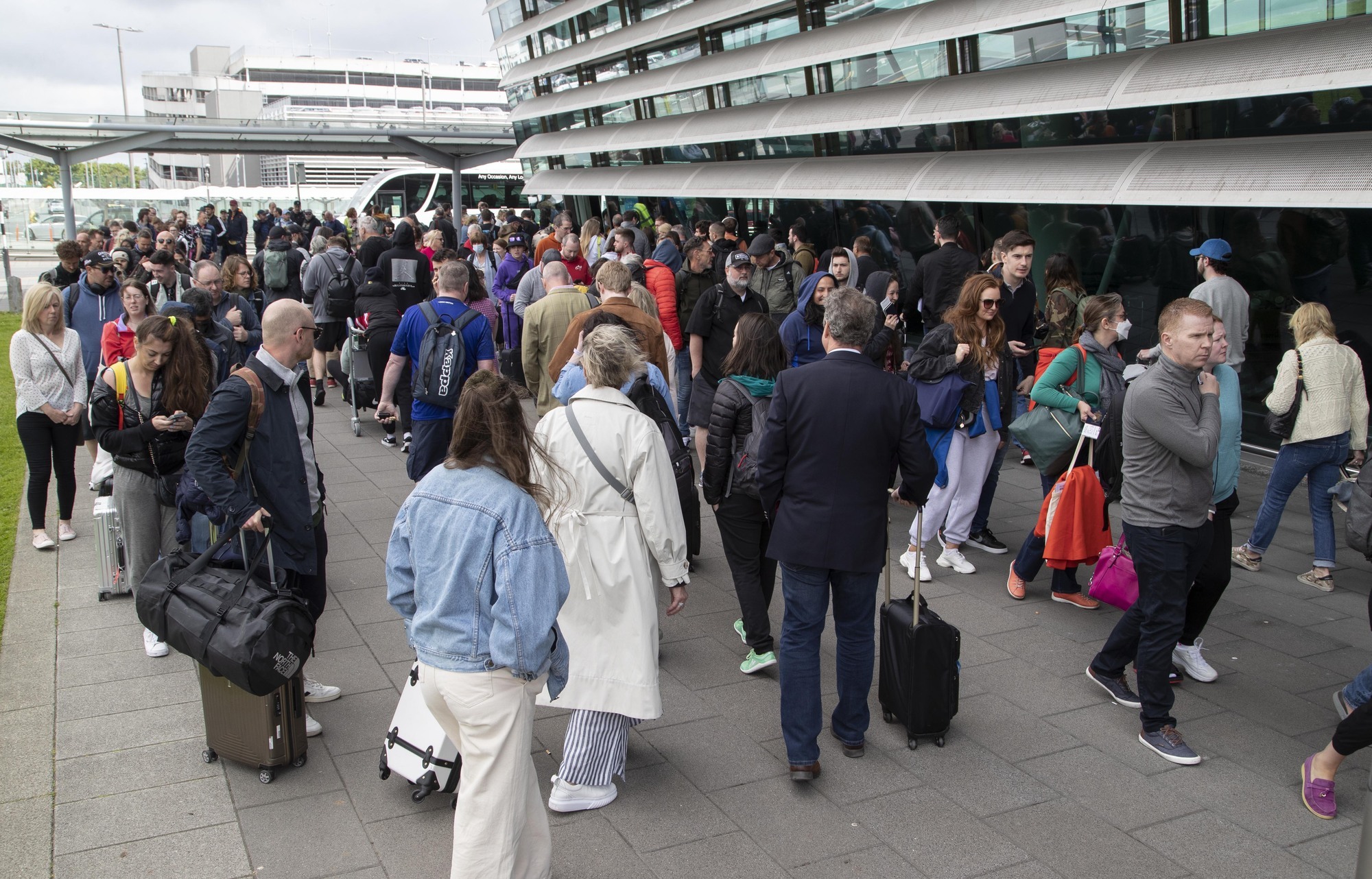
Around 1,400 people missed flights last weekend due to long queues for departures at Dublin Airport. Picture: Colin Keegan/Collins

It is natural that the ongoing crisis in the management of air passenger traffic should throw a strong focus on the dominance of Dublin Airport in our commercial aviation strategy and lead to demands for capacity to be switched to major regional airports such as Cork and Shannon or to Knock and Farranfore. It should prompt further questions of the Daa’s ownership and management of Cork Airport, too.

The Central Statistics Office shows that Dublin accounts for almost 86% of air passengers in Ireland. By comparison, London, which has five airports at Heathrow, Stansted, Gatwick, Luton, and City, handles around 60% of British traffic, linking with 14 domestic and 396 international destinations. Dublin is still a popular choice with those flying to and from Britain.

With the counsel of despair this week that there can be “no guarantee” that there will not be repeat of this weekend’s terrible scenes when around 1,400 people missed their flights after queuing for hours, the question now being asked is whether there is a systemic problem in a country that is almost wholly reliant on effective air links to our neighbours and to Europe.

Of course, Dublin isn’t the only location that has experienced difficulties. Schiphol, Gatwick, Manchester, Luton, Bristol, and Belfast have all witnessed disruption and cancellations for a number of reasons. However, has the scale of Ireland’s difficulties been exacerbated by an over-riding ambition to ensure that Dublin dominates the skies?

Although the initial cause of the problem was the acceptance of hundreds of applications for voluntary redundancy during the pandemic, Labour leader Ivana Bacik also blamed a failure to ensure a more equitable distribution of flights across the country.

Labour leader Ivana Bacik: She said a failure to ensure a more equitable distribution of flights across the country has added to the problems at Dublin Airport. Picture: Gareth Chaney/Collins

For flight flexibility to work implies a much more integrated strategy with a willingness of the main airlines to collaborate in what is, after all, a cut-throat market that is on track to lose $11bn (€10.25bn) worldwide this year.

This is unlikely to happen. There is a view that Dublin has sufficient capacity if it is adequately staffed, however long that takes. Without major Government direction, the unspoken attitude of the airport authority, and indeed the flight operators, is that the consumer has to suck up the difficulties in the short term.

But what is the short term?

Pandemic controls started to ease in February and many of the destinations that people want to visit have been open for months. Where is the plan to ensure that this turmoil will not last into the summer break?

Without that clarity, travel is a risk. Despite all the corporate hand-wringing, only the consumer has the power to change this thinking.

More in this section

Revoiced

Newsletter

Had a busy week? Sign up for some of the best reads from the week gone by. Selected just for you.

Cookie Policy Privacy Policy Brand Safety FAQ Help Contact Us Terms and Conditions

© Examiner Echo Group Limited