Irish Examiner view: TB is still a killer, and we can't let it thrive due to complacency 
World Health Organization warns that tuberculosis, dubbed 'the forgotten disease', is back with a vengeance
Irish Examiner view: TB is still a killer, and we can't let it thrive due to complacency 

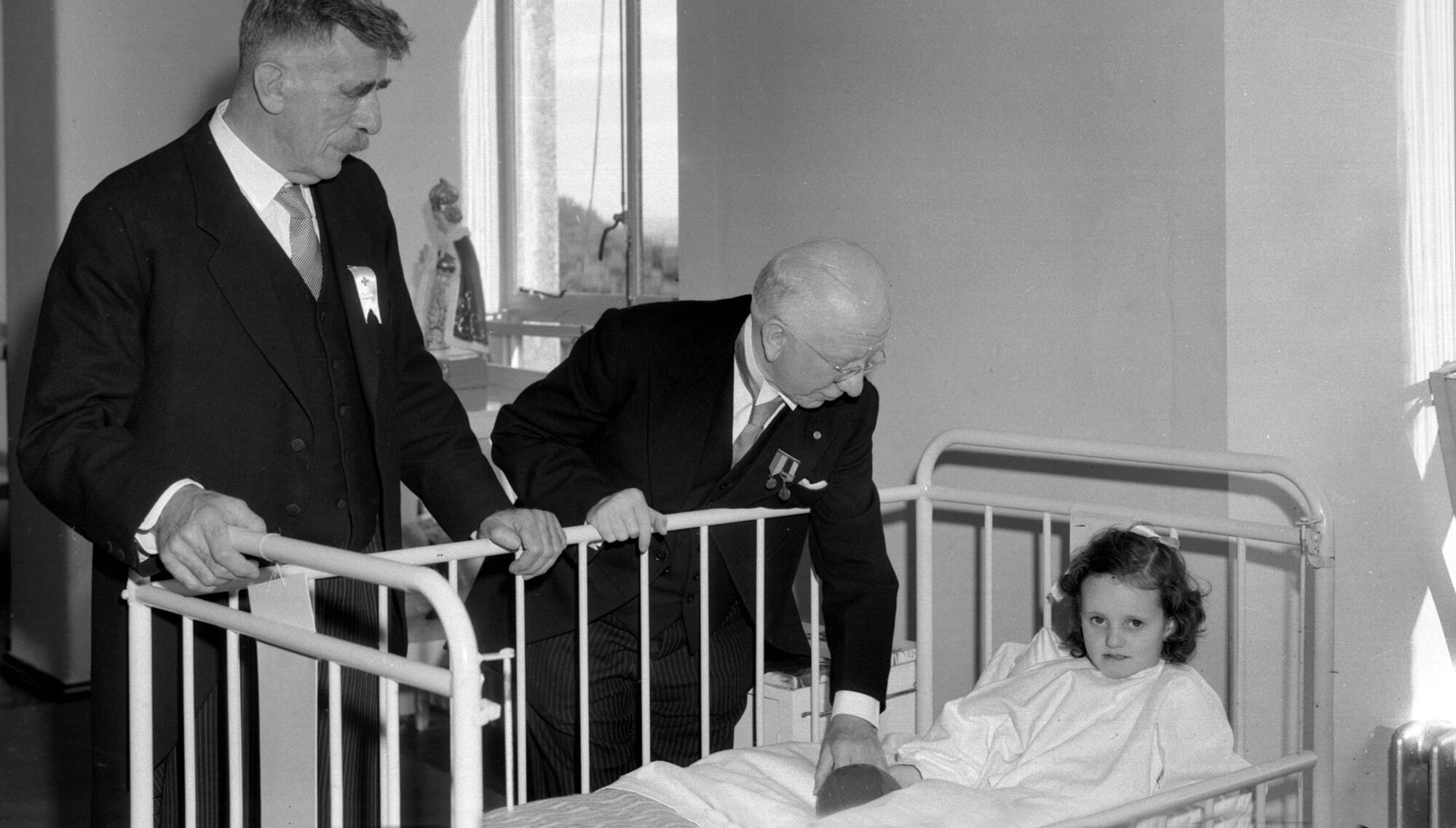
Then president Sean T O'Kelly visiting a young patient during the official opening of a 50-bed  tuberculosis (TB) unit at St Raphael's, Montenotte, Cork, in September 1948. File picture: Irish Examiner Archive

Covid-19 and its variants grab the headlines, but coming up on our blind side is a worrying increase in tuberculosis — a disease which, like smallpox and malaria, we thought we could control and ultimately defeat.

TB, once known as the ‘White Plague’, is back with a vengeance, says the WHO, which identifies it as the second biggest infectious killer after Covid, claiming 4,100 lives every day around the world. During the pandemic, rates of infection increased for the first time in more than a decade.

Experts say Ireland needs to appoint a national tuberculosis controller, and that the Russia-Ukraine war, with its mass displacement of people, is likely to further increase the incidence of the disease in the West.

Ireland has had a long history of expertise in identifying and repelling TB, which is spread from person to person often, although not exclusively, from the same family units, through microscopic droplets into the air. Although tuberculosis is contagious, it’s not easy to catch.

Its demise has long been proclaimed, but such claims have always proved premature. It is treatable, but the costs are escalating rapidly.

In particular, multidrug-resistant TB is becoming more common. According to Public Health England, Britain has the second-highest mortality from TB in western Europe. This death rate is also five times higher than in the US. This is due in large part to migration from Eastern Europe. The WHO says the TB programme in Ukraine stalled several years ago, and that 29% of the world’s reported cases in 2018 were in the now war-torn country.

Treatment, including using a drug called rifampicin, usually takes six months, but there are now more cases of multiple-drug resistant TB in Ireland, requiring 18 months of extremely expensive medicines.

Joseph Keane, respiratory physician at St James’s Hospital and professor of medicine at Trinity College Dublin, said: “This notion that TB is not a problem is pure rubbish. We are getting highly complex, multiple-drug resistant cases. There were five of these, and seven of rifampicin-resistant in 2019, and it won’t have been much different for 2020. We are seriously looking at a problem.”

Treatment for these types of TB comes to “in excess of €200,000 per person”, he said.

Prof Keane and his colleagues in the Irish Thoracic Society want to see the establishment of a national TB control programme and a national controller to unify all the elements of care and response across the country. He added: 

If Covid taught us nothing, it taught us that airborne diseases can run amok in settings such as prisons and wherever you have poverty or overcrowding. 

This does not seem too large an ask for a country such as ours which is about to welcome 200,000 displaced persons who are likely to require testing for TB on arrival.

Becoming complacent about TB has allowed a notorious killer to re-establish itself in our modern society. Over previous centuries a catalogue of well-known figures succumbed to it, including the Brontë Sisters, Anton Chekhov, Chopin, DH Lawrence, the poet John Keats, and the fictional Mimi in La Bohème. We don’t have to willfully add to the death list.

x

More in this section

Revoiced

Newsletter

Sign up to the best reads of the week from irishexaminer.com selected just for you.

Cookie Policy Privacy Policy Brand Safety FAQ Help Contact Us Terms and Conditions

© Examiner Echo Group Limited