Irish Examiner view: Following pilgrim trails to environmental salvation won’t be easy
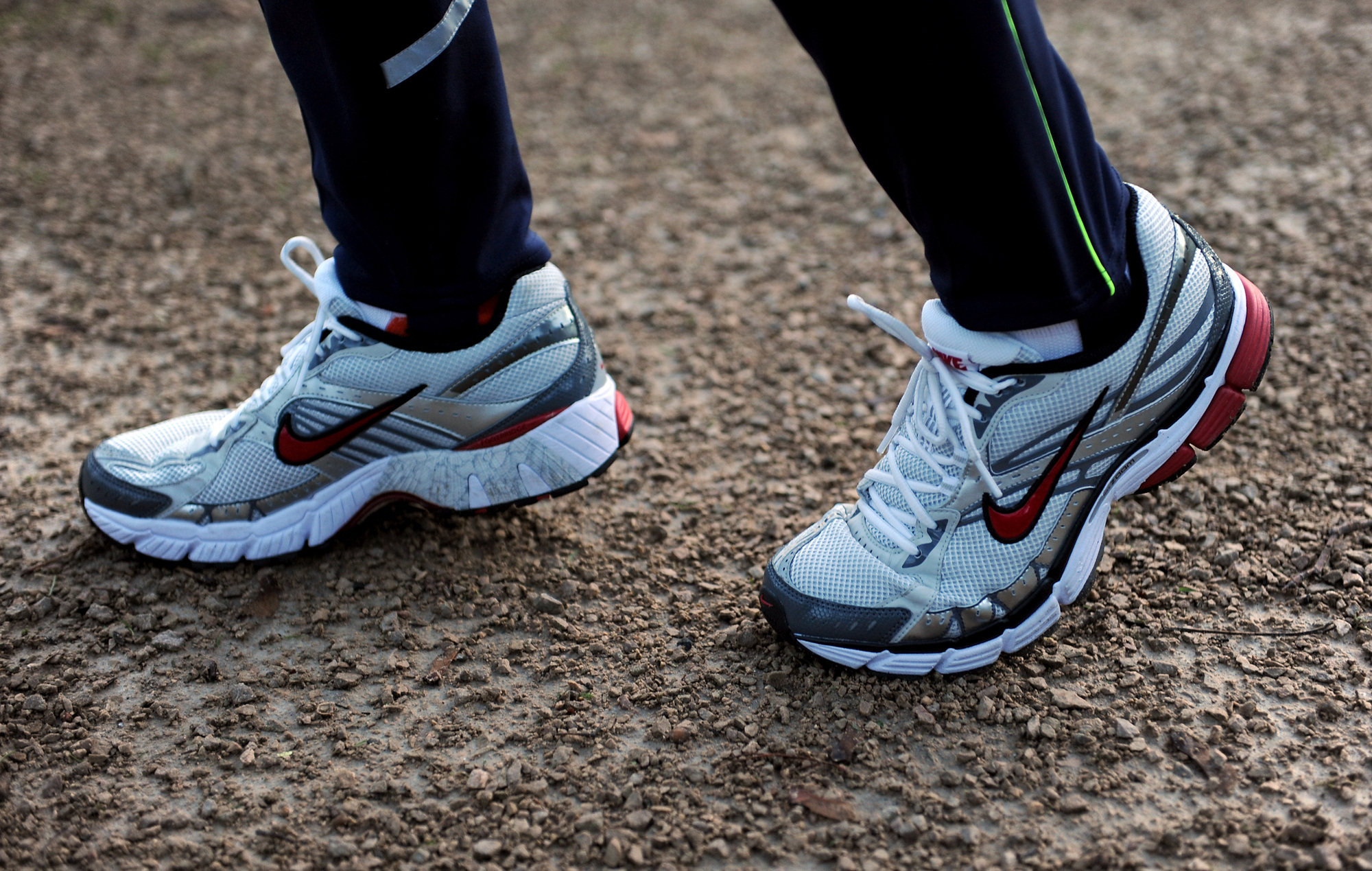
Adharanand Finn made it his mission to run around the entire coast of Ireland. That's about 2,250km for anyone full of New Year’s resolution to follow in his footsteps. Stock picture: PA
Many people followed the odyssey last year of the long-distance runner Adharanand Finn, who made it his mission to run around the entire coast of Ireland. That’s a mere 2,250km for anyone full of New Year’s resolution to follow in his footsteps.
In around 10 weeks, with his wife and teenage son as the motorhome support team, he started in Dublin, the natal city of his mother, and progressed via the Wicklow Mountains, Cork, up the Wild Atlantic Way, past Galway, his father’s birthplace, to Donegal and into the North before doubling back to finish on the banks of the Liffey.
Rather in the style of Forrest Gump, some people came out to run with him. Others reinforced his opinion of the warm welcome which can await visitors.
Finn’s forthcoming account of his travels — — will provide pleasant and reaffirming reading with invigorating descriptions of the stunning scenery.
But his pre-publicity contains a line which chimes strongly with other recent news reports.
“Ireland has a lot of space,” he says. “I hesitate to call it wild space, as it is one of the least biodiverse countries in the world, with barely any remaining natural forest.”
An interesting observation from someone who has tracked more individual steps throughout the island than any of us, and they reinforce the news that 90% of Ireland’s protected habitats are in an “unfavourable” condition.
The Status of EU Protected Habitats and Species in Ireland, 2025, commonly referred to as the Article 17 Report, is published every six years. Assessments are based on data gathered from the National Parks and Wildlife Service and Inland Fisheries Ireland. It presents a comprehensive overview of the standing of the 59 habitats and 60 species in Ireland that are granted EU protection.
It noted that more than two-thirds of habitats are impacted by agricultural-related activities, particularly inappropriate grazing, drainage, and pollution. Invasive and problematic species, and recreational activities also damage quality. Other species are under particular pressure as we saw most grievously last August when a potent, and never identified substance, killed more than 40,000 fish, mainly prized salmon and trout, on the River Blackwater in Co Cork.
Assessments for 2025 noted that 51% of habitats had deteriorated. These included sites designated as special areas of conservation as well as the wider countryside. Where conservation efforts had been focussed, some 9% showed improvement.
Under such circumstances, crumbs of comfort must be taken where they can be found. We are in for a long haul with full recovery targets under Ireland’s Nature Restoration Law to be met, as so many other environmental objectives seem to be, in 2050.
It is manifestly the case that our world cannot be rebuilt in a day, or even several decades, but we have to keep stepping consistently in the right direction.
To this end, we can take some further encouragement from the long distance runner Finn. He described how, during his remarkable journey, he found himself following some of Ireland’s ancient pilgrim trails. This could sometimes prove frustrating.
“Some of these pilgrim trails did just follow roads, out in the middle of nowhere with no respite, which was a little disappointing and could get tortuous,” he said.
“But at the same time, the pilgrims wanted a bit of suffering in there, to feel like they’d earned their arrival wherever they went.”
That’s an inspirational piece of insight, particularly for those days when 2050 seems a long way off.
It is, to borrow the most memorable lyric from Disney’s , a “tale as old as time”.
No, not the relentless failure to come to terms with the national housing crisis, but that other prominent, and visible, consequence of demand exceeding supply — the inability to find enough beds for hospital patients during times of peak demand, some of which are completely, consistently predictable.
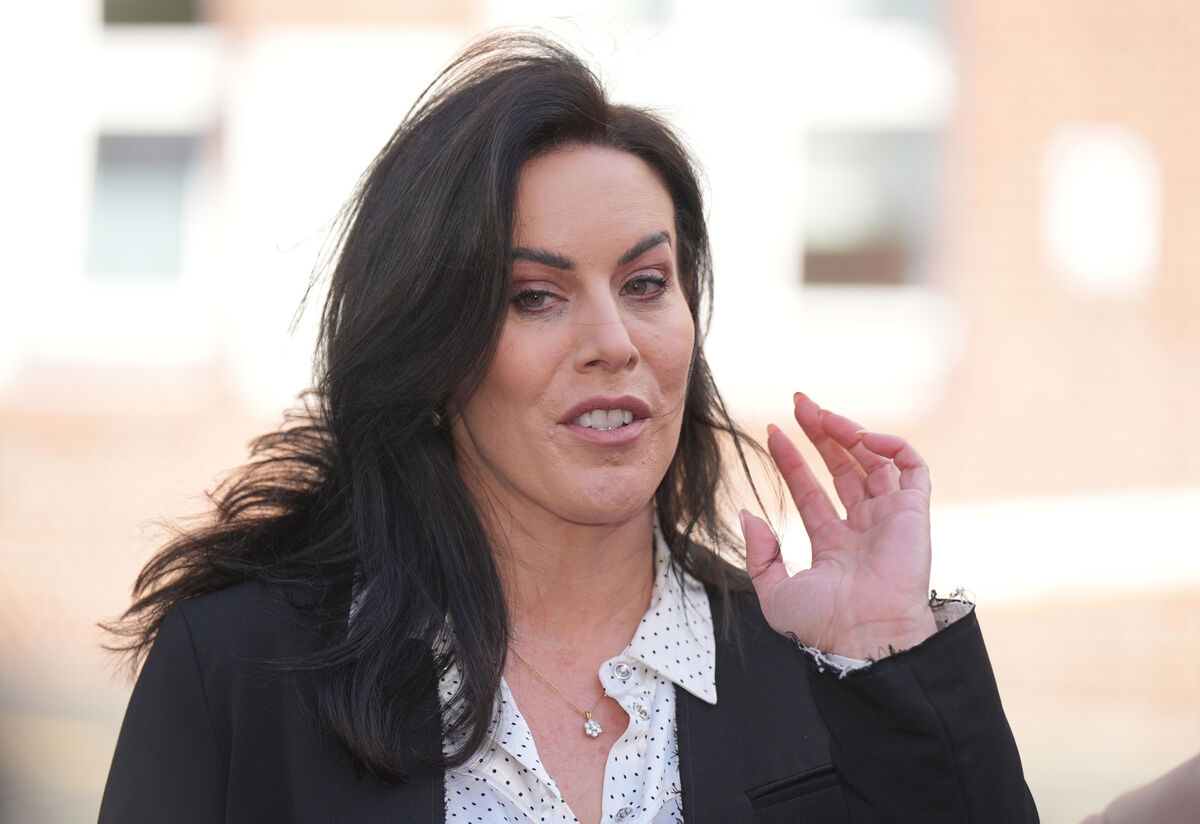
This has irked Jennifer Carroll MacNeill, the latest minister for health forced to explain embarrassing delays despite a multitude of waiting list action plans (WLAPs to the cognoscenti) and the deployment of various shades of task force dating back some five years or more.
Figures from the Health and Safety Executive show there were 442 patients waiting on trolleys at one stage this week with a further 691 patients in temporary surge capacity beds.
A total of 75 patients were waiting more than 24 hours, of whom 14 were aged 75 and above.
This year it is Cork and Galway hospitals that are on the naughty step for their “persistent difficulty” with overcrowding and failure to keep pace with hospitals in improving the situation, the minister briefed journalists this week.
“People are just as sick with the flu in the areas around the Mater or Beaumont and their performance and the management of their hospital flow, the discharging and how they’re supporting patients is consistently better,” said Ms Carroll MacNeill.
Hospital managers in the regions will get a chance to have their say later this month when they meet the minister to be quizzed and answer her question as to whether community hospitals and other facilities have been used “in the best way.”
There’s nothing wrong with a bracing performance review, of course, but it is worth recalling that there are shared responsibilities for hospital waiting lists in Ireland.
This will be one of the many challenges facing Anne O’Connor when she arrives as the new chief executive of the HSE in March after Bernard Gloster steps down following nearly 40 years of public service.
.
As a three-time visitor to the sprawling city of Shanghai, our Taoiseach, Micheál Martin, will be familiar with the laconic observation of the black-and-white movie idol Marlene Dietrich that “five years in China is a long time”.
So much so that he said something approaching the same thing on his first trip this week as Ireland’s leader.
Dietrich’s Shanghai Lily from the 1932 Josef von Sternberg film was journeying to the thriving metropolis at the junction of the Yangtze and Huangpu Rivers because she “wanted to buy a new hat”.
But Mr Martin was in China for different reasons.
He was selling something. Or rather two things — the importance of Irish exports and the influence of Europe at the start of a year where we will play an increasing role as we take over the rotating presidency this summer.
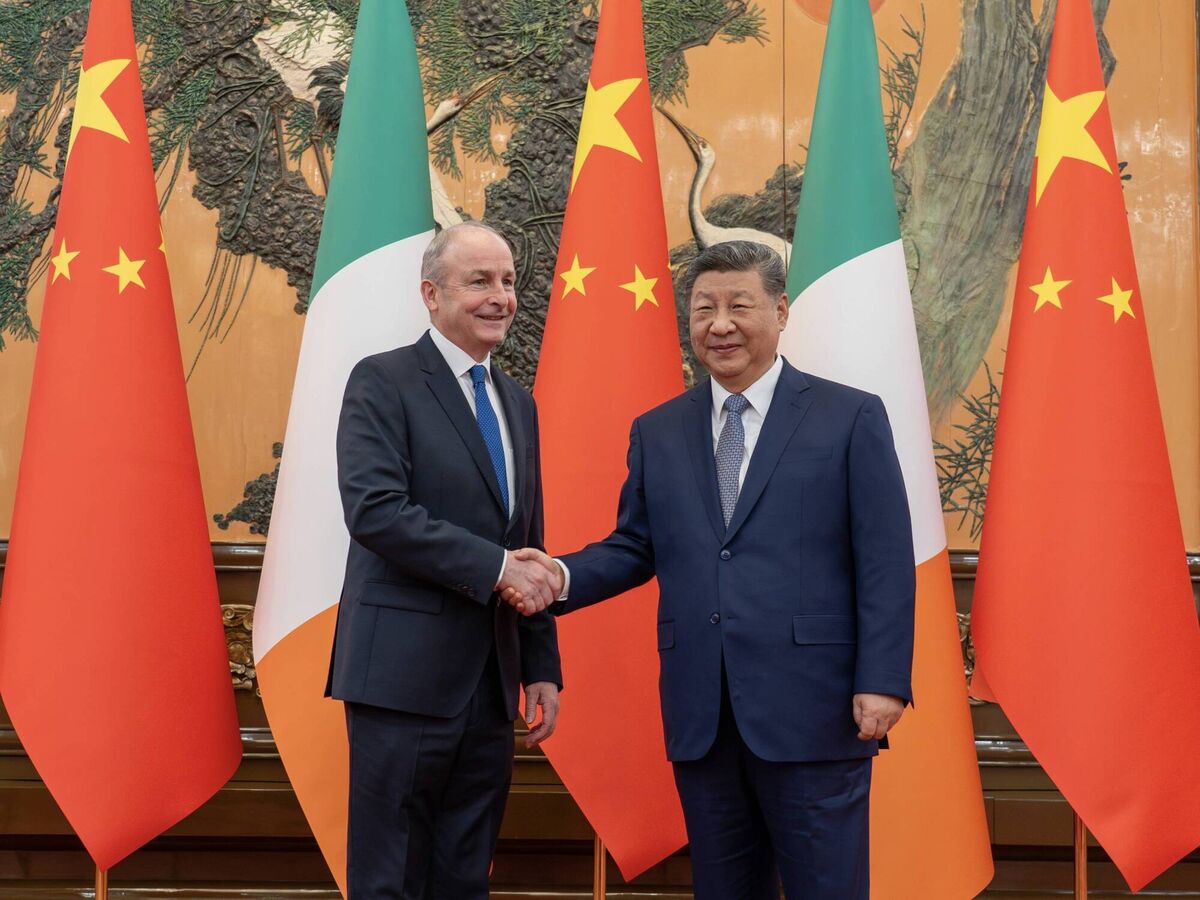
Mr Martin, making only the second visit by a taoiseach since Enda Kenny went to Beijing in 2012, met Chinese president Xi Jinping to discuss broader connections including commerce, economics, and tourism between the two countries.
He called for more open trade and specifically referenced access to the Chinese market for Irish beef, an important discussion in the context of the contentious EU-Mercosur agreement which allows 99,000 tonnes of South American meat annually into the EU at a reduced tariff.
Of course, Ireland has a great story to tell when it comes to food, and no more so than in China with the development of the Kerry Group which has expanded from just three employees 20 years ago to some 1,400 current staff. Mr Martin could describe it as “a real Irish success story on the world stage” without a hint of hyperbole. Other meetings involved representatives from biotech, healthcare and pharma, and finance and travel companies.

The conversations about Irish beef coincided with the latest report from Bord Bia this week which showed that the value of food and drink exports expanded by 12% to a record €19bn last year.
Dairy, beef, and seafood exports all increased amid higher prices on global markets. But the export values of alcohol tumbled to €2bn driven largely by a decline of 5% in Irish whiskey because of Donald Trump’s tariffs.
Ireland’s biggest growth market was the EU, although our largest single customer remains the UK with exports increasing 14% to €6.7bn. This places our discussions with Beijing and Shanghai in some context. Exports to Asia were “broadly stable” at €1.1bn despite declines in beef and pork to China and Japan.
No one will pretend that maintaining relationships with the superpower that is China is an easy furrow to plough — just ask the Australian government and the city of Darwin about that — but if a consequence of Mr Martin’s visit is to expand markets for our agriculture and other services while simultaneously keeping our lines of communication open then we, just as Shanghai Lily would have done, can admire what he has achieved.
CONNECT WITH US TODAY



Be the first to know the latest news and updates