Irish Examiner view: Ukraine war comes to the home front as prices escalate
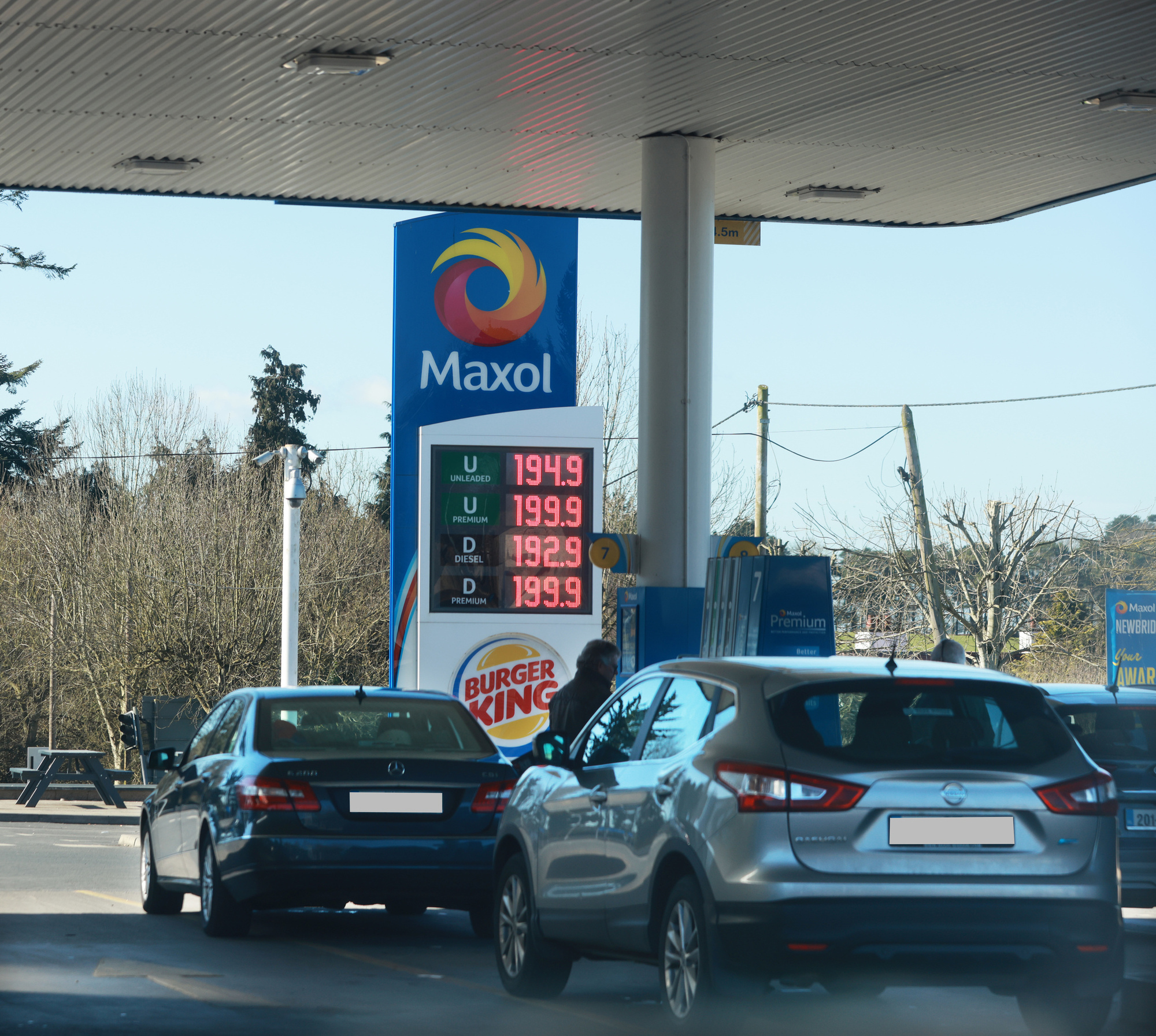
Fuel prices at this Maxol garage in County Kildare were just below €2 per litre on Saturday. Picture: Eamonn Farrell/RollingNews.ie
With petrol prices reaching towards €2 per litre — €1.96.9 per litre was seen in Blarney this weekend — the economic consequences of the war in Ukraine are daily becoming more visible.
And, just like the fighting and casualties, the situation will become worse.
The AA calculates that if the cost of filling your car was €100 per tank then this will amount to €2,428 per annum for the average motorist, an increase of almost €600 in the past 12 months.
Every 10c increase in the pump price adds €120 to the annual cost of fuelling your vehicle.
Tánaiste Leo Varadkar said the Government will make an intervention on fuel prices before October’s budget, broadening assistance with the cost of living for consumers, but is waiting for a European Commission discussion document to ensure that governments act in concert.
However, by the time that paper is tabled, the impact of Putin’s War and the requirement for action may be much more draconian than administrations are currently implying.
David Malpass, the former US Treasury minister who was Donald Trump’s choice for World Bank president in 2019, said last week that the conflict was “a catastrophe” for the global economy because inflation is already rising, raising the prospect that it may accelerate into double digits before the end of the year, with potentially significant ramifications for politicians across western democracies.
The Standard and Poor’s GSCI Index, a wide-ranging tracker of commodity and raw material prices, rose by 16% in the past seven days.
Household utility bills are racing away.
For the first time since the oil shocks of the 1970s we may have to contemplate petrol rationing.
Russia and Ukraine — the breadbasket of Europe — jointly provide almost 35% of the world’s wheat and barley exports and 20% of all maize.
Even if Ukraine’s ports were not under Russian shelling, the world’s container ships are boycotting goods from, or bound for, Russia.
Five of the largest cargo operators, from Denmark, Singapore, Switzerland, France, and Germany have declared an embargo while the sixth, Cosco of China, has suspended services “on safety grounds”.
Along with its ally Belarus it is responsible for two-fifths of the world’s potash exports, a fundamental element in the making of fertiliser, prices for which have been soaring across the trading markets.
This will ultimately contribute to increases in the price of food which are inevitably on their way.
The World Bank said the increases will “hit the poor hardest”, particularly in households and homes of food- importing nations.
Because it is most probable that we are in this conflict for the long haul there could be dangerous political impacts for parties currently in power.
Many pet projects may have to be shelved. For now the emphasis must be on energy security, food supply, and costs.


CONNECT WITH US TODAY



Be the first to know the latest news and updates