Irish Examiner view: Wide-ranging Bill needs great scrutiny
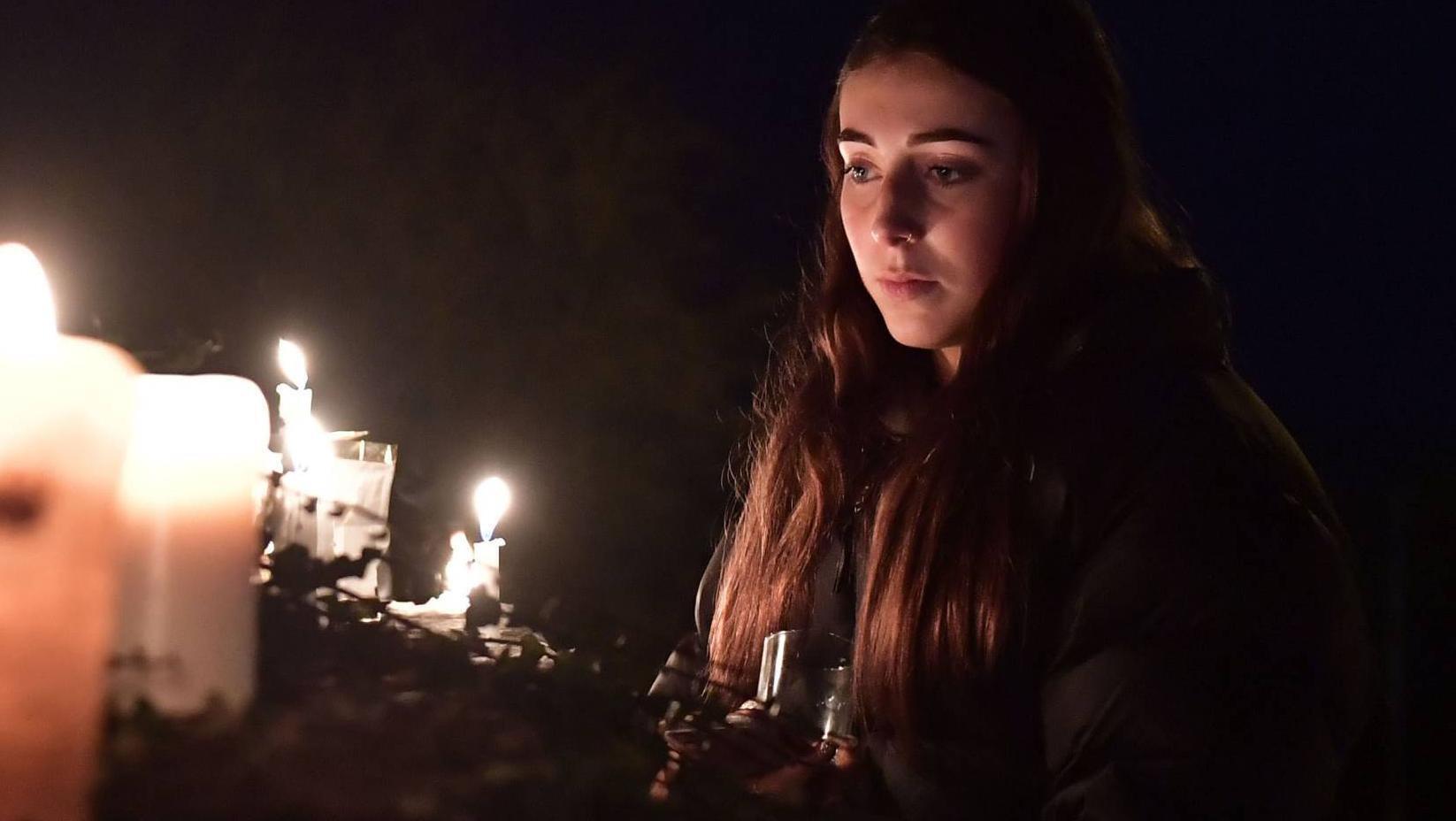
TULLAMORE, IRELAND - JANUARY 14: A young woman lights a candle as she attends a vigil for murdered school teacher Ashling Murphy near the scene of her murder on January 14, 2022 in Tullamore, Ireland. Picture: Charles McQuillan/Getty
Unsurprisingly, last week’s launch of the Online Safety and Media Regulation Bill ― all 140-plus pages of it ― did not garner the public attention it may have otherwise done. The nation was focused on other issues, and specifically the murderous attack on Ashling Murphy which will continue to dominate headlines this week.
It is a significant legislative proposal which seeks to establish a wide range of constraints on “old” and “new” media overseen by a single body, the Coimisiún na Meán, an Irish Media Commission. This will include an online safety commissioner, will implement and monitor updated rules for online advertising, social media, broadcasting and video-on-demand services, such as Netflix and Disney+, and has the potential to become one of the state’s most powerful regulators. It will supercede the current functions of the Broadcasting Authority of Ireland (BAI) and oversee both television and radio broadcasters.
The new Commission will have the power to fine transgressors up to €20m or 10% of turnover, which is an attention-grabbing recommendation, and it will have the ability to involve itself in such matters as freedom of speech, unacceptable forms of advertising (for example junk food, alcohol, high fat/salt/sugar foods, and gambling.) It will also be imposing a levy, part of which will be used to fund independent Irish productions.
Chapter 2 of the Bill (Duties), section 46J, states that a broadcaster, or provider of an audiovisual on-demand shall not make available “anything which may reasonably be regarded as causing harm or offence” or “anything which may reasonably be regarded as tending to undermine the authority of the State.” There is clearly much to be fleshed out here before citizens can feel reassured that a monolithic commission is the appropriate arbiter for every aspect of our media and communications experience, particularly when everything we are taking on will have to fit into an EU template. And the fact that this is a political initiative is reinforced by the words of Catherine Martin, Minister for Tourism, Culture, Arts, Gaeltacht, Sport and Media who states: “The Bill I am publishing represents a new departure in Irish law and is emblematic of this Government’s commitment to protecting the people of Ireland, especially our children, whether offline or online through fair, rules-based and robust regulation.” We will return to the detail as it becomes more apparent, but one of the major concerns must be the age at which young people are deemed to be sufficiently adult to develop their own digital identity, and in particular maintain their social media accounts. It is generally accepted by platforms and through much of Europe that the age is 13. In Ireland GDPR regulations require an Age of Digital Consent to be 16.
Experience, and anecdotal evidence, indicates that it can be much younger. A survey of 4,000 youngsters by CyberSafe Kids Ireland last Autumn concluded a third of pre-teen, aged between eight and 12, children are interacting online with people they don’t know — and a growing number are also not telling a trusted adult when they come across something upsetting online.
Researchers found that 93% owned their own smart device, and 84% reported using social media and instant messaging apps despite minimum age restrictions. Four fifths of children, the majority of them boys, play online games which frequently have a high level of social interaction. Meanwhile one third of pre-teens are in communication in these environments with adults they do not know.
The Bill makes it clear that further proposals are to follow and will be informed not only by Europe but by the forthcoming Electoral Reform Bill and Gambling Bill. But if it cannot guarantee safety for children then it does not matter how shiny and large the new Media Commission is. It will not be fit for purpose. We look forward to seeing the detailed proposals.
CONNECT WITH US TODAY



Be the first to know the latest news and updates