Irish Examiner view: Long-lasting legacy of our response
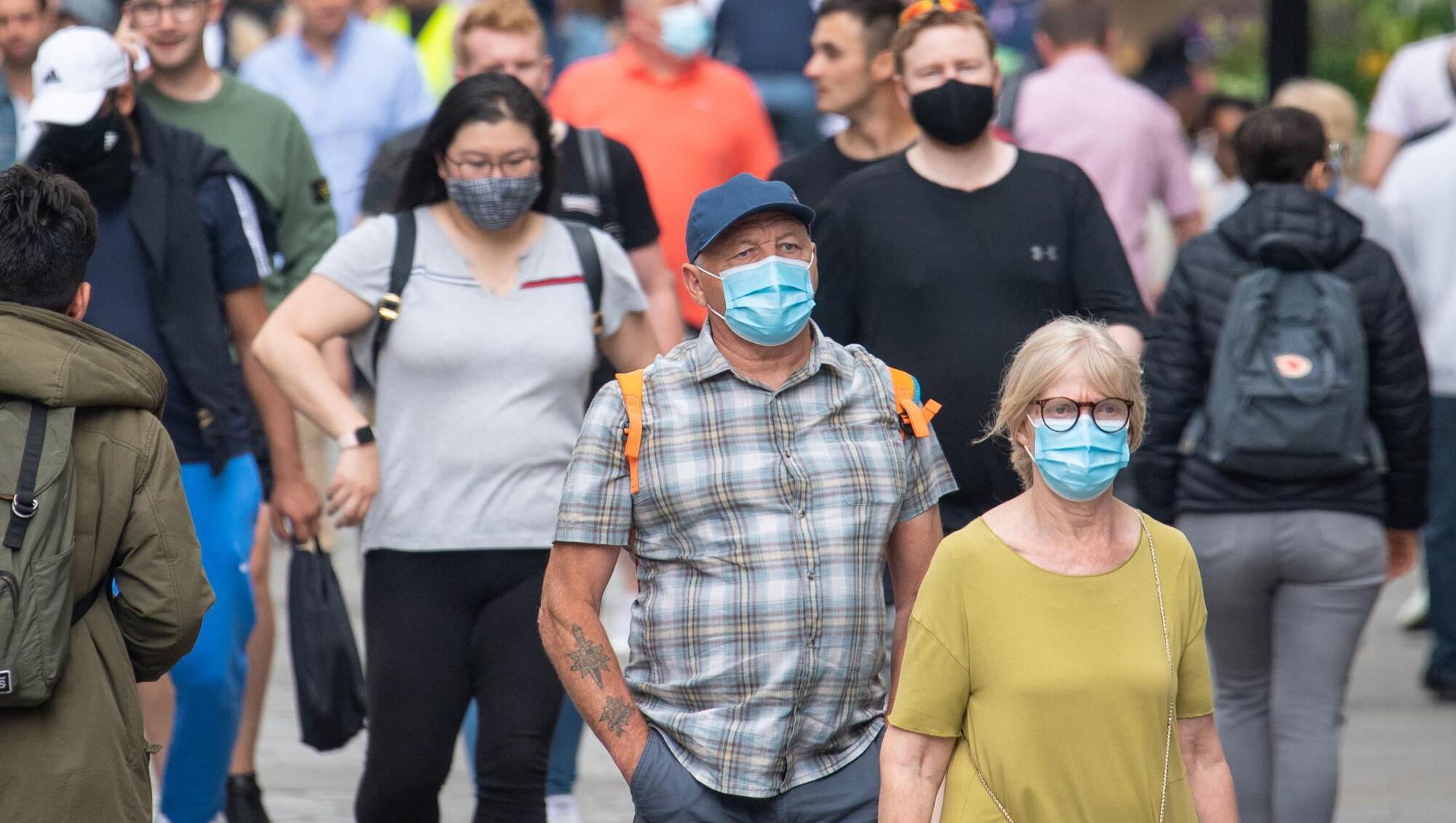
Among the measures being marshalled to tackle the fouth wave are a vaccine booster programme, antigen testing, and mandatory mask-wearing in crowded areas both indoors and outside. File picture
There have been times during the Covid-19 pandemic that we have felt that victory was within our grasp.
Numbers were low, restrictions easing, and a sense that normality, whatever that is, was returning. Yet every time we dare to dream that we are released from the Covid stranglehold, we are soon disabused of our hopes.
At this point though, there is a sense that we do not have a defined route out of the latest surge at a time when the stakes have never been higher.
Yesterday’s decision to extend the use of booster vaccines and to roll out antigen testing to schools is certainly a positive development but it remains to be seen if it is enough.
Speaking on RTÉ radio yesterday, Colman O’Loughlin, president of the Intensive Care Society of Ireland and a consultant in the Mater Hospital, outlined in stark detail the consequences of this latest phase in the pandemic. With around 50% of acute ICU beds in the Mater occupied by Covid-19 patients, normal surgical activity was being significantly curtailed for the first time since the third wave, Dr O’Loughlin explained. The reality is that this is not just an issue in the Mater Hospital, but in every hospital in the country.
It is not only surgeries that are impacted.
The fact that nearly 3,500 healthcare workers have themselves been hit by the virus means that there is a significant drain on resources at a time when all hands are very much needed on deck.
Yesterday’s Covid figures revealed a further 4,570 cases, with the number of patients in hospital with the virus topping 600 for the first time since February.
While the temptation is to focus on the crisis at hand, there is another, potentially deeper, calamity unfolding on the horizon. Yesterday, the Irish Patients’ Association revealed that over 220,00 people are now waiting more than 12 months for their first consultant-led outpatient appointment. These people are quietly waiting in their homes, silently suffering ailments for which a GP has decided they need further care.
Add this cohort to the large number of patients who have had their surgeries or treatments cancelled or curtailed and you have a considerable cross-section of the community who are facing serious delays in their treatment.
But can we begin to countenance the long-term impact on the entire health service as it struggles to deal with the inevitable wave of patients who are currently waiting in the wings for their treatment?
It could be argued that this is just another defining moment in the battle against Covid-19. But in reality, the steps we take now, both individually and collectively, will have implications for years to come on the health of our citizens and the state of our health service.
Read More
CONNECT WITH US TODAY



Be the first to know the latest news and updates