Irish Examiner view: Survivors at centre of our national day
It is deeply significant that we have chosen to reflect on all aspects of our history and the experiences of our most-silenced citizens on St Patrick's day
Irish Examiner view: Survivors at centre of our national day

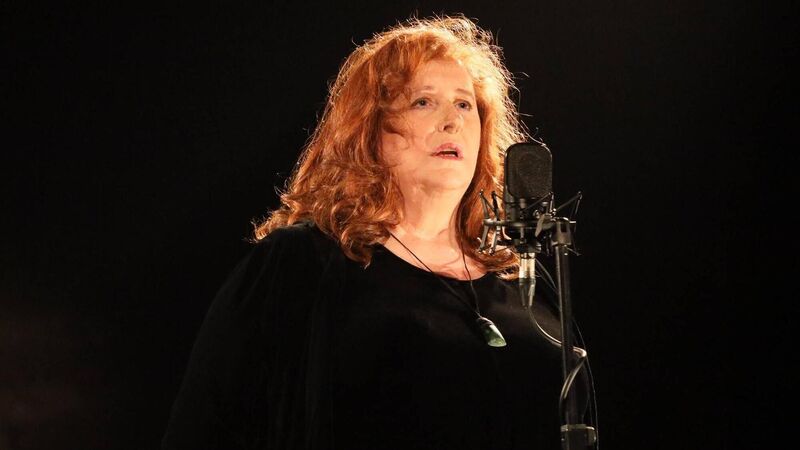
Mary Coughlan in the Abbey Theatre projectHome: Part Oneon mother and baby homes. Picture: Mark Stedman

We marked St Patrick’s Day yesterday in the most counterintuitive of ways. And ‘marked’ is probably a better word than celebrate because all of those age-old traditions — parading on the streets, gathering in great numbers, drowning the shamrock — were off limits under level 5 coronavirus restrictions. The pubs remained shut and, to cap it all, the sun even shone.

But perhaps the most radical departure from previous years was what took place on the Abbey stage last night when 46 women voiced the testimonies of survivors of mother and baby homes as part of Home: Part One

It was the national theatre’s response to the recent inquiry into those institutions where women and their children were stripped of independence, dignity and, in many cases, their identity too.

“It is their time to speak and our time to listen,” Abbey co-directors Graham McLaren and Neil Murray said.

It was a bold and brave step because, too often, St Patrick’s Day is a time for artifice and the painting over of the very many cracks in our society, past and present, with a vivid shade of green. 

It is a day when we happily disavow the hard truths, turning to stereotype instead. That offers a comforting moment of denial, perhaps.

It is deeply significant then that, in one quarter at least, we have chosen to reflect on all aspects of our history and the experiences of our most-silenced citizens. 

Those experiences were relayed in harrowing but important detail last night as they were livestreamed from the Abbey Theatre.

The fact that the voices of women were given space to be heard at our national theatre, on our national day, is a powerful statement. And a very necessary one.

Their accounts of how they were treated and the injustices they suffered at the hands of the Irish State and Church will be available to watch back until July.

There is a cruel irony in that because the theatre and the project’s curator, Noelle Brown, have succeeded in doing something that the State has failed to do; that is, preserve the words of some of those most affected by what happened in Irish institutions throughout the 20th century.

It is a source of ongoing disquiet that the Mother and Baby Homes Commission of Investigation destroyed the audio recordings of some 550 people’s testimony without making transcripts. 

The commission insisted that it had told witnesses it would do so, a claim disputed by many of those who exposed their own vulnerabilities and pain to give evidence.

The testimonies were later retrieved at the eleventh hour but many issues still need to be addressed. Any future inquiry — into illegal adoptions or what happened at the many other homes outside the Commission’s remit — must be established in a way that puts survivors’ lived experience at its core.

The Abbey Theatre and those who took part in Home: Part One have shown us how to do that and, in the process, given us a very different St Patrick’s Day; one that shows the importance of embracing a more truthful and more real version of our Irish identity.

x

More in this section

Revoiced

Newsletter

Sign up to the best reads of the week from irishexaminer.com selected just for you.

Cookie Policy Privacy Policy Brand Safety FAQ Help Contact Us Terms and Conditions

© Examiner Echo Group Limited