Time to follow Wilson’s example: Decision will reawaken old hatreds
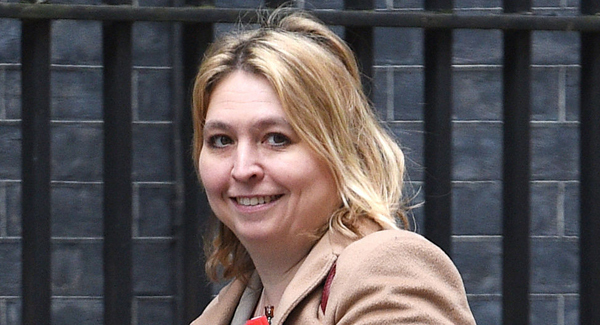
Last September, Northern Ireland secretary Karen Bradley admitted that before she took up her post she was ignorant of the region’s divisions. She said she was unaware that nationalists did not vote for unionists or that unionists did not vote for nationalists.
“I didn’t understand some of the deep-seated and deep-rooted issues,” she blushed. The pilot did not know how to fly the plane but at least she knew it. That admission showed Ms Bradley in a poor light but it showed those who appointed her up in a malicious way. A greenhorn was asked to be ringmaster in these islands’ most volatile, unsettled circus.
Since that September interview, and as Brexit divides Britain in a toxic way, the level of ignorance and disinterest — often bordering on the openly contemptuous — shown on Ireland by a myriad of English politicians is little short of staggering.
Set against this background, the generally much-improved relationships between the great majority of people on these islands is something of a miracle; a victory for common decency that has, despite provocation after provocation, almost transcended history.
That decency suffered another a broadside last weekend. The British public was warned that should next Thursday’s decision from the North’s prosecution service be one to prosecute former soldiers for murder over Derry’s Bloody Sunday in 1972, when 13 protestors were shot dead, “a storm of utter fury from the public” would follow. History, sadly, decrees that a storm of fury will follow whatever decision is announced.
The old tribal war drums will rumble. The world will be, once again, black or white, or more accurately, green or orange. The usual, malignant forces will exploit whatever decision is announced to nourish their bigotry.
There is no ambiguity about what happened in Derry that awful day. British soldiers, with the encouragement of officers, murdered civilians.
The world knows that and the prosecution of some old men will not change that. Sadly, that did not prevent Ms Bradley telling the House of Commons that killings by the army or police during the Troubles were “not crimes”. Thankfully, she has recognised how offensive her remarks were and apologised. Her on-the-job training continues in the most painful, dangerous way.
The people of Derry were done a terrible wrong that day and it may, nearly 40 years later, expect too much of them to ask them to turn the page so a new, better Ireland might follow. However, some group, some community will have to take that step if today’s peace is to endure. The horrors of the past cannot be continually disinterred without consequences.
Just as Enniskillen’s Gordon Wilson did when IRA bombers murdered his daughter in November 1987, we must move on. Marie Wilson was one of 12 killed that day but her father dedicated the rest of his life to reconciliation. He never forgot her but worked to ensure that other families did not suffer the same horrors. His example offers a template that might be, no matter what decision is announced next week, followed by those who cherish peace and tolerance.
Any alternative response cannot end well.
CONNECT WITH US TODAY



Be the first to know the latest news and updates