South Kerry greenway delayed: The common good must win the day
In an increasingly crowded world, uncontrolled access to natural or man-made tourist attractions has become a contested idea.
From January, visitors to Australia’s Uluru — Ayer’s Rock in our Anglo world — will not be allowed climb the landmark sacred to the indigenous, Anangu people.
A version of that relentless tide ebbs and flows closer to home. Skellig Michael has seen a surge in visitors.

The fragile monastic site was caught in the glare of international publicity when Star Wars scenes were filmed there.
Nearly 17,000 people visited the island last year — well above the number approved in its Unesco management plan.
If this growth continues, it is only a matter of time before commercial and heritage interests are in conflict — if they are not so already.
Skirmishes in that culture war are being fought in European cities and islands.
This year, Venice, a beautiful city with a population of 265,000, experimented with turnstiles to try to control the 20m tourists who flood it every year.
Increasingly, European city and island communities are uniting to oppose over-tourism.
Activists argue that mass tourism inflates rents, closes local shops, creates low-wage jobs, and exacerbates pollution.
This imbalance is also behind opposition to Airbnb, now seen as an unwelcome driver of housing costs.
An extreme version of this aversion to visitors was seen in New Zealand last month, when surfers at a jealously-guarded surfing mecca on the North Island were shot at.
Ireland might not have reached that saturation point, but a high-summer walk around Dublin would suggest we may have to confront the toxic fallout of mass tourism soon.
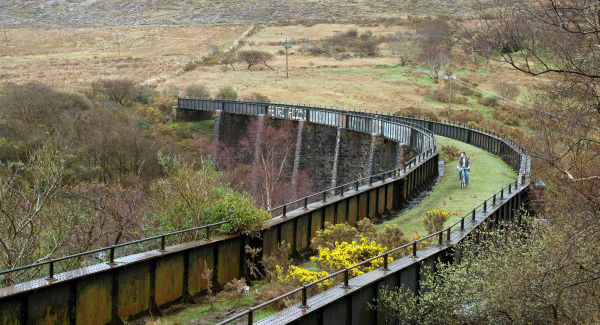
These issues are just two of the principles fuelling a simmering row over a 32km greenway in south Kerry.
The greenway is to follow the disused railway line from Glenbeigh to Cahirciveen and onto Renard Point.
As always, there is popular support for the project, in general terms at least, but the devil is in the detail.
Kerry County Council has been stymied and, according to the local authority, it must employ compulsory purchase orders (CPOs) to complete the project.
Unsurprisingly, some farmers oppose this.
They insist money is not the issue, but fear CPOs might be used to push greenways through other areas or to extend the south Kerry greenway.
The CPO process was established in the 1963 Planning Act to ensure the common good prevails over individual interests — the dynamic in play in south Kerry.
Farm lobbies always resist the conflation of public interest issues with farm subsidies.
However, at a moment when the EU links farm subsidies to cutting pollution, that is naive.
In an increasingly urbanised world, it maybe dangerously so.
South Kerry has shamefully squandered a world-class tourist attraction — Lough Currane’s once-great, but now decimated game fishery — so proposals to attract even more tourists must be objectively evaluated.
If, after that process, the greenway is still considered attractive, the common good must prevail and the CPO process go ahead.
Which raises an interesting, if unrelated question — if CPOs can be used to support tourism interests, why are they not used more often to try to ease the housing crisis?