Sacking of Anne O'Connor sets impossible bar for next HSE boss
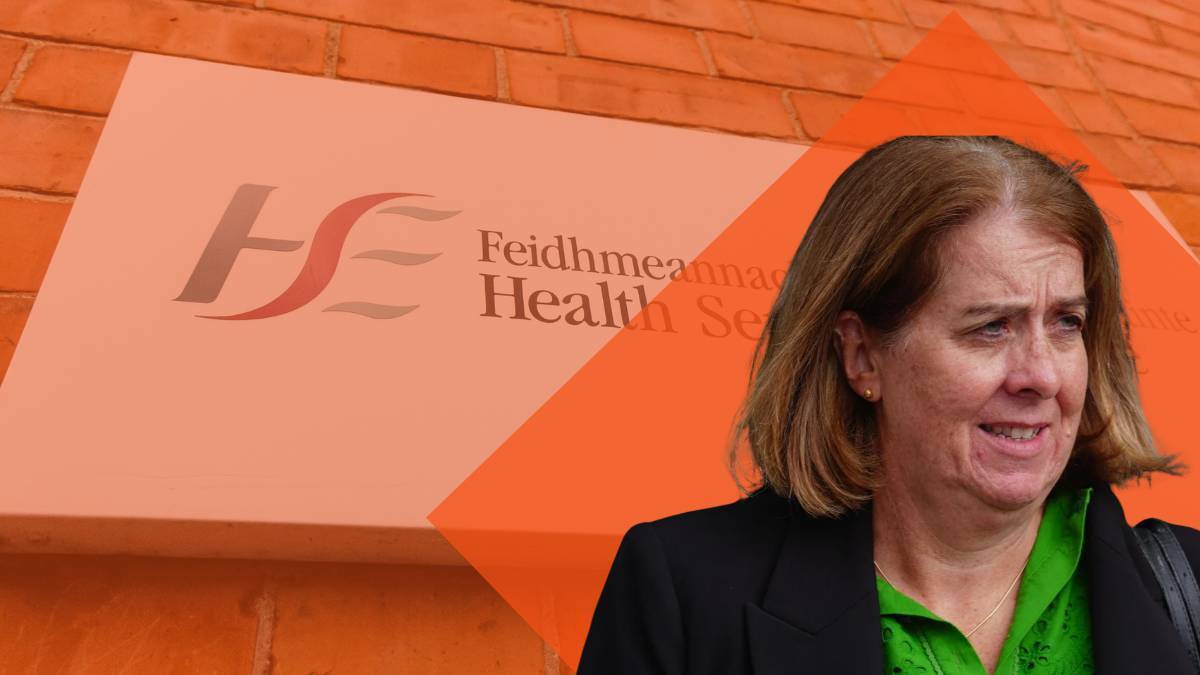
Anne O'Connor was the first woman to lead the HSE and brought deep frontline clinical and operational experience to the role.
On a Monday morning in late November, the real state of our health service is obvious in every acute hospital nationwide.
Emergency departments are full, corridors are lined with patients waiting for beds, and surgical teams are checking whether overnight admissions will force them to cancel scheduled procedures. More than 670 people are waiting on trolleys and over a million are on waiting lists as we head into winter.
That is why the HSE board’s decision to end Anne O’Connor’s tenure after less than nine months has caused such dismay across the frontline. Hospital consultants, nurses, midwives and health unions rarely speak with one voice on senior management departures, yet the reaction this week has been uniform shock.
Ms O’Connor was the first woman to lead the HSE and brought deep frontline clinical and operational experience to the role. As the IHCA said on Monday, sending a chief executive into the ring with one hand tied behind her back, only for her own board to tie the knot, is no way to run a health service.
By handling Ms O’Connor’s departure in a manner that has now triggered a court challenge, the board has tied itself and the health service into a distracting legal dispute just as winter pressures hit. Whatever happens in the courts, the wider governance failure cannot be brushed aside.
Read More
A board’s main job is strategy and making sure its chief executive has the authority and backing to do the work. By the HSE board’s own account, Ms O’Connor had a 12-month probation with formal reviews in June and October, yet it terminated her contract after eight months.
Cutting short a 12-month probationary window before winter has even begun looks like a reaction to short-term pressure. If, as Labour leader Ivana Bacik has stated on Radio 1, the process was "reverse engineered", the minister for health and the board must reflect on their positions, as that runs contrary to basic decency.
Look at the five areas on which Ms O’Connor was judged: spending, urgent and emergency care, waiting lists, organisational reform and workforce management. Professor Niamh Brennan, one of Ireland’s leading authorities on corporate governance, put her finger on the problem this week.
Those goals belong on a five-year horizon, not an eight-month window. Meaningful reform in a large public health system takes years. Judging any chief executive against multi-year targets after eight months sets an impossible bar.
At the same time, the tools needed to meet those targets were being pulled back. The six new HSE health regions were meant to bring decision-making closer to patients so local clinical directors could fix local bottlenecks. Instead, when the Department of Health stripped regional spending autonomy in September alongside strict recruitment controls, hospital managers and clinical leads were forced back into seeking central sign-off for basic staffing and operational decisions.

Over the past 18 months, top-down management has undermined local accountability before the regional structure has even had time to work. You cannot centralise spending, restrict frontline hiring, and then blame the chief executive when hospitals struggle to expand capacity.
As the minister for health and the HSE board prepare to recruit a successor, they owe patients and staff a straight answer. What do they expect the next chief executive to do differently? If they hand the next appointee the exact same targets while withholding operational control, the outcome is predictable. Another leader will be gone within months, and waiting lists will be no shorter.
Behind the boardroom row lies the real causes of our hospital logjams. Ireland’s headline health budget has grown, yet decades of under-investment have left us treating patients in listed Victorian buildings never designed for modern medicine. Public hospitals routinely run near full capacity rather than the 85% international safety benchmark.
The four dedicated elective hospitals promised for Cork, Galway and Dublin for scheduled surgery remain stuck in planning and early tender stages rather than treating patients. Hospital-based doctors still have no unified electronic health record at the bedside, with nationwide deployment not due to finish until 2032.
Ireland still sits roughly a third below the European average for hospital consultants per capita, and accelerating consultant recruitment remains essential to cutting waiting lists. To get the full benefit from newly appointed consultants, we have to match recruitment with MRI and CT scanner capacity, specialist radiographers, and clinic rooms.
Healthcare is a team sport, and any shortfall in physical, digital or staffing infrastructure breaks the chain, reducing efficiency and directly impacting patient care.
Strong corporation tax receipts have given the State a genuine chance to close these gaps, though windfall revenues will not last forever. Absorbing temporary tax surpluses into day-to-day budget overruns is a short-sighted way to run public finances.
Those resources must be locked into multi-year capital investment, with major health builds granted the same fast-track critical infrastructure status as energy and transport projects, so beds, elective centres and digital systems are built and staffed before leaner economic years return.
Under interim chief executive Damien McCallion and whoever takes the job permanently, progress depends on giving clinical directors the authority to run services properly. Rolling out criteria-led discharge across our hospitals, so trained nursing and HSCP colleagues can discharge patients safely once agreed clinical criteria are met, alongside protected elective capacity so winter surges do not cancel scheduled operations, would make a tangible difference to patient flow.
Swapping out the captain of the Titanic just before it hits the iceberg is neither a strategy nor a solution. Giving frontline teams the staff, hospital beds and autonomy to care for patients safely is what matters.
Trust between the minister, board and frontline staff has been badly damaged. Its repair is crucial to delivering the excellent, accessible health system Irish patients pay richly for and deserve.
- Professor Gabrielle Colleran is president of the Irish Hospital Consultants Association

BLACK FRIDAY
Already a subscriber? Sign in

CONNECT WITH US TODAY



Be the first to know the latest news and updates