Marie Keenan: Blaming defence solicitors for justice woes is unfair
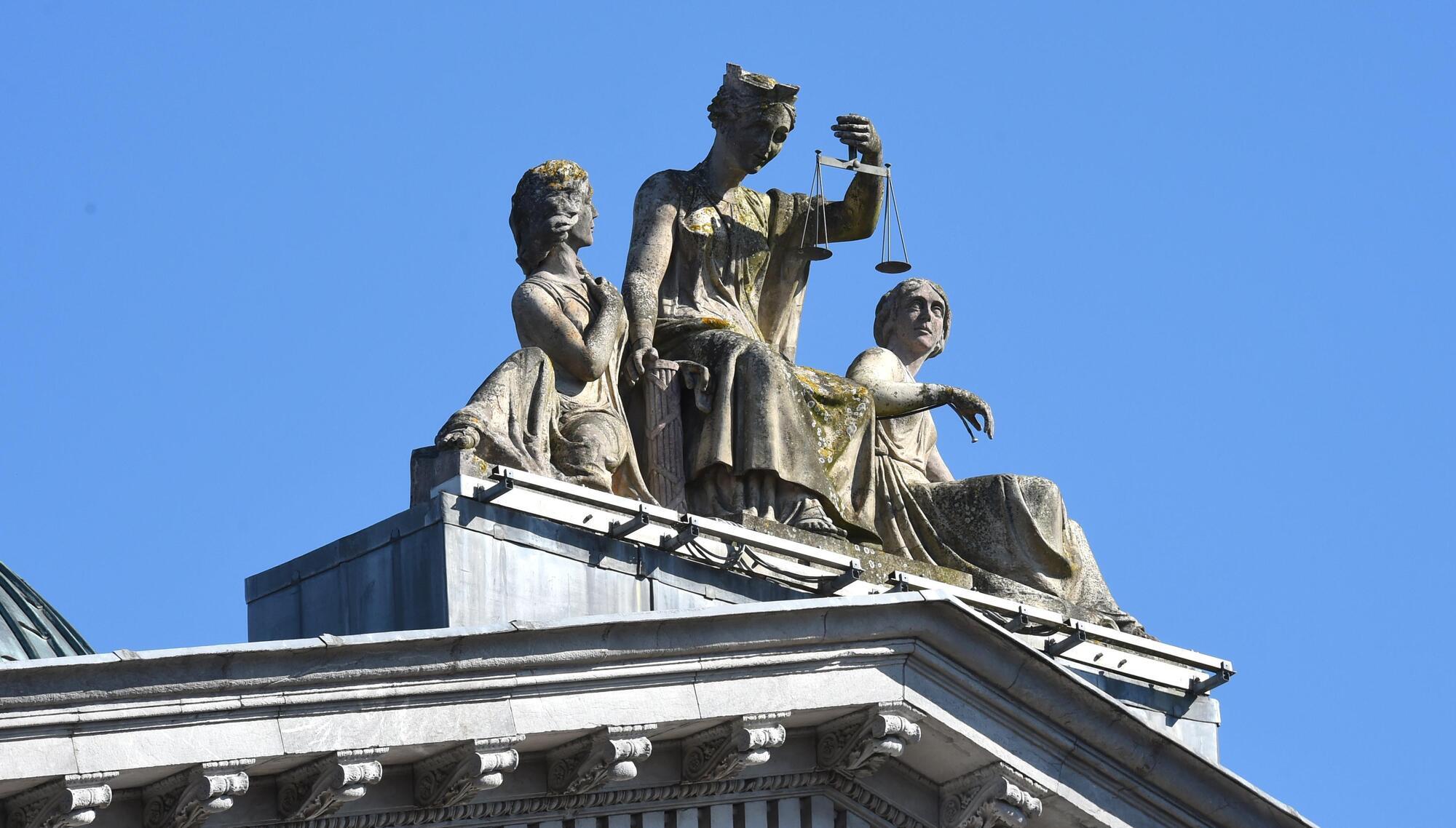
Our research pointed to the need for investment across the entire criminal justice system before the significant issues causing delays and adjournments could be adequately addressed. File picture: Larry Cummins
If you didn’t notice or get to read my report, , don’t worry. I think in a sense you weren’t meant to.
Commissioned by the Department of Justice, the report was launched at a small gathering. There was no press conference or no big push by the Department of Justice to get the findings out there.
Truth be told it was only after much pressure by me on behalf of my team, (associate professor Deirdre Healy, UCD, criminologist, Gemma McLoughlin–Burke BL, barrister, and Dr Kate Keenan, psychiatrist) and a few Dáil questions, that the report was launched at all.
So, why is this relevant now?
It may be relevant for the current dispute between solicitors and the minister for justice regarding the fees and structure of criminal legal aid. It may also be relevant for the kind of blame being attributed to defence solicitors for causing delays in the system or for seeking adjournments for their own financial gain.
Our research did not support these accusations.
I fear we may be facing further down the track on criminal legal aid, in the wrong direction, if it is not adequately reformed to the satisfaction of the relevant parties and with respect for defence solicitors and the work they do.
One of the aims of our research was to study the reasons for delays in the criminal justice system, particularly pertaining to sexual offences. These cases span the entire system.
We conducted 73 interviews with 78 stakeholders from across the criminal justice system asking them about delays and reforms that were necessary. Interviewees came from a range of ranks, roles and geographical regions to ensure a broad representation of views. We studied literature and statistics in Ireland and beyond.
Under-resourcing across the criminal justice system emerged as the top offender as the cause of delays.
This included under-resourcing across the entire system; An Garda Síochána, medical and forensic services, Sexual Assault Treatment Units (SATUs), a shortage of judges, of courts service staff, of court rooms, the brevity of the court day and the court calendar, poor data processing systems, and the shortage of suitably qualified psychiatrists who can be instructed for the purpose of certain types of trials.
Further blockages in the court system, such as the availability of interpreters or special provisions for vulnerable parties, compounded the problem. These factors are well known.
Early in the research we also found some factors not anticipated. These included the level of criminal legal aid fees, the structure of the criminal legal aid scheme and the explosion of disclosure information involved in criminal trials particularly of a sexual nature.
For this reason, we conducted specialist interviews specifically on criminal legal aid with four individuals with expertise in the administration and workings of the scheme. We also added questions on criminal legal aid as part of a more general interview for all cohorts of interviewees.
We made some important findings.
A culture among some counsel in preparing criminal cases in the last minute was a serious cause of delay. This was caused in part by an inadequate criminal legal aid scheme, both the fees and structure, and exacerbated by the uncertainty permeating the court system regarding when trials will proceed.
Aside from the level of the fees, which have increased since our research was published to restore the historical cuts imposed during the 2008 recession, we found the current fee structure, unchanged for many years, does not reflect the labour-intensive nature of the work undertaken by legal professionals.

This relates particularly to the ‘explosion’ in disclosure information required in many criminal trials and the vulnerability of many of the accused persons and children coming before the courts.
We proposed that the structure be reviewed and improved with the aim of realigning the structure of payments to fit the level of work involved.
We found the current disclosure fee and how it is structured and managed was not fit-for-purpose; the threshold for the special disclosure payment was too high.
Effectively we argued for increasing the fees of defence solicitors and legal professionals to reflect the work involved. The minister is doing the opposite.
Because of the backlog in the courts, dates are offered for trial for two or more years from the date of arraignment. This uncertainty leads to oversubscribed diaries and diary clashes.
While we found that a minority of highly sought-after senior counsel were in demand, and were hanging onto cases despite oversubscribed diaries, the majority of criminal barristers struggled to make a living.
It became evident to us that a move away from last minute-ism would require not only a restructuring of criminal legal aid fees but engagement with a cultural change within the Bar.
We found that even when disclosure materials are requested in a timely manner by defence solicitors and legal professionals on both sides, there were huge delays in the production of disclosure materials by the HSE and Tusla.
This often related to a shortage of staff, the paper nature of some historical records and the sensitivities involved in working with complainants, whose personal information is requested for what they and many see as completely unrelated criminal investigations.
In these circumstances, disclosure materials were sometimes not examined by prosecution and defence counsel until close to the trial date, even when requested early, sometimes necessitating further disclosure requests when the documents were examined.
While significant efforts by judges at case management and pre-trial hearings may help improve matters in the courts, our research pointed to the need for investment across the entire criminal justice system before the significant issues causing delays and adjournments could be adequately addressed.
We did not find that spurious delay tactics were being used by defence solicitors in criminal cases.
While domestic violence was outside our remit we heard from some NGOs for domestic violence that this is something worth further investigation in relation to those types of cases.
We found that adjournments in sexual offences were sought both by the prosecution and the defence for mostly legitimate reasons. Judges are the arbiters of whether adjournments are granted.
Getting back to the current dispute between the minister for justice and defence solicitors, blaming defence solicitors for the ills of the criminal justice system, including adjournments and delays, seems to be grossly unfair, based on research and practice.
While public support does not appear to be on the side of solicitors in the current dispute, I would encourage that the complexities involved here are much better elucidated.
It is not simply a matter of so called ‘highly paid’ defence solicitors looking for more. That is to misunderstand the facts.
A properly functioning criminal legal aid scheme is essential for the administration of justice. It needs to be adequately funded.
- Professor Marie Keenan is emeritus professor of Criminal and Restorative Justice at UCD

CONNECT WITH US TODAY



Be the first to know the latest news and updates