Departing UN chief warns of ‘moment of truth’ in efforts to curb global warming
As United Nations climate talks kick off in Turkey on Monday, Secretary-General Antonio Guterres has an urgent message for world leaders: “This is a moment of truth.”
He has delivered variations of this ominous warning about climate change in the past decade, often with increasingly hyperbolic language. Three years ago, he even said “the era of global boiling has arrived” – referring to rising temperatures and increasing extreme weather, both results of climate change.
But this time, it will be his last global warming sermon as head of the United Nations as his second and last term expires at the end of the year.
The sense of urgency is palpable in a world with worsening killer heatwaves, storms, floods and droughts amid ever higher temperatures and, on top of all of it, El Nino, a naturally occurring climate pattern that scrambles weather systems around the globe.
At Cop31, Mr Guterres said he will tell leaders: “This is a moment of truth. We can no longer wait, we can no longer have endless discussions in which everybody tries to push the responsibility to someone else. Everybody must do more, everybody must do more now.”
The “moment of truth” message weighs so heavily that the secretary-general used the phrase three times in 20 minutes during a recent exclusive interview with The Associated Press. He discussed his one last push in the fight against climate change and a 10-year tenure where he became one of the most visible advocates urging often recalcitrant countries to do more to reduce their emissions of heat-trapping gases.
The gravity of global warming reality also weighs heavily as he recalled his personal climate moment of truth. It was, he said, “one of the most difficult days of my life”.
It came last year when he consulted with scientists before a major speech on climate. As he had for nine years, Mr Guterres was going to insist that the 2015 Paris Agreement’s main goal – limiting warming to 1.5C since pre-industrial times – was still alive. He was going to say the world needs to do far more to keep below that threshold, and that it was doable.
“Scientists told me you cannot say that because that’s no longer true,” he said. Too much carbon dioxide and other greenhouse gases, the result of burning fossil fuels, had been released into the atmosphere.
“That was an enormous shock for me,” he said. Now the UN is trying to limit how much past that threshold the world heads.
It felt like a failure, Mr Guterres said.
“But it’s not the world that’s failed, it’s the political leadership that’s failed,” he said.
Protecting the planet, he said, requires a long-term strategic view. Yet in many political systems “there is no strategic view. And policies change frequently, not allowing the kind of constant determined investment that is necessary”.
He pointed to his tenure as Portugal’s prime minister in the late 1990s to show it is possible to invest long term in a greener future. He added that a worldwide boom in wind and solar power as cheaper alternatives to fossil fuels gives him hope.
With wars raging in Ukraine and Iran and worries about artificial intelligence – which he also tried to rally world leaders around – there are a lot of threats out there, Mr Guterres said.
“The problem is that all these things are getting combined,” he warned, noting the huge electricity and water consumption and carbon emissions of AI.
War-related energy shocks show that relying on fossil fuels is a fundamental security problem, he said.
Three years ago, Mr Guterres toured the highest peaks of Nepal, warning of a future with swollen glacier-fed lakes bursting and devastating floods and landslides.
“I am here today to cry out from the rooftop of the world: Stop the madness,” he said in 2023. “The glaciers are retreating, but we cannot. We must end the fossil fuel age.”
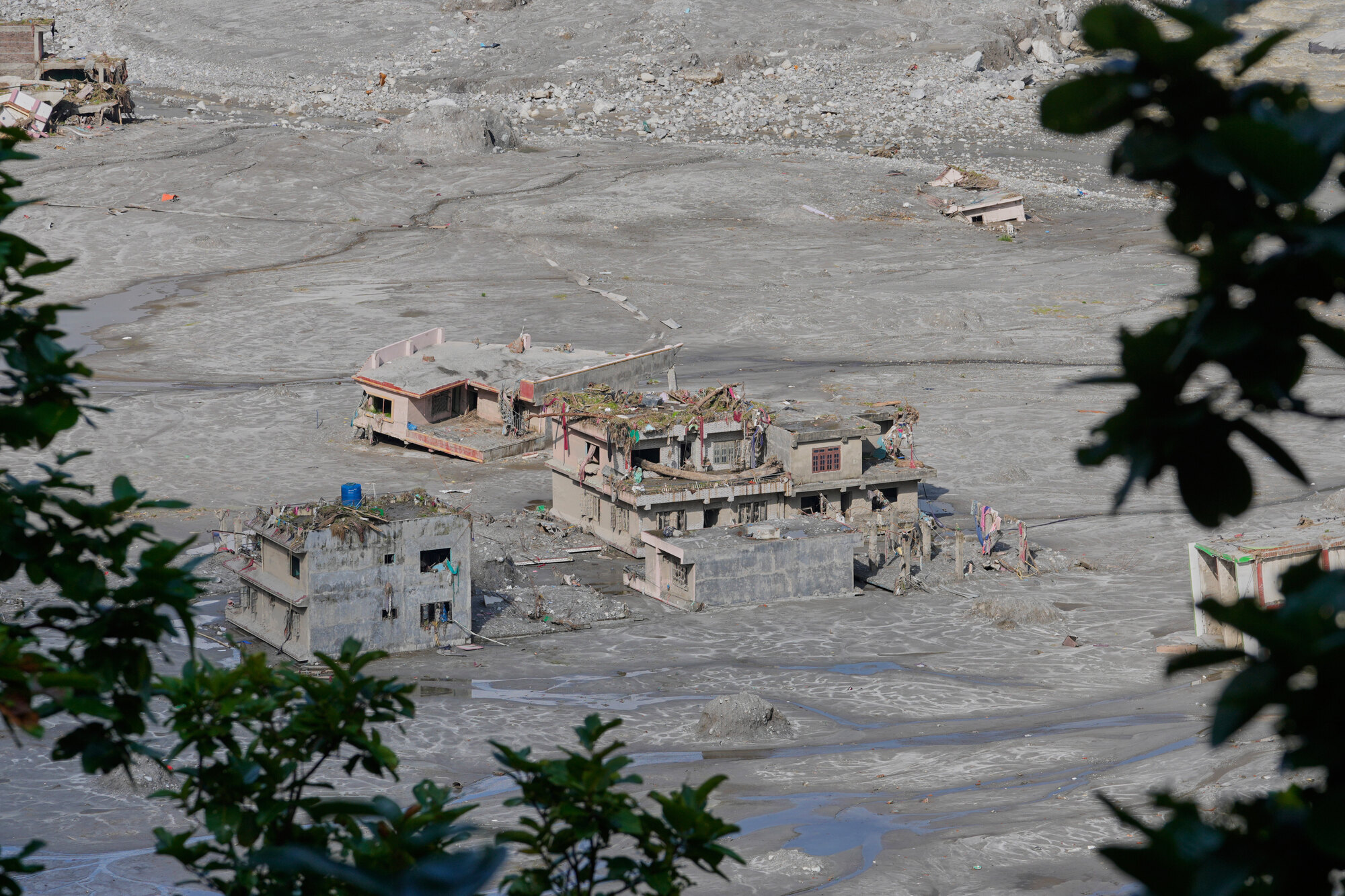
But he said his warning came to fruition “sooner than what I expected”, as floods in August in Nepal killed more than 1,400 people with another 5,600 missing. Scientists said climate change played a role in the disaster.
Mr Guterres said someone needs to pay to help the victims of climate change, who often did not cause the problem.
“Fossil fuel companies are making huge profits and obviously those windfall profits should be taxed and those taxes should be applied in supporting the countries that are having the more dramatic impacts of climate change,” he said.
Talking earlier this month with a science team on a drifting platform in the middle of the Arctic Ocean, Mr Guterres mentioned that his trip to Mount Everest and chats with researchers changed him.
He said the conversations created “a sense of fury in relation to those who go on, if not denying, at least refusing to take the measures that are necessary to stop this madness”.
But he said because nations do not have to do what the UN or its leaders ask and superpowers have veto authority, his position as secretary-general “has no real power”.
He added: “We have not much money. But there is one thing we have: A voice.”
That is why he simply has three words of advice to whoever succeeds him: “Tell the truth.”
For the public, he has a message he wants everyone to remember on climate change: “Take it seriously because it is an existential threat. The first thing we need to fight is for our own lives.”
CONNECT WITH US TODAY



Be the first to know the latest news and updates