'Every home should have a conversation around food waste' 
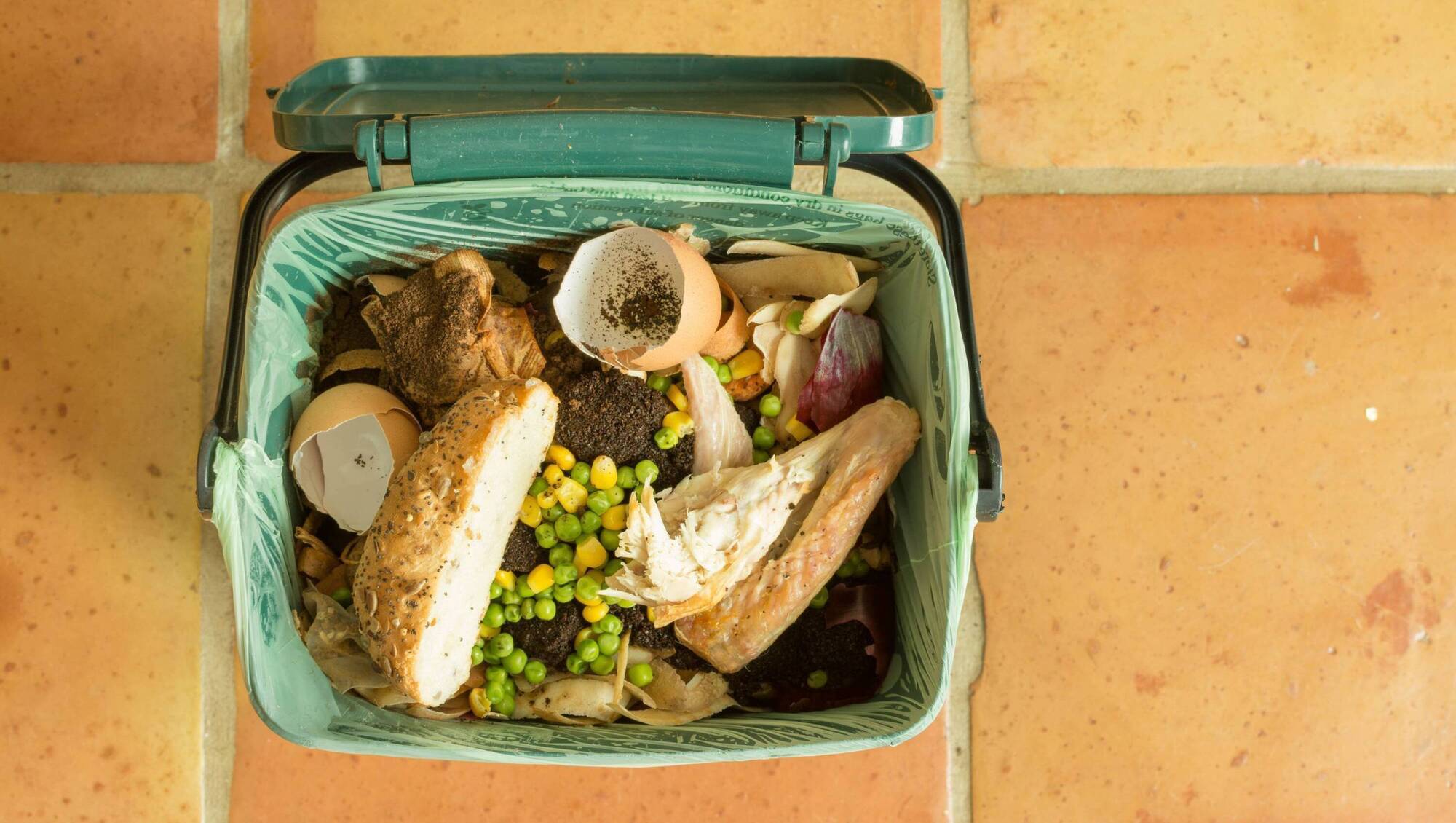
On the UN International Day of Awareness of Food Waste, Jonathan deBurca Butler sees what Ireland is doing to address the problem
 Of the 708,000 tonnes of food waste generated in Ireland, 219,000 tonnes are generated by households.

Of the 708,000 tonnes of food waste generated in Ireland, 219,000 tonnes are generated by households.

Given how integral the sliced pan is to the Irish diet, it’s amazing to think that 41% of us say bread is the food item we fling in the bin most often.

That’s according to a recent report from the Environmental Protection Agency’s (EPA) stop food waste programme, which also found that 62% of us forget to eat leftovers in time. The EPA also found that of the 708,000 tonnes of food waste generated in Ireland, 219,000 tonnes are generated by households. That’s despite the fact three-quarters of us make shopping lists and nine out of ten believe consumers have a role to play in preventing food waste.

So, as we mark the UN International Day of Awareness of Food Waste today, where is Ireland in its battle against it?

“We’ve only been monitoring it for a few years but that overall figure is coming down,” says Aoibheann O’Brien, co-founder and director of development and innovation at NGO FoodCloud. “We are probably in the middle in terms of policy and legislation. We have some great initiatives in terms of the brown bins and segregation of food waste, but when it comes to food donations, other countries like France, Spain, Italy, and countries in Eastern Europe have more favourable environments for it.”

It was this particular problem that O’Brien and her co-founder Iseult Ward were trying to address when they started FoodCloud in 2012. 'Brien said:

CLIMATE & SUSTAINABILITY HUB
It really started as a college project

“I’d been working in London in banking for a couple of years and I came back to Ireland to do a Master’s in Environmental Science at Trinity College. I thought I’d have time to volunteer in something similar in Ireland but there was very little going on in surplus food or food-sharing at that time. There was a call-out for people who were interested in social entrepreneurship and social enterprise. I pitched an idea around surplus food and Iseult Ward responded to the call to action. It started from there.”

Aoibheann still remembers their first donation, from a farmers’ market in Glasnevin, Dublin to a local Don Bosco youth house.

Manager of Food Share Kerry, Sinéad Donnelly Hickey: "It all looks great on the belt when you’re buying it, but where can it go if you don’t need it anymore? That’s where we come in.”

“We were delighted with ourselves,” she recalls. “But that was just one story. We realised there were so many more like that just in Ireland. People who didn’t have an avenue for their surplus food and others who could use it. So that’s the premise of FoodCloud and it’s basically the same today: trying to match businesses with surplus food to community groups that can use it.”

Since then, FoodCloud has grown. It has 90 staff, over 140 regular volunteers, thousands of corporate volunteers, and in Ireland it now boasts a network of three warehouses, in Dublin, Galway and Cork, which take in large volumes of surplus food from farmers, retailers and manufacturers and redistribute it to some 700 community groups across the country.

One of those is the Rainbow Club Cork, an alternative respite service for teenagers and young people living with autism and neurodiversity.

“We got involved with FoodCloud when we opened our cafe about seven years ago,” says CEO and co-founder, Karen O’Mahony. “We wanted to have a place for parents and it’s very much the centre of the organisation; it’s the hub where everyone meets. We’re in a DEIS area so we’re conscious of the price of things. This food helps us to keep the prices down but doesn’t tie us to a menu every week.”

The club’s Cottage Community Café offers pastas and pasta bakes like lasagne, toasties, breakfasts, afternoon teas, and even platters of sandwiches for off-site events.

“FoodCloud ring on Monday from Dublin and our lads chat to them about the list of food available,” explains Karen. “You have a certain weight in your package. There is a monthly fee. You make up the order and they deliver on Wednesday. It’s a large bulk that you get so it’s well worth it. It has helped enormously. There’s such a variety of food there that it helps us to mix up the offering.”

Down the road in Tralee, Food Share Kerry works with over 50 charities and organisations across the county. It uses FoodCloud’s Foodiverse app to connect food suppliers - farmers, restaurants, supermarkets or manufacturers — to registered charities and community organisations. The app streamlines communication between donors and recipients to minimise administrative hurdles and track food redistribution.

“I would love to see a conversation around food waste within every home or business,” says Manager of Food Share Kerry, Sinéad Donnelly Hickey. “If everyone could cut down on waste and what they perceive as waste, it would help enormously. It all looks great on the belt when you’re buying it but where can it go if you don’t need it anymore? That’s where we come in.”

The fact that they have to is, Donnelly Hickey says, a “sign of the times”. Recent data suggests she’s right. A 2025 Central Statistics Office survey of income and living conditions puts the national food poverty rate at roughly 8.9%. An increase that is being “driven by inflation and high living costs”.

Of course, these economic phenomena are not restricted to these shores. Food waste is a huge global problem and it’s remarkable that upwards of 40% of food is wasted when 700m people across the globe don’t have enough to eat.

That’s why FoodCloud partners with similar organisations and offers its tech solutions in the UK, Czech Republic, Slovakia, and Kenya, and hopes to expand its offering further.

“Sharing these tech solutions with our international partners means we can learn from what they’re doing and they can learn from us,” says O’Brien.

“It’s great to be part of that global community and it really helps to drive impact.”

An impact that will soon celebrate a whopping 500m meals rescued since 2012.

“Our goal is to get to a billion by 2030 and we want Ireland to be a leader.”

More in this section

ieFood

Newsletter

Sign up for our weekly journey into the best of Ireland’s food scene with recipes, reviews and stories from our award‑winning food writers.

Cookie Policy Privacy Policy Brand Safety FAQ Help Contact Us Terms and Conditions

© Examiner Echo Group Limited