We need a change in attitude to construction jobs if we are to deliver on housing and infrastructure
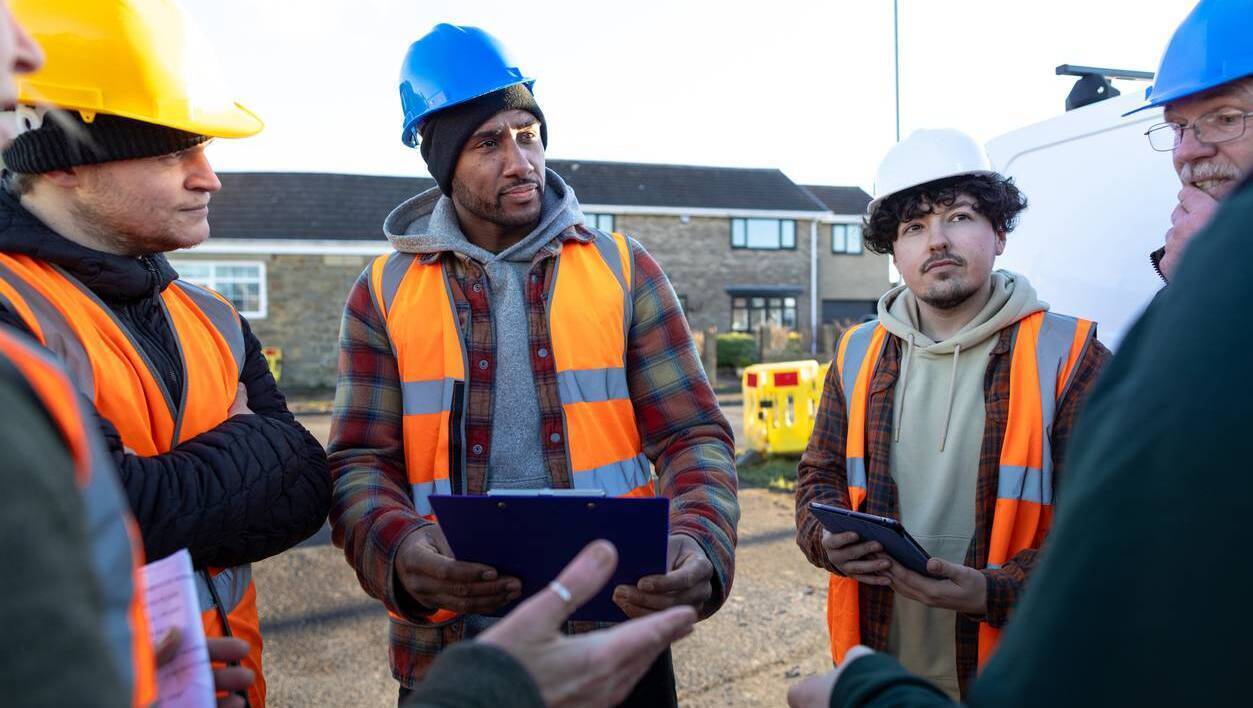
Construction workers, electricians, plumbers, carpenters and engineers are not peripheral to Ireland’s future, they are fundamental to it. Housing delivery, infrastructure expansion, climate adaptation and economic growth all depend on their skills.
In late 2025, the Government unveiled two major housing and infrastructure policy frameworks. If Ireland is to be successful in delivering the homes and public works these plans promise, then this success will depend not just on funding or regulation, but on a fundamental societal shift in how we value trades and careers in construction.
The policy frameworks are ‘Accelerating Infrastructure, Report and Action Plan’ and ‘Delivering Homes, Building Communities 2025–2030: An Action Plan on Housing Supply and Targeting Homelessness’, and both set out an ambitious blueprint for the coming years with regard to critical infrastructure and housing delivery.
The scale of investment, policy reform, and planned action on both fronts, which overlap in many ways, is welcomed and ultimately essential to the future of both the economy and wider society.
For well over a decade now, the Irish construction sector has grappled with labour shortages that span trades, professional services, project management and site supervision. Rather than a cyclical blip, this must now be viewed as a structural challenge shaped by demographic shifts, post-2008 economic crisis attrition, inadequate training pipelines, and global competition for construction talent.
The current situation with regard to the construction workforce gap is so significant, given the pipeline of infrastructure and housing projects planned, further and higher education minister James Lawless believes the country must now consider how it can “do more with less because we may not have the workforce to do everything that we need to do”.
Unless this issue is addressed with urgency and scale, the ambitious targets set out in both the infrastructure and housing plans will struggle to be delivered on the ground.

There has been positive movement on this front in recent years. Ireland’s apprenticeship training pipeline has made real and measurable progress over the past five years, and it is important to acknowledge that success.
Since the establishment of the Department of Further and Higher Education in 2020, investment in the apprenticeship system has increased over time. Budget 2026 alone allocated €79m to apprenticeships, bringing total annual funding to €411m, a 123% increase since 2020.
That investment has already delivered meaningful results, with annual apprenticeship registrations having grown from 6,177 in 2019 to 9,352 in 2024, an over 50% increase in this timeframe. This momentum provides a strong foundation for meeting the Government’s target of 12,500 new apprentice registrations per year by 2030, with two-thirds in craft and construction-related programmes.
The forthcoming Action Plan for Apprenticeship 2026–2030, due to launch later this year, offers a crucial opportunity to build on this progress and align training capacity with Ireland’s long-term housing and infrastructure ambitions.
However, investment and programme expansion alone will not solve the workforce challenge. One of the most stubborn barriers remains cultural rather than structural.
This bias is deeply embedded. Students are often guided towards CAO points rather than practical aptitude, while trades are framed as alternatives for those who “didn’t make it” academically. That narrative is not only outdated but deeply damaging. It discourages talented young people from entering essential professions where they can earn a very good living, while also undermining sectors that quite literally build and maintain our economy.
What is urgently needed now is a national campaign to reset attitudes. Apprenticeships must be positioned as first-choice careers, not fallback options. That means showcasing real stories of apprentices who have built financially secure, technically skilled and fulfilling careers.
It means highlighting the economic value, social contribution and long-term progression that trade careers can offer, from site leadership to entrepreneurship and business ownership.
Construction workers, electricians, plumbers, carpenters and engineers are not peripheral to Ireland’s future, they are fundamental to it. Housing delivery, infrastructure expansion, climate adaptation and economic growth all depend on their skills.
If we want to deliver on national policy ambitions such as development of critical infrastructure projects like MetroLink, build 300,000 houses, and achieve a net-zero emissions society by 2050, then we must ensure young people see apprenticeships not as an alternative to success, but as one of its strongest pathways.
While recruiting and training tradespeople and skilled construction workers will play the major role in boosting construction workforce numbers, the current shortage means international sourcing is also required to supplement the local workforce and is critical to meet the ambitious policy targets set out above.
Without international sourcing of workers into the Irish construction sector, then we simply won’t meet the Government’s target of 300,000 new homes by 2030, alongside the large-scale investment of €102.4bn in infrastructure project spending. Investment which will be needed to make house building more viable across the country.
The Department of Further and Higher Education forecasts an additional 80,000 workers will be needed to supplement the current construction workforce, which stands at about 177,000 workers, in order to build those 300,000 new homes and retrofit a further 444,106 existing homes. This is without getting into additional workers which will be needed to tackle our infrastructure deficit.
A big problem for Ireland is we are not an outlier in this regard, and we share this common problem with our European neighbours. House prices in the EU have increased by up to 60% on average since 2015, with some member states seeing rises of over 200%.
This can create a problem for Ireland when it comes to talent recruitment and retention across the Irish construction sector. Given the current shortage of skilled tradespeople and workers across the domestic industry already, we are regularly competing with other European countries for construction workers who are also trying to meet their own demands when it comes to housing and infrastructure.
To compete with other countries across Europe and further afield, we need to make international talent recruitment for construction roles more attractive to entice those skilled workers to relocate to Ireland.
This means examining visa requirements, tax regulation, relocation benefits, competitive pay and conditions, standard of living, and possible pathways to long-term residency.
The Government has set out its approach to dealing with some of the most pressing issues of our time across infrastructure and housing. But without tackling the shortage of skilled workers in the Irish construction sector, by reshaping societal attitudes towards trades careers and creating an attractive system for international workers, these plans risk remaining blueprints struggling to get executed on the ground.
- David Ward is the founder and managing director of Ward Personnel, an Irish recruitment firm specialising in the construction and mechanical and electrical sectors
CONNECT WITH US TODAY



Be the first to know the latest news and updates