Colin Sheridan: Has the world finally caught up with Lena Dunham's vision?
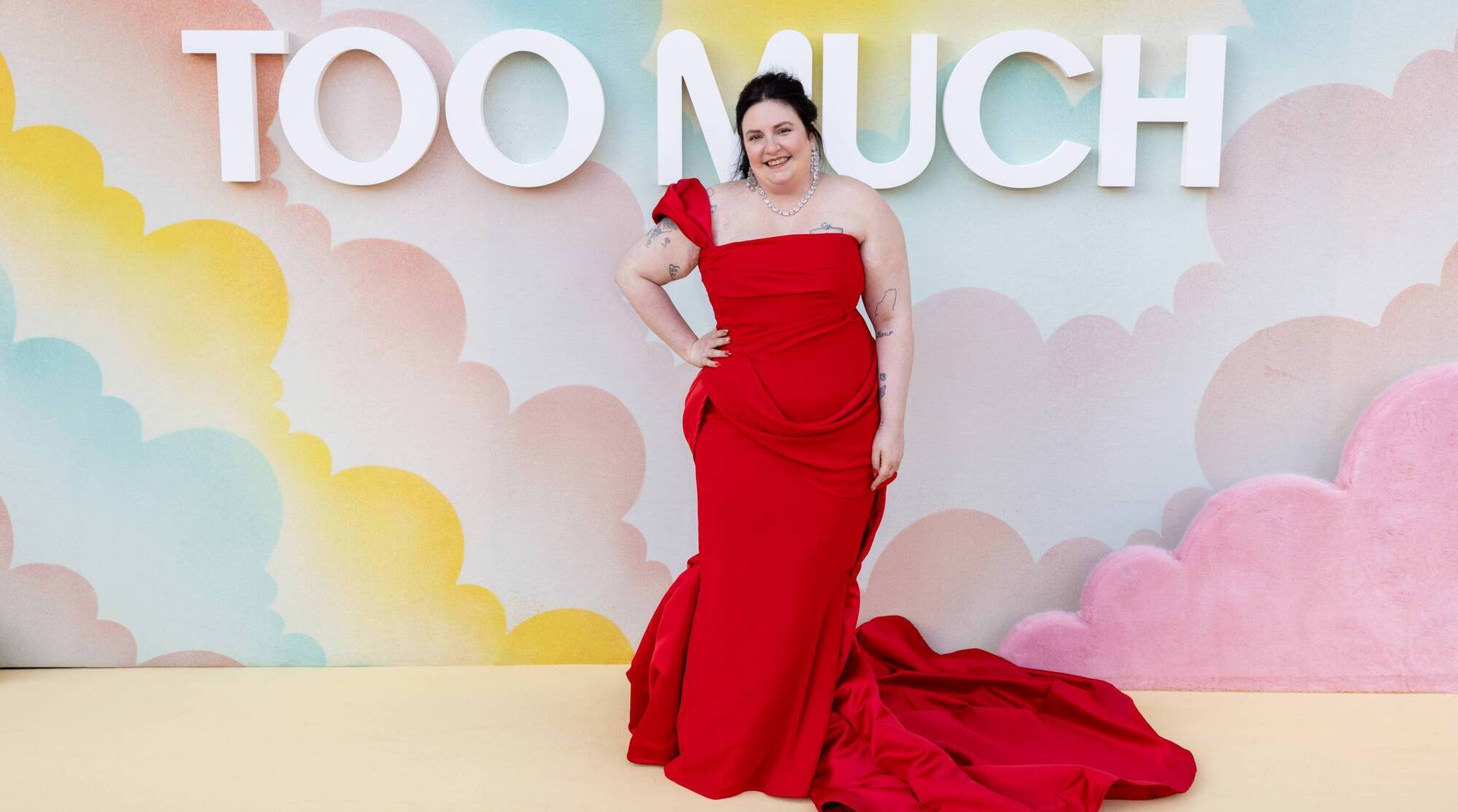
Maybe Lena Dunham had absorbed a disproportionate share of public backlash, arriving at precisely the moment when audiences were least prepared for what she was offering. Photo: StillMoving
There was a time when television insisted on flattering us — soft lighting, cleaner endings, characters who behaved just plausibly enough to let us off the hook. Then along came a voice that seemed not only uninterested in that illusion, but actively determined to dismantle it.
The re-emergence of Lena Dunham — this time via her new memoir — offers a useful moment to reconsider this idea. Not because Dunham has suddenly changed, but because the culture around her has. Or at least, it claims to have.
It’s easy to forget just how seismic felt when it arrived in 2012. Not because it was perfect, but because it was so jarringly uninterested in perfection.
Here were bodies that weren’t curated, sex that wasn’t choreographed to flatter, relationships that felt less like sweeping arcs and more like slow, awkward collisions. It was messy, sometimes excruciatingly so.
And people — particularly men — were appalled. Not all, of course. But enough to make the backlash feel like a cultural event in itself.
The criticism often masqueraded as moral concern or aesthetic critique - allegations that an anecdote about her childhood revealed she had sexually abused her sibling, accusations around her attitudes to race - but beneath it was something simpler: discomfort. Dunham wasn’t just telling stories about women; she was removing the mediation that had long made those stories palatable to a broader (read: male) audience.
Contrast that with , a show that was, in its time, genuinely revolutionary. It put female desire front and centre, gave women careers, voices, agency. But it also softened the edges. It was aspirational, glossy, often bathed in a kind of golden-hour unreality where even heartbreak looked chic. It invited men in, or at least didn’t actively repel them.
Dunham didn’t care if you were comfortable, and that’s perhaps why she became such a lightning rod. She wasn’t just creating; she was exposing.
The interiority of her characters — their narcissism, anxiety, selfishness, vulnerability — was presented without apology. These weren’t women as muses or moral centres; they were protagonists in the fullest sense, which is to say, they were often unlikeable.
That, historically, has been a privilege more readily afforded to male characters. Think of the anti-heroes that dominated television in the early 2000s — flawed, destructive, compelling men whose complexity was seen as a mark of seriousness.
When Dunham offered something analogous for women, the response was markedly different. The scrutiny was sharper, the tolerance thinner.
Which raises the question: would a male filmmaker, presenting similarly unvarnished depictions of himself and his peers, have faced the same level of opprobrium?
It’s hard to imagine he would.
Part of the answer lies in familiarity. Audiences are used to men being messy. It’s almost expected. Women, on the other hand, have long been required to justify their presence on screen by being admirable, or at the very least, redeemable.
Dunham refused that bargain. In doing so, she arguably helped open the door for a wave of shows that followed. , for instance, took the idea of the flawed female protagonist and pushed it further — breaking the fourth wall, implicating the audience, turning confession into performance.
, while structurally different, centres women who are not just complex but actively complicit in morally dubious acts. They are, at times, both heroes and villains of their own story.
That duality feels almost commonplace now. But it wasn’t always.
So was the catalyst? Maybe not the sole one, but certainly part of a broader shift. Cultural change rarely hinges on a single text, but there are moments where something crystallises — where a show, or a voice, captures a mood that had been building quietly beneath the surface.
Dunham did that, whether people liked it or not. And many did not.
The intensity of the reaction to her — personal, often vicious — says as much about the audience as it does about the work. She became a shorthand for a certain kind of millennial womanhood, for privilege, for self-absorption, for a generation’s perceived failings.
“Love her or hate her” became the default framing, which is often what happens when a figure refuses to sit comfortably within established narratives.
It’s worth asking whether that level of scrutiny has eased for those who followed. Phoebe Waller-Bridge, Sharon Horgan — both cultural forces in their own right — have been subject to criticism, certainly, but not quite the same sustained, personalised backlash.
Perhaps the ground had already shifted.
Or perhaps Dunham absorbed a disproportionate share of it, arriving at precisely the moment when audiences were least prepared for what she was offering.
Which brings us back to the present, and to her memoir. The title alone, , suggests a reckoning, not just with celebrity but with the machinery that produces and consumes it.
It’s an opportunity to revisit her work with the benefit of distance, to separate the art from the noise that surrounded it.
And maybe, too, to reconsider our own role as viewers.
What does it mean, now, for a man to engage with work like Dunham’s? Not as an anthropological exercise, not as something to be tolerated or even “admired”, but as something that speaks — however uncomfortably — to universal experiences filtered through a particular lens.
Because that’s the thing about perspective: it doesn’t have to be yours to be real.
If anything, the act of stepping outside your default viewpoint — of watching without the expectation of being catered to — might be the most valuable shift of all. Not a reversal of the gaze, exactly, but an expansion of it.
Dunham didn’t ask for permission to make her work. She didn’t soften it to broaden its appeal. She simply made it.
The question is whether we’ve caught up.

CONNECT WITH US TODAY



Be the first to know the latest news and updates